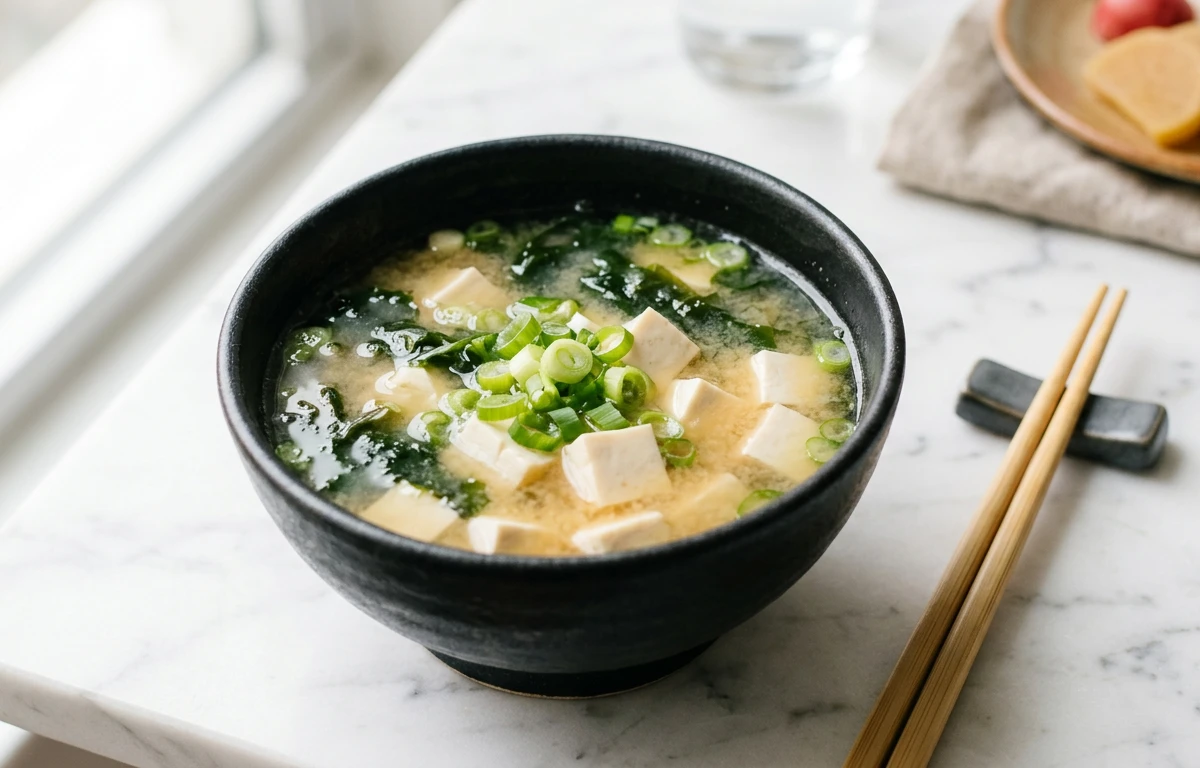
Classic Miso Soup with Tofu & Wakame
A warm, soothing bowl of classic Japanese miso soup with silky tofu and tender wakame seaweed. This comforting staple comes together in just 15 minutes with a deeply savory dashi broth that lets the delicate miso flavor shine through. Perfect as a starter or light meal.
For 4 servings
- prep · ~5 min
Soak the wakame.
Place dried wakame in a small bowl of cold water and let it soak for 5 minutes until rehydrated and tender. Drain and set aside.
- boil · ~8 min
Make the kombu dashi.
Add 4 cups of water and the kombu piece to a medium saucepan. Place over medium heat and slowly bring to just below a boil. As soon as small bubbles appear around the edges, remove the kombu with tongs — do not let it boil.
TIPBoiling kombu makes the broth slimy and bitter. Pull it out the moment you see bubbles forming. - boil · ~2 min
Add bonito flakes and finish dashi.
Bring the kombu-infused water to a full boil. Add the bonito flakes all at once, then immediately turn off the heat. Let the flakes steep undisturbed for 2 minutes.
TIPDon't stir the bonito flakes — stirring makes the broth cloudy. Let them sink naturally. - prep · ~1 min
Strain the dashi.
Place a fine mesh strainer over a clean bowl. Pour the broth through the strainer to catch the bonito flakes. Return the clear dashi to the saucepan. Discard the spent flakes.
- simmer · ~2 min
Warm the tofu in the broth.
Place the saucepan with strained dashi over low heat. Gently add the cubed silken tofu and let it warm through for 2 minutes. The broth should be hot but not simmering.
TIPNever boil miso soup after adding miso. High heat destroys the delicate flavor and beneficial probiotics. - mix · ~1 min
Dissolve the miso paste.
Turn off the heat. Place the miso paste in a ladle, dip it into the hot broth, and whisk the miso with chopsticks inside the ladle until completely dissolved. Stir the dissolved miso back into the soup.
TIPDissolving miso in a ladle first prevents lumps and ensures even distribution. - assemble · ~1 min
Add wakame and finish.
Stir the rehydrated wakame into the soup. Taste and adjust with a pinch of salt if needed. Ladle into serving bowls immediately.
- garnish · ~1 min
Garnish with green onions and serve.
Top each bowl generously with sliced green onions. Serve hot as a starter or alongside rice for a light meal.
What to keep in mind.
6 tips from the recipe — small details that make a real difference to the final dish.
- 1Use a fine-mesh strainer lined with cheesecloth for an extra-clear dashi broth.
- 2Cut the silken tofu gently with a wet knife to prevent sticking and crumbling.
- 3Rehydrate the wakame until just tender – oversoaking makes it mushy and flavorless.
- 4Always remove the kombu before the water boils to avoid a slimy, bitter broth.
- 5Never reheat leftover miso soup in the microwave; the miso's aroma will degrade.
- 6For the cleanest miso dissolution, whisk the paste in the ladle until no streaks remain before stirring in.
Adapt it for your goals.
Vegan
Replace bonito flakes with a 3-inch piece of kombu and 1/2 cup dried shiitake mushrooms, soaked overnight; simmer both for 10 minutes for a rich plant-based dashi.
low sodiumLow-sodium
Use half the miso paste (1.5 tbsp) and replace the other half with a pinch of salt and a splash of low-sodium soy sauce to reduce salt without sacrificing umami.
spicySpicy
Add 1 teaspoon of rayu (Japanese chili oil) or a pinch of shichimi togarashi to each bowl before serving for a warming kick.
heartyHearty
Stir in 1/2 cup of cooked udon noodles and a handful of baby spinach with the wakame to turn the soup into a more filling meal.
Why this is on our healthy list.
Probiotic-Rich Miso
Unpasteurized white miso contains live Lactobacillus cultures that support gut health and digestion.
Iodine from Seaweed
Kombu and wakame provide natural iodine, essential for healthy thyroid function.
Complete Protein in Tofu
Silken tofu offers all nine essential amino acids, making this a valuable plant-based protein source.
Low-Calorie Satisfaction
This soup is naturally low in calories (under 100 per cup) while providing satiety from broth and protein.
Frequently asked questions
Yes — red miso (aka) is saltier and more intense; use about 2 tablespoons instead of 3 and reduce added salt.