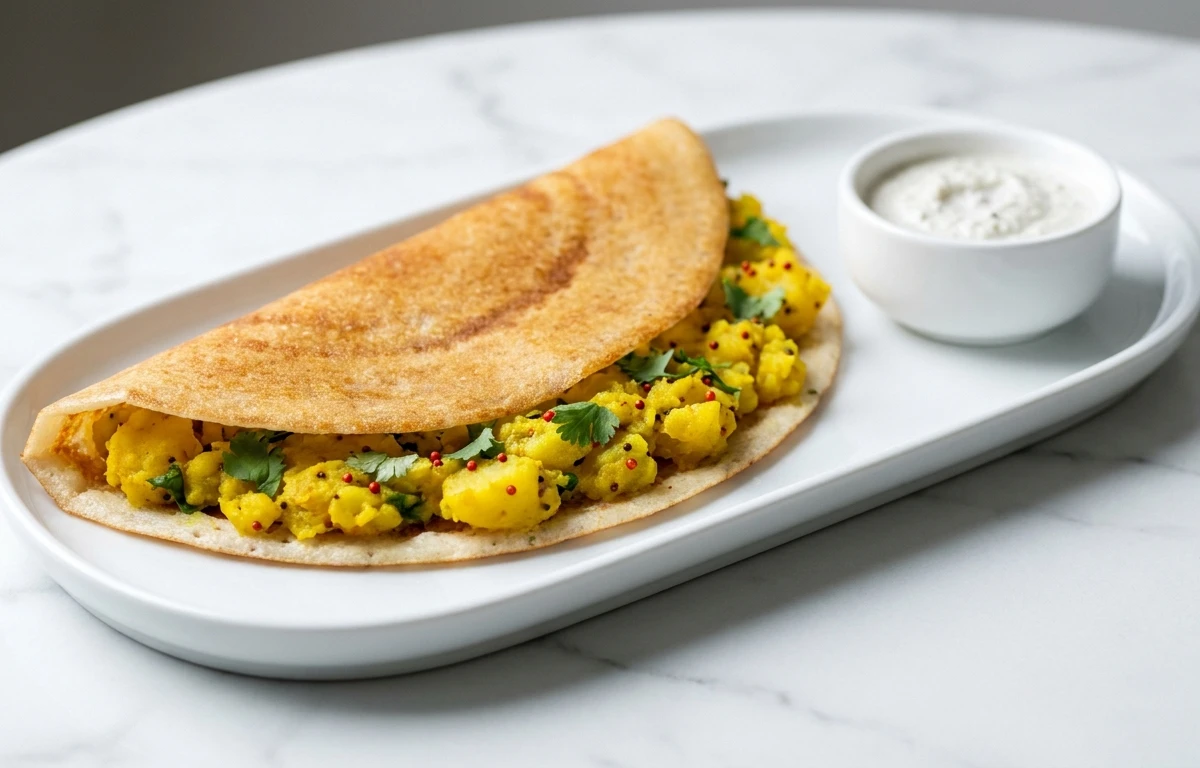
Masala Dosa
Crispy, golden-brown fermented rice and lentil crepes wrapped around a spiced potato filling. This iconic South Indian breakfast comes with a perfectly tangy, soft potato masala and shatters delicately with every bite.
For 8 servings
- prep
Soak the rice and dal for the batter.
1.Wash 2 cups rice and ½ cup urad dal separately until water runs clear.2.Soak rice with ½ tsp fenugreek seeds in 3 cups water for 4 hours.3.Soak urad dal separately in 2 cups water for 4 hours.TIPSoaking well ensures a fluffy batter — don't rush this step. - prep
Grind the batter to a smooth paste.
1.Drain urad dal and grind first in a wet grinder, adding water gradually until silky and fluffy (about 20 min).2.Remove the dal paste, then grind the soaked rice to a slightly coarse paste (not completely smooth).3.Mix both pastes in a large bowl with clean hands, combining well to aerate.TIPThe rice should have a little grit — over-grinding makes dosas hard instead of crispy. - rest · ~480 min
Ferment the batter overnight.
Cover the bowl loosely and let it rise in a warm place for 8-10 hours or overnight. The batter will double in volume and smell slightly sour.
TIPIn cold weather, place the bowl in an oven with the light on — the gentle warmth helps fermentation. - prep
Season the fermented batter.
1.Once fermented, add 0.5 tsp salt to the batter and mix gently.2.Adjust consistency with a splash of water if needed — it should be pourable but not runny. - boil · ~20 min
Boil and prepare the potatoes.
1.Boil 4 medium potatoes in water until fork-tender (15-20 min).2.Drain, peel, and roughly mash them — keep some small chunks for texture.TIPDon't mash the potatoes too smooth; chunky bits make the filling more interesting. - temper · ~3 min
Make the tempering for the potato filling.
1.Heat 2 tbsp oil in a pan over medium heat.2.Add 1 tsp mustard seeds and let them splutter (30 sec).3.Add 1 tsp chana dal, ½ tsp urad dal, and ½ tsp cumin seeds — sauté until golden (1 min).4.Toss in 10 curry leaves, 2 slit green chilies, and 1 inch chopped ginger — fry until fragrant (30 sec).5.Add 2 tbsp broken cashews and sauté until light golden (1 min). - saute · ~9 min
Sauté onions and build the potato filling.
1.Add 2 thinly sliced onions and cook until translucent and soft (4-5 min).2.Stir in 1 pinch turmeric powder and mix well.3.Add the mashed potatoes, 1 pinch salt, and ½ cup water — stir to combine.4.Cover and simmer for 5 minutes on low heat, then turn off the heat.5.Finish with 1 tbsp lemon juice and 2 tbsp chopped cilantro.TIPLet the filling cool slightly before stuffing — hot filling makes the dosa soggy. - fry
Cook the masala dosa.
1.Heat a flat tawa or griddle over medium-high heat. Sprinkle a few drops of water — it should sizzle and evaporate instantly.2.Wipe the tawa with an oiled cloth or halved onion.3.Pour a ladleful of batter in the centre and spread outward in a thin circular motion to form a large, even crepe.4.Drizzle 1 tsp oil around the edges and on top — let it cook undisturbed.TIPWork fast when spreading — the batter sets quickly on a hot tawa. - assemble · ~2 min
Fill and fold the dosa.
1.When the base turns golden brown and the edges lift (about 2 min), place a generous scoop of potato filling in the centre.2.Fold the dosa over the filling into a half-moon or roll it into a cylinder.3.Remove immediately and serve hot.TIPDon't flip the dosa — masala dosa gets its distinct color from one-sided cooking. - serve
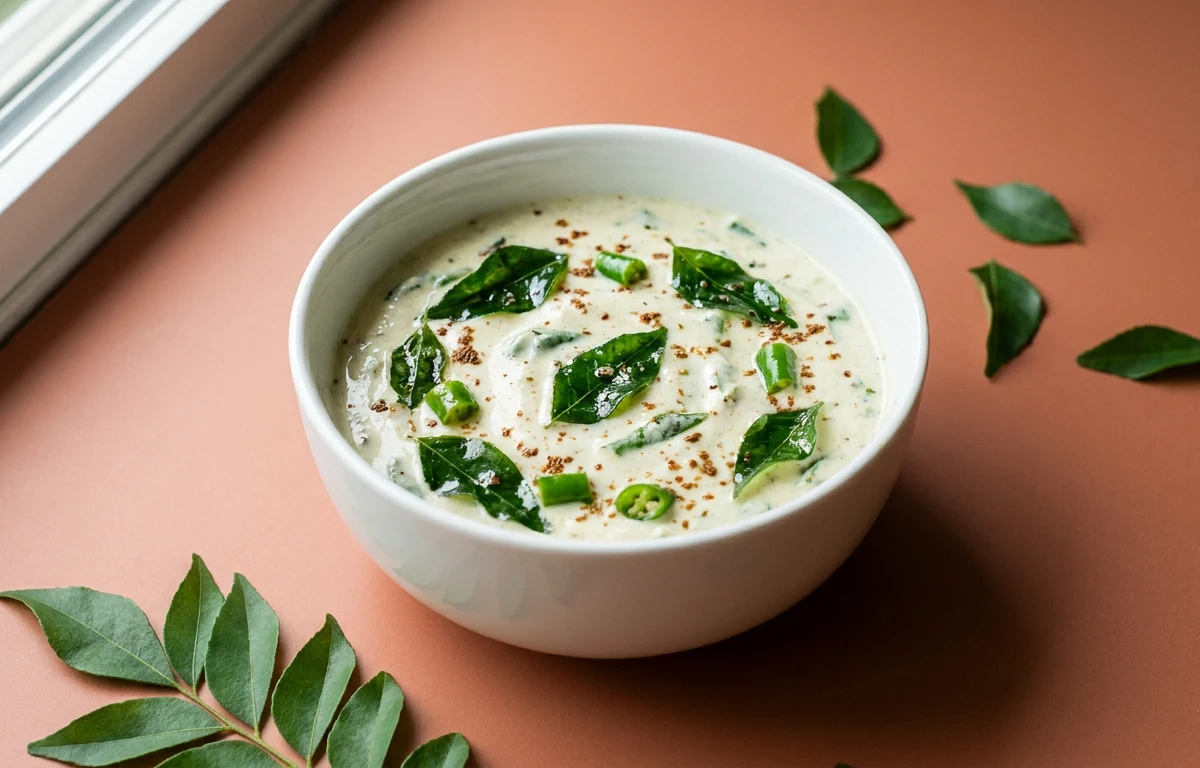
Repeat with remaining batter and serve immediately with coconut chutney and sambar.
What to keep in mind.
6 tips from the recipe — small details that make a real difference to the final dish.
- 1For a perfectly crispy dosa, ensure the tawa is hot enough — a sprinkle of water should sizzle and vanish instantly.
- 2Spread the batter in a thin, even circular motion using the back of a ladle; work quickly as the batter sets fast on the hot surface.
- 3Don't flip the dosa — masala dosa is cooked on only one side to achieve its signature golden-brown color and delicate crunch.
- 4Let the potato filling cool slightly before stuffing the dosa to prevent it from making the crepe soggy.
- 5If your dosas are sticking, wipe the tawa with a halved onion dipped in oil after each dosa to create a natural non-stick surface.
- 6Ferment the batter in a warm place (like an oven with the light on) if your kitchen is cold — proper fermentation gives the dosa its characteristic tang and airy texture.
Adapt it for your goals.
Rava Dosa
Replace the fermented rice-lentil batter with a quick semolina (rava) batter. No fermentation needed — just mix rava, rice flour, all-purpose flour, spices, and water. Perfect for last-minute cravings with a uniquely lacy, extra-crispy texture.
Onion DosaOnion Dosa
Skip the potato filling and sprinkle finely chopped onions, green chilies, and coriander leaves directly onto the dosa while it cooks. A lighter, quicker version that highlights the caramelized sweetness of the onions.
Mysore Masala DosaMysore Masala Dosa
Spread a spicy red chutney (made from dry red chilies, garlic, and tamarind) onto the dosa before adding the potato filling. It adds an extra layer of heat and tang, true to the style of Mysore.
Cheese DosaCheese Dosa
After spreading the batter, sprinkle grated mozzarella or cheddar cheese over the dosa before adding the potato filling. A fusion twist that kids love — the melted cheese adds a creamy richness to the crispy crepe.
Why this is on our healthy list.
Fermented for Gut Health
The natural fermentation of rice and urad dal promotes the growth of beneficial probiotics, aiding digestion and improving gut microbiome diversity.
High in Plant Protein
The combination of rice and urad dal provides a complete protein profile (all essential amino acids), making masala dosa a satisfying plant-based protein source.
Rich in Iron and B-Vitamins
Urad dal (black gram lentils) is a good source of iron and folate, while the whole dish offers B vitamins from both lentils and fenugreek seeds — important for energy metabolism.
Potassium from Potatoes
Potatoes contribute a significant amount of potassium, which supports healthy blood pressure and proper muscle and nerve function.
Frequently asked questions
The most common reasons are insufficiently warm environment, stale urad dal, or too much salt added before fermentation. Keep the batter in a warm spot (30-35°C) and use freshly hulled urad dal — do not add salt until after fermentation.