
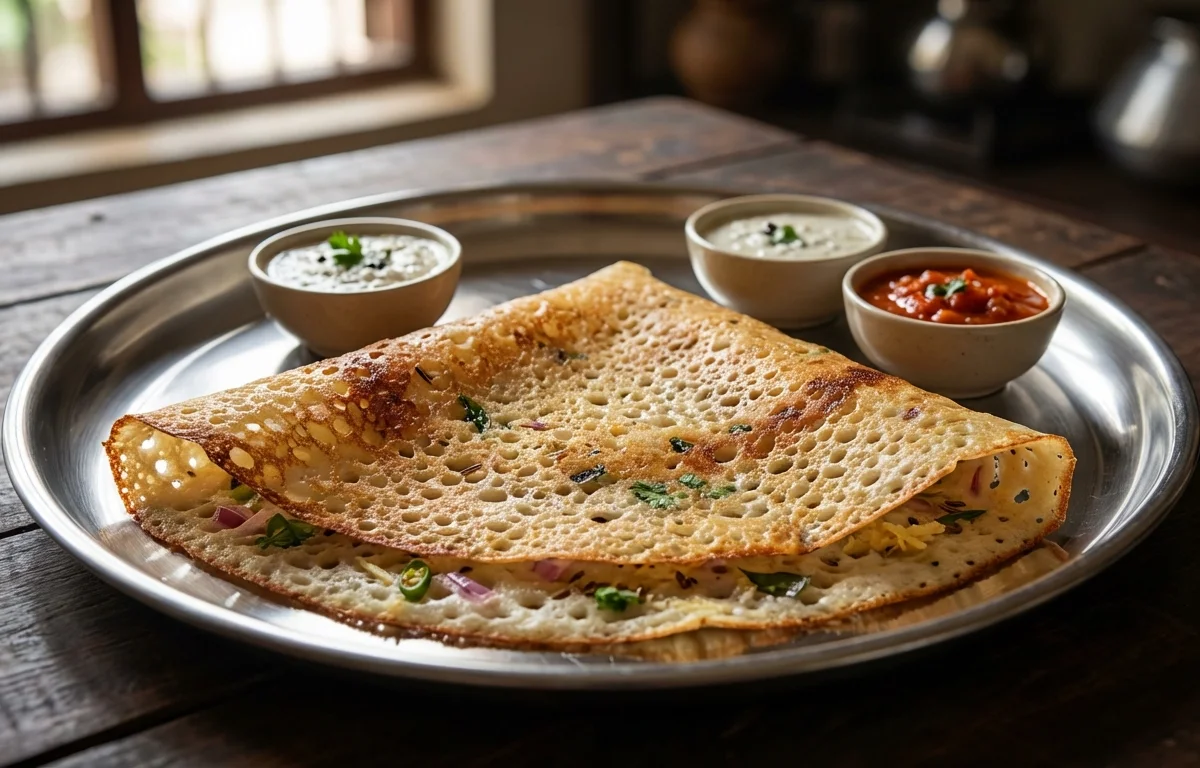
Rava Dosa
Thin, lacy dosas made with semolina, rice flour, and yogurt for a crisp edge and light center. This quick South Indian favorite comes together without fermentation and tastes great with coconut chutney or sambar.
For 4 servings
- mix · ~5 min
Make the batter.
1.Add semolina, rice flour, all-purpose flour, yogurt, salt, and black pepper to a mixing bowl.2.Pour in water gradually and whisk to make a smooth, thin batter with no lumps.3.Stir in onion, green chili, ginger, coriander leaves, curry leaves, and cumin seeds.TIPThe batter should be much thinner than regular dosa batter so it spreads into a lacy dosa. - rest · ~15 min
Rest the batter.
Set the batter aside for 15 minutes so the semolina softens. Stir well before cooking, as the flour settles at the bottom.
- fry · ~3 min
Cook the first dosa.
1.Heat a flat pan over medium heat until hot.2.Stir the batter well and pour it from a little height in a circular motion to form a thin, lacy dosa.3.Drizzle a little oil around the edges and over the top.4.Cook until the bottom turns deep golden and crisp, about 2 to 3 minutes.TIPDo not spread the batter with a ladle; the tiny gaps help create the signature crisp texture. - fry · ~1 min
Flip and finish the dosa.
Loosen the edges, flip gently, and cook the second side for 30 to 45 seconds. Remove when crisp and lightly golden.
- fry · ~10 min
Cook the remaining dosas.
Stir the batter before each dosa and repeat with the remaining batter, adding a little oil each time.
- serve
Serve hot.
What to keep in mind.
7 tips from the recipe — small details that make a real difference to the final dish.
- 1Keep the batter very thin; if it thickens after resting, add a splash of water before the next dosa.
- 2Stir the batter before every pour because the semolina and rice flour settle quickly at the bottom.
- 3Pour from a little height in a circular motion and do not spread with the ladle, or you will lose the signature lace.
- 4Make sure the tawa is properly hot before pouring; on a lukewarm pan the batter clumps instead of forming holes.
- 5Drizzle oil around the edges first, since the thin rim crisps fastest and releases more easily from the pan.
- 6Chop the onion and curry leaves very fine so the dosa stays thin and cooks evenly without tearing.
- 7Serve each dosa as it comes off the pan; rava dosa loses some of its crispness if stacked too long.
Adapt it for your goals.
Gluten-free
Skip the all-purpose flour and replace it with more rice flour or a little additional semolina for a fully gluten-free version.
no onionNo-onion
Leave out the onion for a cleaner, lighter dosa that pairs especially well with coconut chutney.
spicierSpicier
Add extra green chili and a little more black pepper for a sharper heat that stands up well to mild chutneys.
veganVegan
Replace the yogurt with a few teaspoons of lemon juice or a plant-based yogurt to keep a slight tang without dairy.
Why this is on our healthy list.
Lighter No-Ferment Batter
This dosa comes together without long fermentation, and its thin batter cooks into a light, crisp texture rather than a heavy pancake.
Herb and Spice Benefits
Ginger, cumin, curry leaves, coriander, and green chili add aroma along with plant compounds that make the dish feel fresh and lively.
Moderate Dairy Addition
A small amount of yogurt adds tang and some protein while helping round out the flavor of the grain-based batter.
Frequently asked questions
The batter is usually too thick or the pan is not hot enough. Thin it with more water, stir well, and pour from a little height without spreading.


