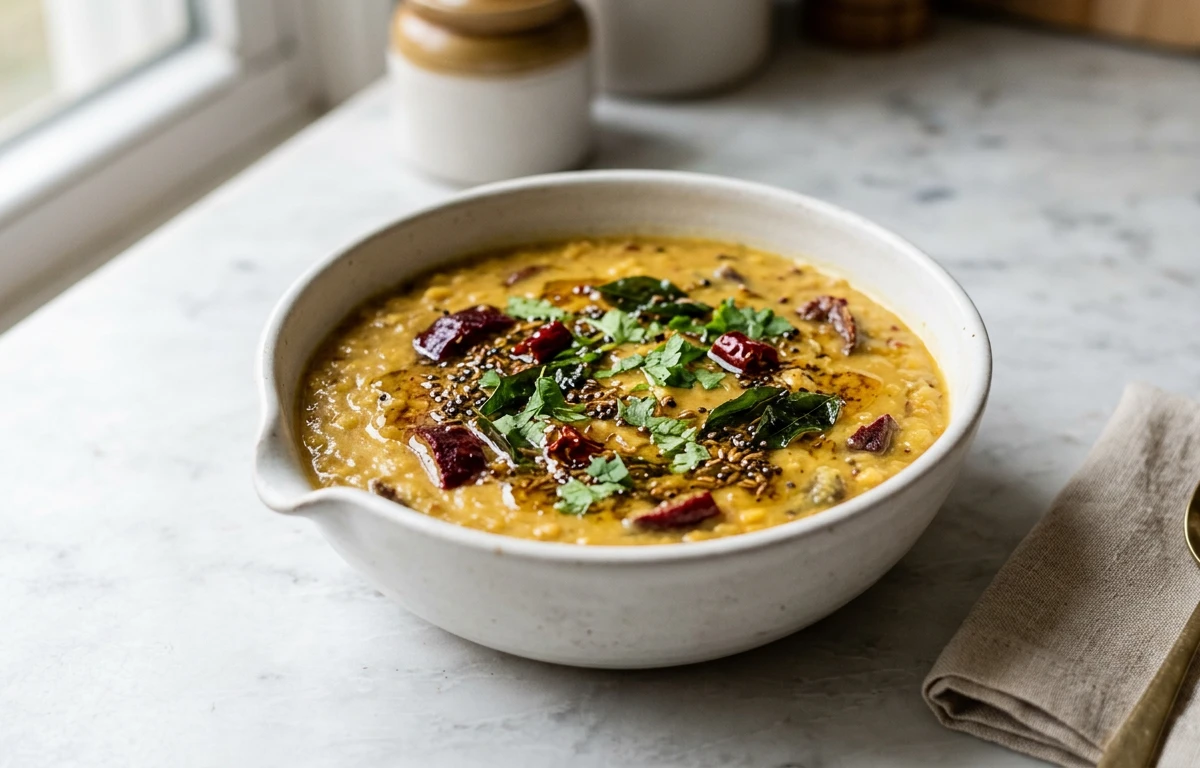
Dal with Kokum
A light, tangy Maharashtrian dal that gets its gentle sourness from kokum petals. The toor dal is pressure-cooked until soft, then finished with a fragrant tempering of mustard seeds, cumin, garlic, and curry leaves. It’s comforting, easy to digest, and pairs beautifully with steamed rice and a drizzle of ghee.
For 4 servings
- prep · ~10 min
Soak the kokum.
Place the dried kokum petals in a small bowl with 2 tablespoons of warm water. Let them soak for 10 minutes while you prepare the dal.
- pressure cook · ~20 min
Pressure cook the dal.
1.Add washed toor dal, 3 cups of water, turmeric powder, and salt to the pressure cooker.2.Close the lid and cook on medium heat for 4 whistles.3.Let the pressure release naturally. Open the lid and whisk the dal until smooth.TIPAdd 1/4 teaspoon of oil to the dal before cooking to prevent foaming. - simmer · ~10 min
Add kokum and adjust consistency.
Pour the whisked dal back into the pressure cooker or a deep pan. Add the soaked kokum along with its soaking water. Stir well and add about 1/2 to 1 cup of additional water to reach a pouring consistency. Bring to a gentle simmer on low heat for 8 to 10 minutes.
TIPKokum's sourness blooms when simmered, so don't rush this step. - temper · ~3 min
Make the tempering.
1.Heat oil in a small tempering pan over medium heat until shimmering.2.Add mustard seeds and let them pop completely.3.Add cumin seeds and let them sizzle for 10 seconds.4.Add crushed garlic, dried red chili, and curry leaves. Sauté until garlic turns golden and fragrant.5.Switch off the heat and stir in the asafoetida. - mix · ~2 min
Combine the tempering with the dal.
Immediately pour the sizzling tempering over the simmering dal. Stir well, add the slit green chilies, and let everything simmer together for 2 more minutes so the flavors meld.
TIPPour the tempering from a slight height for that signature crackle — it releases the aroma instantly. - garnish
Garnish with fresh coriander and a drizzle of ghee.
Turn off the heat. Ladle the dal into serving bowls, top generously with chopped cilantro, and finish with a small drizzle of ghee over each serving.
What to keep in mind.
7 tips from the recipe — small details that make a real difference to the final dish.
- 1Soak the kokum petals for the full 10 minutes to fully hydrate and release their tart flavor.
- 2Whisk the pressure-cooked dal vigorously to break down any lumps for a silky-smooth texture.
- 3Let the mustard seeds pop completely before adding other tempering ingredients to avoid bitterness.
- 4Crush garlic cloves with the skin on to prevent them from burning too quickly in the hot oil.
- 5Add the asafoetida off the heat to preserve its pungent aroma without it turning bitter.
- 6Pour the tempering from a slight height over the dal for an instant burst of fragrance.
- 7This dal thickens as it cools; thin it with hot water when reheating to restore consistency.
Adapt it for your goals.
Vegan
Omit the ghee drizzle and use a neutral oil for the tempering to keep this dal fully plant-based — it remains equally comforting and tangy.
high proteinHigh-protein
Add 1/4 cup of mashed cooked moong dal along with the toor dal for an extra protein boost without altering the tangy kokum flavour.
jainJain
Skip the garlic and onions entirely; the tempering of mustard seeds, cumin, asafoetida, and curry leaves alone creates a deeply aromatic dal suitable for Jain diets.
low oilLow-oil
Reduce oil in the tempering to 1/2 teaspoon and dry-roast the cumin and mustard seeds before adding a splash of water — you still get the aromatic crackle with minimal fat.
spicySpicy
Add a finely chopped green chili along with the garlic in the tempering, or stir in 1/4 teaspoon of red chili powder with the turmeric for an extra layer of heat.
Why this is on our healthy list.
Rich in Plant Protein
Toor dal (split pigeon peas) provides a hearty dose of plant-based protein, supporting muscle repair and keeping you full longer.
Digestive Support from Kokum
Kokum is traditionally used in Indian cuisine to aid digestion and add a tangy flavor without the acidity of tamarind or lemon.
Anti-Inflammatory Turmeric
A pinch of turmeric powder adds curcumin, a compound known for its anti-inflammatory and antioxidant properties.
Gut-Friendly Spices
Asafoetida, cumin, and curry leaves in the tempering are prized in Ayurveda for reducing bloating and enhancing nutrient absorption.
Low in Fat
With only a teaspoon of oil and optional ghee, this dal is a light, low-fat meal base that doesn't compromise on flavor.
Frequently asked questions
Yes, substitute 1 teaspoon of tamarind paste or 1/2 teaspoon of tamarind concentrate for the 4 kokum petals — the sourness profile will be slightly different but still delicious.



.webp)