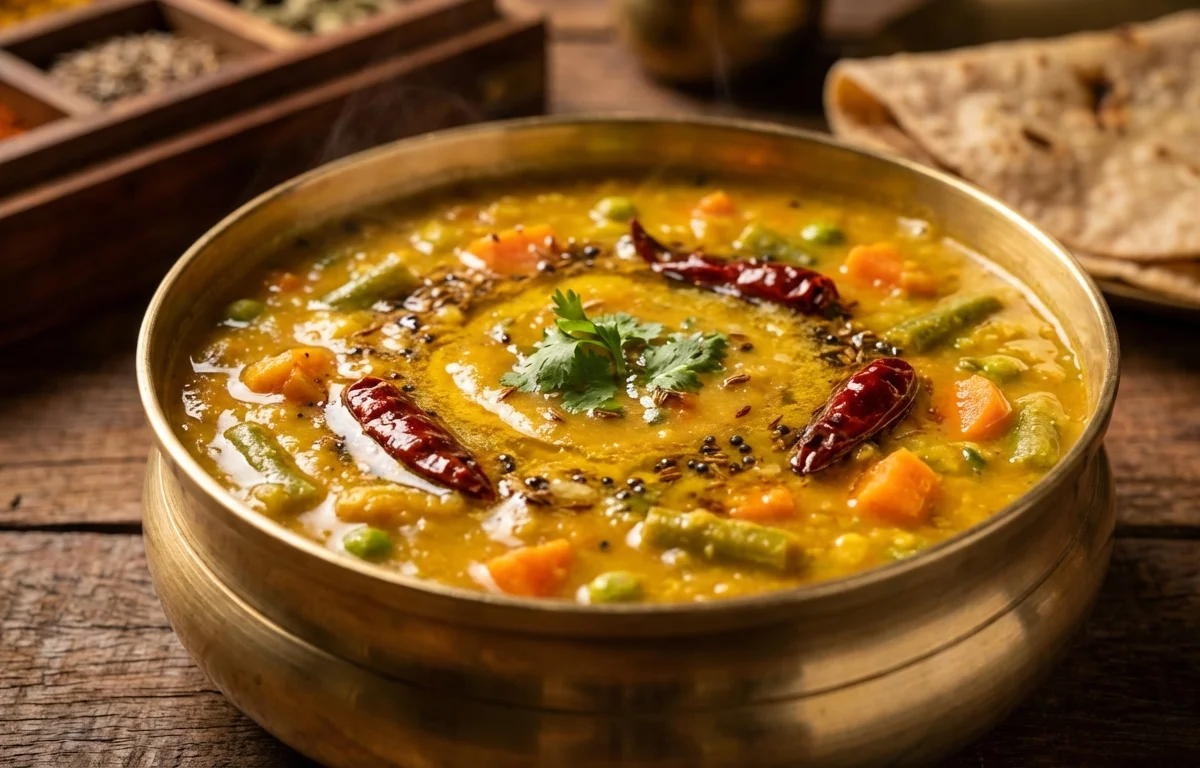
Vegetable Dal
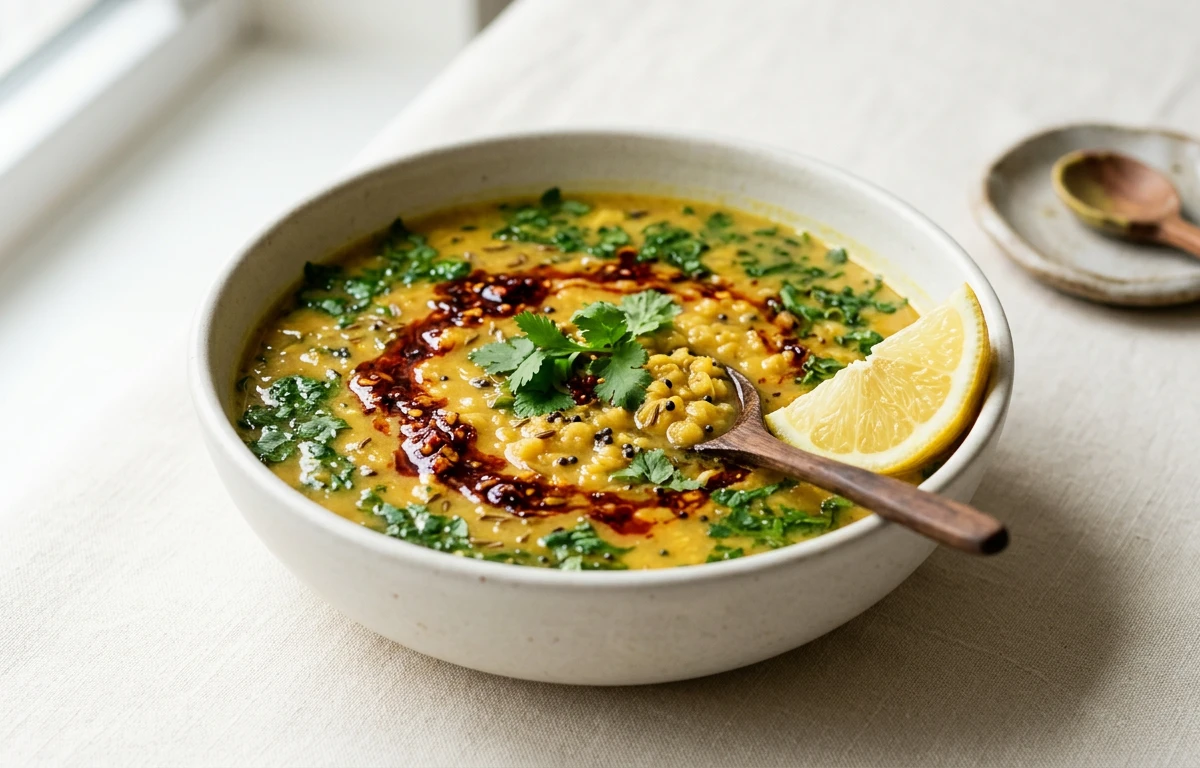
A hearty, comforting bowl of lentils simmered with seasonal vegetables and finished with a fragrant tempering of cumin, garlic, and red chilies. This everyday Indian dal is protein-packed, lightly spiced, and perfect with steamed rice or roti.
For 4 servings
- prep · ~30 min
Soak and prep the lentils.
1.Rinse toor dal and moong dal together in water until clear.2.Soak in fresh water for 30 minutes, then drain.TIPSoaking softens the lentils and helps them cook faster and more evenly. - pressure cook · ~10 min
Pressure cook the lentils.
1.Add drained lentils, 3 cups water, and turmeric powder to the pressure cooker.2.Close lid, cook on medium heat. Wait for one whistle, then lower heat.3.Cook for another 5 minutes. Turn off heat and let pressure release naturally.TIPNatural pressure release prevents the dal from turning pasty; it keeps a nice texture. - temper · ~2 min
Make the tempering.
1.Heat ghee in a deep pan over medium heat until shimmering.2.Add cumin seeds and let them crackle (30 sec).3.Add asafoetida, minced garlic, and dried red chilies. Sauté until garlic is golden (30 sec).TIPDon't let the garlic burn — golden is fragrant and sweet, brown turns bitter. - saute · ~10 min
Sauté the aromatics and vegetables.
1.Add chopped onion and sauté until soft and translucent (3-4 min).2.Add chopped tomato and cook until it breaks down and softens (2-3 min).3.Stir in carrot, green beans, and bottle gourd. Sauté for 3-4 minutes until vegetables start to soften.4.Add coriander powder and stir well to coat the vegetables.TIPA splash of water helps deglaze the pan if the spices start to stick. - simmer · ~10 min
Combine dal and vegetables, then simmer.
1.Pour the cooked dal into the pan with the vegetables. Stir well.2.Add salt and garam masala. Mix thoroughly.3.Bring to a gentle simmer and cook uncovered for 8-10 minutes, stirring occasionally, until dal thickens slightly.TIPAdjust consistency with a little hot water if the dal is too thick — it should flow easily from the ladle. - garnish
Finish with lemon and coriander.
1.Turn off the heat. Stir in lemon juice.2.Garnish generously with chopped coriander leaves. - serve
Serve hot with steamed rice or roti.
What to keep in mind.
6 tips from the recipe — small details that make a real difference to the final dish.
- 1Soak the lentils for 30 minutes to ensure even cooking and a creamy texture.
- 2Let pressure release naturally to prevent the dal from becoming mushy.
- 3Sauté the tempering until garlic is just golden, not browned, to avoid bitterness.
- 4Adjust the dal's consistency with hot water after simmering if it thickens too much.
- 5Stir in lemon juice off heat to preserve its bright, fresh flavor.
- 6Cool leftover dal completely before refrigerating in an airtight container for up to 4 days.
Adapt it for your goals.
Low-oil
Replace ghee with 1 tsp oil in the tempering and skip the sauté step — cook vegetables directly in the dal — for a lighter version with 50% less fat.
high proteinHigh-protein
Add 1/2 cup cubed paneer or 1/4 cup roasted peanuts along with the vegetables to boost the protein content by about 10g per serving.
veganVegan
Swap ghee for any neutral vegetable oil (like coconut or sunflower) in the tempering to make this completely plant-based.
seasonal vegetable swapSeasonal vegetable swap
Substitute bottle gourd with diced zucchini or pumpkin for a summer variation, or with sweet potato for a heartier winter version.
spicierSpicier
Add 1/2 tsp red chili powder or 1 fresh green chili, finely chopped, with the tempering for a noticeable heat boost.
Why this is on our healthy list.
Rich in Plant Protein
The combination of toor dal and moong dal provides a complete amino acid profile, supporting muscle repair and satiety.
High in Dietary Fiber
Both lentils and vegetables (carrots, beans, bottle gourd) deliver soluble and insoluble fiber, aiding digestion and promoting fullness.
Packed with Antioxidants
Turmeric, coriander, and asafoetida are rich in curcumin and other anti-inflammatory compounds that help combat oxidative stress.
Low in Fat with Heart-Healthy Ghee
The small amount of ghee adds butyrate and healthy fats, while the dish remains low in total fat, supporting cardiovascular health.
Frequently asked questions
Yes, simmer the soaked lentils in a heavy-bottomed pot with 4 cups of water for 35–40 minutes, stirring occasionally, until soft and creamy.