Eggless Sponge Cake
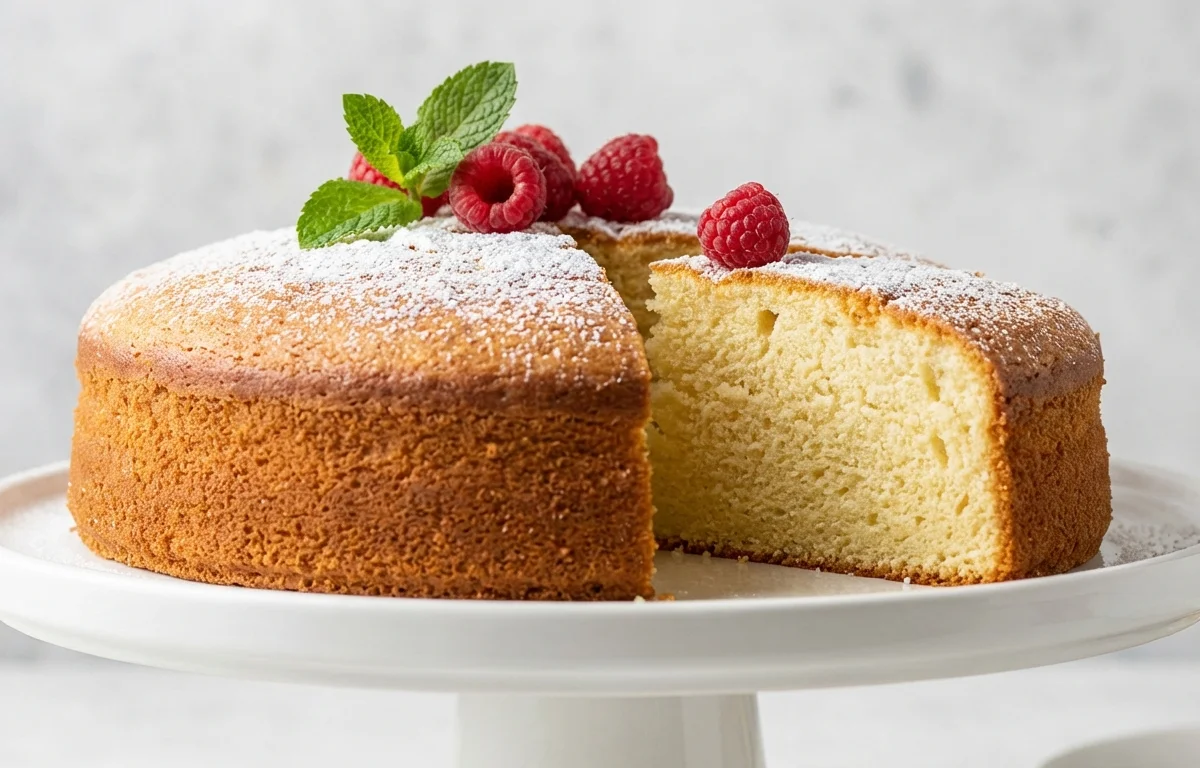
Light, soft, and gently sweet, this eggless sponge cake rises beautifully with yogurt and baking powder. It has a tender crumb that works well for tea time, birthdays, or as a base for simple frosted cakes.
For 8 servings
- prep · ~10 min
Prepare the cake pan and heat the oven.
1.Grease an 8-inch round cake pan with butter.2.Line the base with parchment paper if using.3.Preheat the oven to 180°C for 10 minutes.TIPA fully preheated oven helps the cake rise evenly from the start. - mix · ~4 min
Mix the wet ingredients.
1.Add yogurt and powdered sugar to a mixing bowl.2.Whisk until the sugar looks mostly dissolved and the mixture is smooth.3.Add oil, milk, and vanilla extract.4.Whisk again until well combined. - mix · ~3 min
Fold in the dry ingredients.
1.Sift all-purpose flour, baking powder, baking soda, and salt into the bowl.2.Fold gently with a spatula until no dry streaks remain.3.Stop mixing as soon as the batter looks smooth and slightly thick.TIPDo not overmix the batter or the cake can turn dense instead of light. - assemble · ~1 min
Pour the batter into the pan.
Transfer the batter to the prepared pan and tap the pan lightly on the counter once or twice to release large air bubbles.
- bake · ~35 min
Bake the cake until set and golden.
Bake at 180°C for 30 to 35 minutes, until the top is lightly golden and a skewer inserted in the center comes out clean.
TIPAvoid opening the oven during the first 25 minutes or the cake may sink in the middle. - rest · ~10 min
Cool the cake in the pan.
Let the cake rest in the pan for 10 minutes so it firms up slightly and unmolds without breaking.
- assemble · ~15 min
Unmold and cool completely.
Run a knife around the edges, turn the cake out gently, and cool completely before slicing or frosting.
- serve
Slice and serve the cake.
What to keep in mind.
7 tips from the recipe — small details that make a real difference to the final dish.
- 1Use room-temperature yogurt and milk so the batter emulsifies smoothly and rises evenly in the oven.
- 2Whisk the yogurt and sugar until the sugar looks mostly dissolved; gritty sugar can make the crumb less fine.
- 3After adding the flour, fold just until the batter is smooth—overmixing develops gluten and makes this sponge heavy.
- 4Tap the filled pan only once or twice; too much tapping can knock out the air that helps the cake stay light.
- 5Check doneness at 30 minutes with a skewer in the center; a few moist crumbs are fine, but wet batter means it needs longer.
- 6Cool the cake fully before frosting or slicing, otherwise the tender eggless crumb can tear and steam can make it gummy.
- 7For make-ahead use, wrap the cooled cake tightly and rest it for a few hours; the crumb becomes softer and easier to slice.
Adapt it for your goals.
Vanilla-celebration
Split and frost the cooled cake with whipped cream or buttercream for birthdays; its even, tender crumb makes a reliable layer cake base.
citrusCitrus
Add lemon or orange zest to the wet ingredients for a fresher, brighter tea-time cake without changing the basic texture.
whole wheatWhole-wheat
Replace part of the all-purpose flour with whole wheat flour for a nuttier flavor and slightly heartier crumb.
cupcakeCupcake
Bake the same batter in lined muffin cups for smaller portions that are easier to serve at parties or pack in lunch boxes.
Why this is on our healthy list.
Egg-Free Baking Option
This cake suits people who avoid eggs while still giving a soft, airy texture through yogurt and leavening.
Contains Dairy Protein
Yogurt and milk contribute some protein and also help create a tender crumb without needing eggs.
Lighter Mouthfeel from Oil
Using oil instead of a large amount of butter keeps the sponge moist and soft, especially when served plain with tea.
Frequently asked questions
The most common reasons are overmixing after adding flour, using cold ingredients, or baking in an oven that was not fully preheated.