Haak Saag
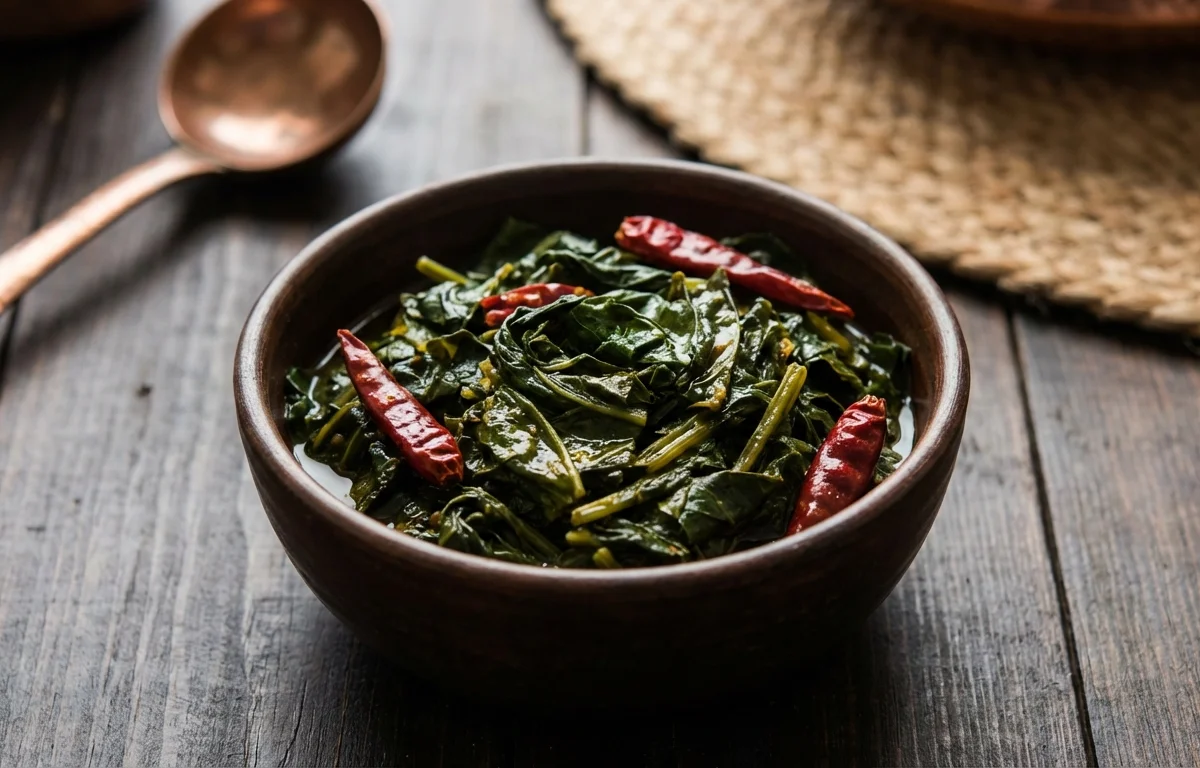
A simple Kashmiri greens dish where tender collard leaves are gently cooked with mustard oil, green chilies, and a touch of asafoetida. Light, earthy, and comforting, it is traditionally served with steamed rice.
For 4 servings
- prep · ~5 min
Prepare the greens.
1.Trim the tough stems from the collard greens.2.Wash the leaves very well to remove any grit.3.Roughly chop the leaves into large pieces. - temper · ~2 min
Heat the mustard oil and add asafoetida.
Warm the mustard oil in a deep pan over medium heat until it reaches a light smoke point, then lower the heat and add the asafoetida.
TIPHeating mustard oil well first softens its sharp raw flavor. - boil · ~2 min
Add the greens, chilies, salt, and water.
1.Add the chopped collard greens to the pan.2.Add the slit green chilies and salt.3.Pour in the water and stir once to settle the greens. - simmer · ~15 min
Cook until the greens turn tender.
Cover and cook on low heat until the collard greens are soft and the liquid reduces but does not dry out completely. Stir once or twice during cooking.
TIPKeep the dish moist; Haak Saag should have a little cooking liquid left at the end. - serve
Serve hot.
Spoon the Haak Saag into bowls and serve hot with steamed rice.
What to keep in mind.
6 tips from the recipe — small details that make a real difference to the final dish.
- 1Wash the collards in several changes of water; any trapped grit will stand out in this simple dish.
- 2Let the mustard oil just reach a light smoke before adding hing to mellow its pungency without burning it.
- 3Keep the collard pieces fairly large so they soften gently without turning mushy.
- 4Do not over-stir while simmering; the greens should stay leafy, not mashed like a puree.
- 5Leave a little cooking liquid at the end; authentic haak is moist and lightly brothy, not dry-fried.
- 6If making ahead, reheat gently with a splash of water so the greens loosen without scorching.
Adapt it for your goals.
Low-spice
Use one slit chili or remove the chilies before serving for a gentler version that keeps the classic mustard-oil flavor.
more traditional haakMore-traditional-haak
Swap collard greens for Kashmiri haak or young mustard greens when available for a more authentic regional taste and texture.
garlic infusedGarlic-infused
Add a lightly crushed garlic clove after the hing for a fuller, homestyle flavor while keeping the dish simple.
spinach mixSpinach-mix
Replace part of the collards with spinach for a softer, quicker-cooking version with a milder green flavor.
Why this is on our healthy list.
Leafy Green Richness
Collard greens bring fiber and a wide range of naturally occurring vitamins and minerals to this minimal dish.
Lightly Cooked and Simple
With very little oil and no heavy cream or frying, this preparation keeps the dish relatively light and clean-tasting.
Plant-Based Comfort Food
This recipe is fully plant-based, making it a satisfying option for vegetarian and vegan meals.
Frequently asked questions
Yes, but reduce the cooking time a lot. Spinach wilts quickly and will give a softer, less textured result than collards.