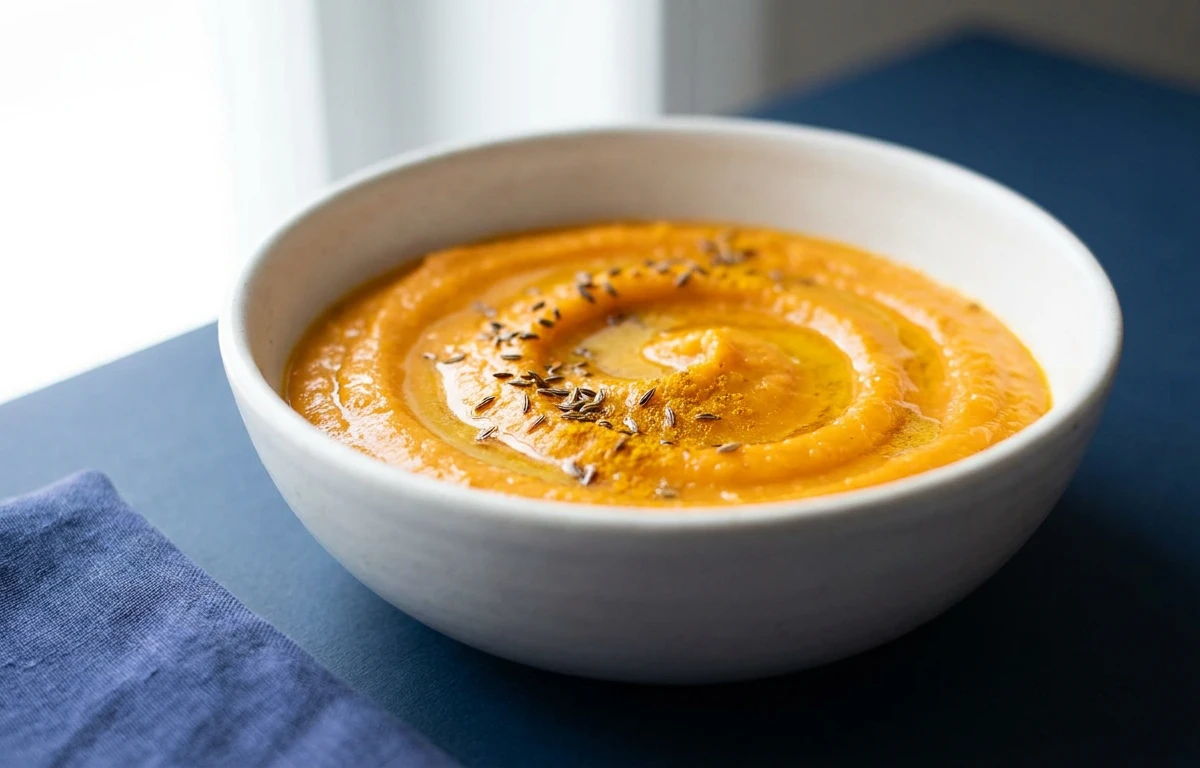
Carrot Puree
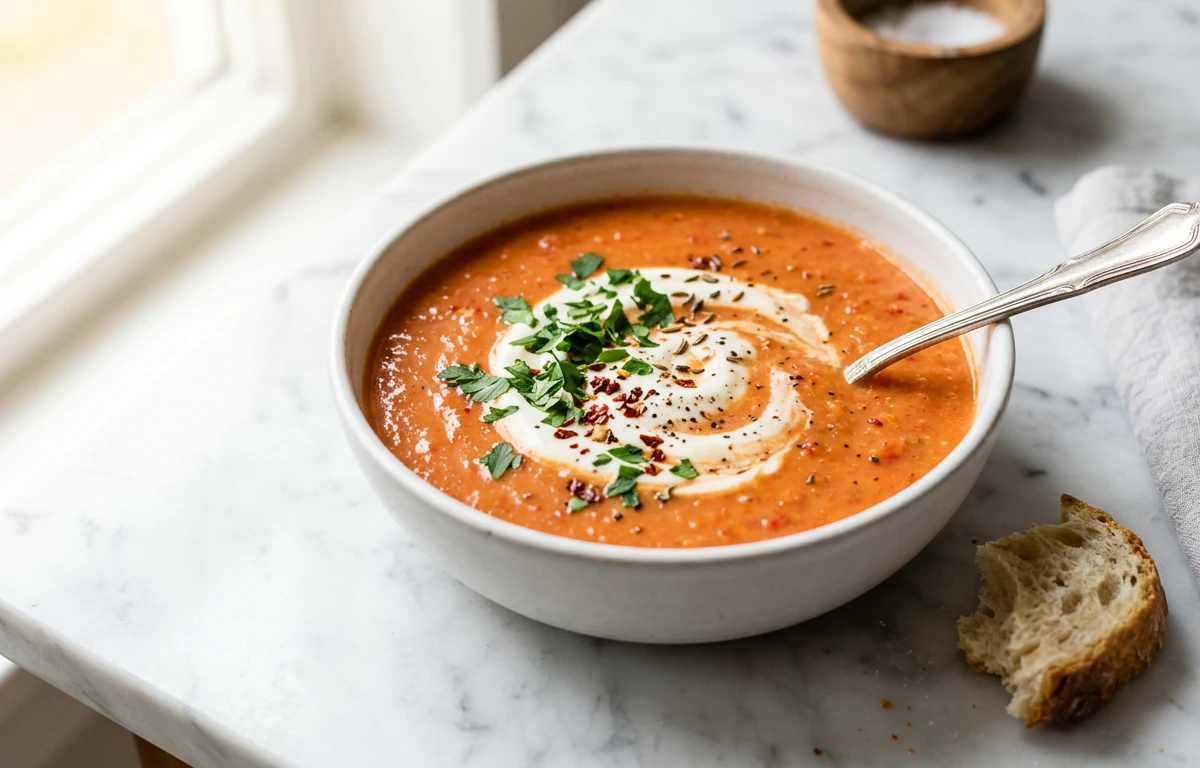
Silky smooth carrot puree with gentle cumin and ginger notes. This simple Indian side dish is lightly sweetened and cooked until velvety, making it perfect with roti, paratha, or as a baby food staple.
For 4 servings
- prep · ~5 min
Prep the carrots.
Peel the carrots and chop them into even rounds about half-inch thick. Even sizing helps them cook uniformly in the pressure cooker.
- pressure cook · ~15 min
Pressure cook the carrots.
Add the chopped carrots and a quarter cup of water to the pressure cooker. Close the lid and cook on medium heat for 3 whistles. Let the pressure release naturally.
TIPLet the pressure drop on its own — opening the cooker early makes the carrots less tender. - mix · ~2 min
Blend into a smooth puree.
Once the carrots are cool enough to handle, drain any excess water and transfer them to a blender. Blend to a smooth, silky puree with no lumps. Add a splash of water only if needed to help blending.
TIPDon't add too much water — the puree thickens as it cooks down in the next step. - temper · ~2 min
Make the tempering.
Heat ghee in a small saucepan over medium heat. Add cumin seeds and let them crackle for 20 seconds. Add grated ginger and sauté until fragrant, about 30 seconds.
TIPKeep the heat medium-low — ginger burns fast and turns bitter. - simmer · ~4 min
Cook the puree with the tempering.
Pour the tempering over the carrot puree in a pan. Add salt and sugar. Stir well and cook on low heat for 3 to 4 minutes until the puree thickens slightly and the flavors meld.
TIPStir continuously to prevent sticking at the bottom. - mix
Finish with lemon juice.
Turn off the heat and stir in the lemon juice. The acidity brightens the natural sweetness of the carrots.
- garnish · ~1 min
Garnish with fresh coriander and serve warm.
Transfer the puree to a serving bowl, scatter chopped coriander leaves on top, and serve warm with roti, paratha, or as part of a thali.
What to keep in mind.
6 tips from the recipe — small details that make a real difference to the final dish.
- 1Cut carrot rounds evenly for consistent pressure cooking and a smoother puree.
- 2Let the pressure release naturally to ensure carrots are fully tender for easy blending.
- 3Drain excess cooked carrot water before blending to avoid a watery puree.
- 4Stir puree continuously during final simmering to prevent sticking and scorching.
- 5Make-ahead: Puree can be refrigerated for 3 days and gently reheated with a splash of water.
- 6For a thicker puree, cook it an extra minute after adding the tempering to reduce moisture.
Adapt it for your goals.
Vegan
Replace ghee with coconut oil or neutral vegetable oil. The coconut oil adds a subtle sweetness that complements carrots, making this side dish fully plant-based.
spiced upSpiced-up
Add 1/4 teaspoon of red chili powder or a pinch of garam masala along with the cumin seeds for a warm, mildly spicy kick that pairs well with parathas.
low sugarLow-sugar
Omit the added sugar entirely — carrots are naturally sweet when pressure-cooked, and the lemon juice at the end will still balance the flavor for a less sweet version.
creamyCreamy
Stir in 2 tablespoons of heavy cream or full-fat yogurt after turning off the heat for an extra-rich, velvety texture that works as a dip or spread.
herb freshHerb-fresh
Swap the coriander garnish for mint leaves or a mix of mint and coriander for a refreshing, cooling contrast to the warm cumin and ginger notes.
Why this is on our healthy list.
Rich in Vitamin A
Carrots are packed with beta-carotene, which the body converts to vitamin A for healthy vision and immune support.
Good Source of Fiber
Whole carrots provide dietary fiber that aids digestion and promotes gut health when consumed as a puree.
Anti-Inflammatory Spices
Ginger and cumin both contain natural anti-inflammatory compounds, supporting overall wellness in this dish.
Low in Calories
This puree uses minimal ghee and sugar, making it a light, nutrient-dense side dish for weight-conscious meals.
Frequently asked questions
Yes, boil the carrot rounds in water until fork-tender (about 10-12 minutes), then drain and blend. The texture may be slightly less silky, but it works well.