
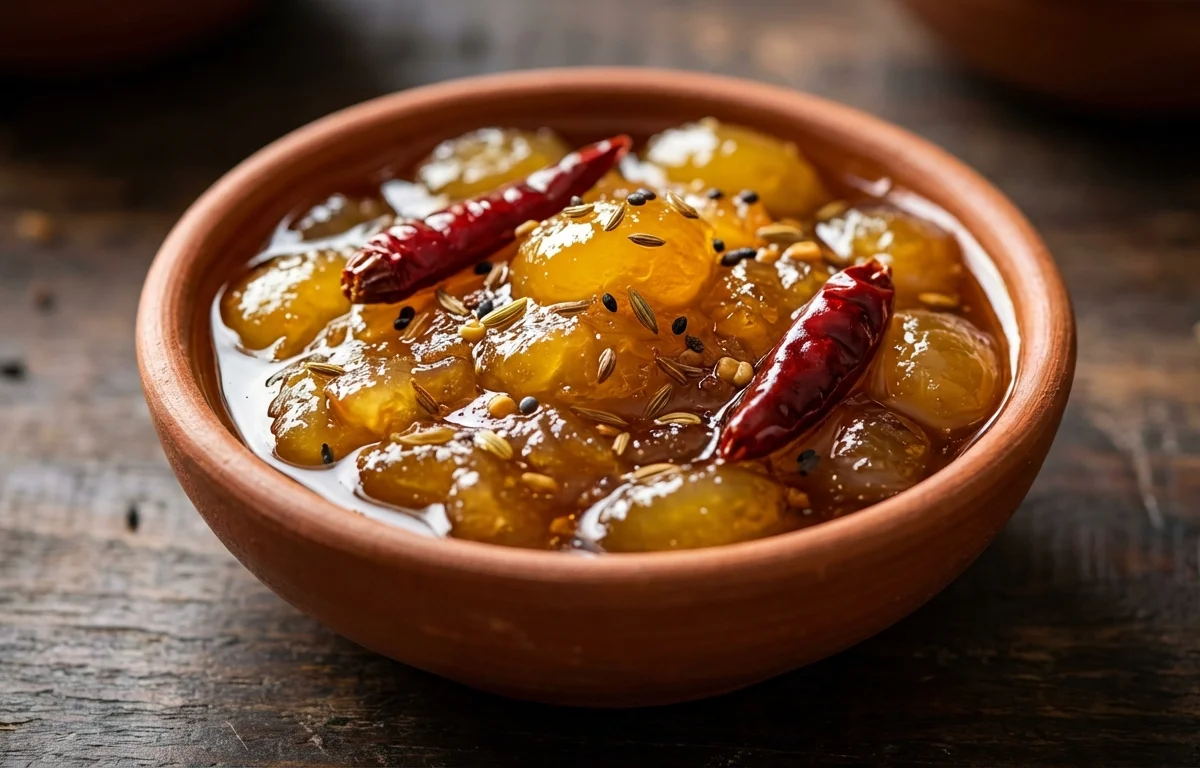
Jolphai Chutney
A tangy, sweet, and mildly spiced Bengali chutney made from jolphai — tender Indian olives — slow-cooked with jaggery and panch phoron. This seasonal winter delicacy delivers a burst of unique astringent flavor cut by sweetness, making it the perfect palate cleanser alongside dal and rice.
For 8 servings
- prep · ~6 min
Parboil the jolphai.
Bring 2 cups of water to a rolling boil. Add the jolphai and cook for 5-6 minutes until the skin softens and starts to split. Drain well and set aside.
TIPDon't overcook — the olives should hold their shape and not turn mushy. - temper · ~2 min
Make the tempering.
1.Heat mustard oil in a pan over medium heat until it reaches its smoking point and turns pale yellow.2.Add dried red chili and panch phoron; let the seeds crackle and turn fragrant (20-30 seconds).3.Sprinkle in the turmeric powder and stir once.TIPLet the mustard oil smoke properly — this removes the raw pungency and brings a mellow nuttiness. - simmer · ~18 min
Cook the chutney with jaggery.
1.Add the parboiled jolphai to the pan and stir to coat with the tempering.2.Sprinkle in the pinch of salt and pour in 0.5 cup water.3.Add the grated jaggery and stir until it dissolves completely.4.Simmer uncovered on low heat for 15-18 minutes, stirring occasionally, until the liquid thickens to a syrupy consistency and coats the olives.TIPStir gently so the jolphai don't break apart. The chutney will thicken further as it cools. - rest · ~10 min
Rest and serve.
Remove from heat and let the chutney cool to room temperature. The flavors deepen as it sits; serve at room temperature alongside steamed rice and dal.
TIPThis chutney tastes even better the next day — make it ahead if you can.
What to keep in mind.
6 tips from the recipe — small details that make a real difference to the final dish.
- 1Parboil the jolphai just until the skins split — they should hold their shape, not turn mushy.
- 2Let mustard oil reach its smoking point to mellow the pungency and develop a nutty aroma.
- 3Stir the chutney gently during simmering to keep the olives intact.
- 4The chutney thickens significantly as it cools, so don't reduce it too much on the stove.
- 5Make this chutney a day ahead; the flavors marry and deepen overnight.
- 6Store in a clean, dry glass jar in the refrigerator for up to two weeks.
Adapt it for your goals.
Spicier
Add 1/4 tsp of red chili powder along with the turmeric for extra heat. Perfect for those who prefer a more fiery chutney.
Ginger lacedGinger-laced
Add 1 tsp of finely grated fresh ginger along with the jaggery for a warm, zesty undertone that complements the olives.
Low sugarLow-sugar
Reduce jaggery to 40 g and add 1 tsp of date syrup or a pinch of stevia for a less sweet version without losing complexity.
Cardamom scentedCardamom-scented
Crush 1 green cardamom pod and add it during simmering for a floral, aromatic twist that echoes Bengali festive sweets.
Why this is on our healthy list.
Rich in Antioxidants
Jolphai (Indian olives) contain natural antioxidants that help fight oxidative stress, similar to Mediterranean olives.
Iron from Jaggery
Unrefined jaggery provides a source of iron, which supports healthy blood cells, especially for those with low iron levels.
Digestive Support
Panch phoron spices like fenugreek and cumin in the blend aid digestion, making this chutney a traditional palate cleanser.
Frequently asked questions
No — jolphai are tender Indian olives with a unique astringent tang. Regular green or black olives will result in a completely different flavor and texture.



-curry.webp)
.webp)