
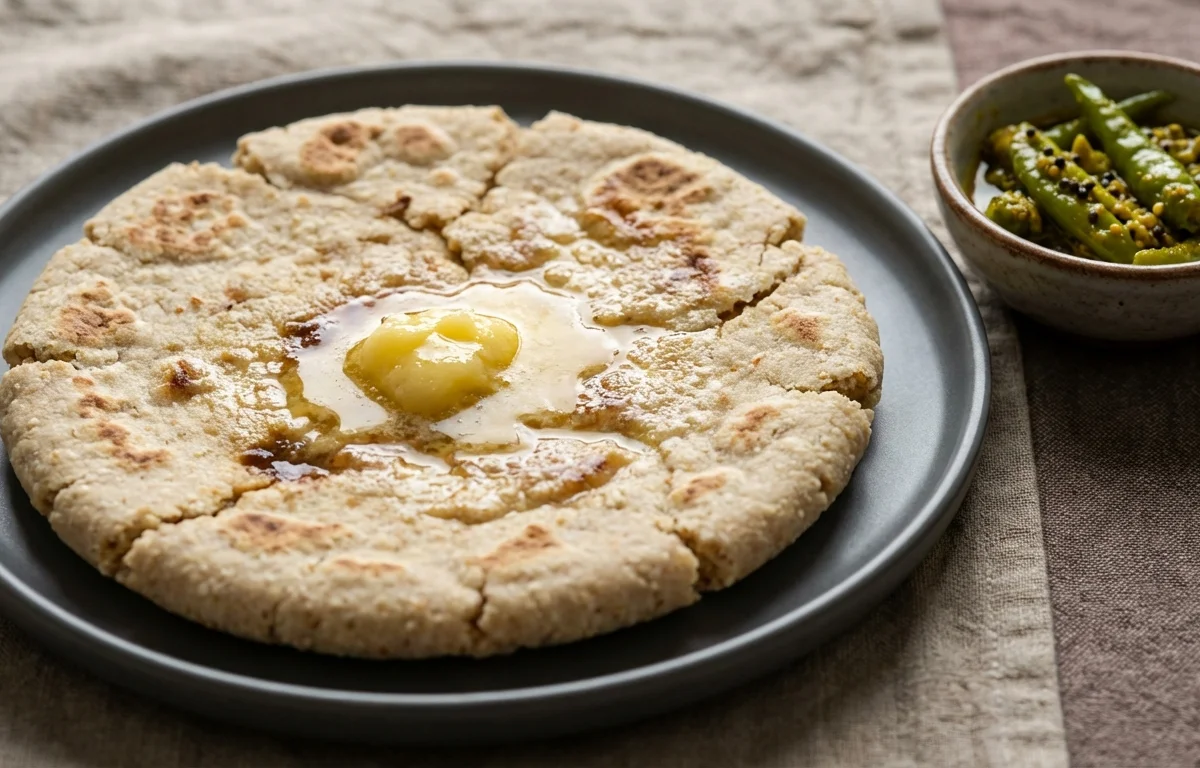
Jowar no Rotlo
A rustic Gujarati flatbread made with jowar flour, warm water, and a little salt. Soft in the center with lightly charred spots outside, this wholesome rotlo is best served hot with ghee, shaak, or jaggery.
For 8 servings
- prep
Warm the water and measure the flour.
Keep the water comfortably hot but not boiling. Add the jowar flour and salt to a wide bowl so you can mix and shape the dough while it is still warm.
- mix · ~3 min
Mix the dough with warm water.
1.Pour most of the warm water into the flour.2.Mix with a spoon or fingertips until the flour looks evenly moistened.3.Add the remaining water little by little until a soft dough starts coming together. - knead · ~4 min
Knead the dough until smooth.
Once cool enough to handle, knead the dough for 3 to 4 minutes until smooth and crack-free. Divide it into 8 equal balls and keep them covered with a cloth so they do not dry out.
TIPJowar dough dries fast, so shape one rotlo at a time and keep the rest covered. - assemble · ~3 min
Pat one dough ball into a rotlo.
1.Place one dough ball on a clean board or your palm.2.Pat it gently with your fingers, turning as you go, until it becomes a medium-thick round.3.Smooth any cracks around the edges with slightly damp fingers.TIPDo not roll it too thin or the rotlo may break while lifting. - fry · ~3 min
Cook the rotlo on a hot tawa.
1.Place the rotlo on a hot tawa over medium heat.2.Cook until the surface changes color and small spots appear, about 1 minute.3.Flip and cook the second side for 1 to 2 minutes, pressing lightly with a cloth or spatula. - other · ~1 min
Puff the rotlo and finish cooking.
Lift the rotlo with tongs and cook it directly over an open flame for a few seconds on each side until it puffs in places and gets light charred spots. If you do not have a flame, keep pressing it gently on the tawa until cooked through.
TIPCook on medium heat so the center cooks through before the outside hardens. - garnish
Brush with ghee.
Brush the hot rotlo lightly with ghee. Repeat shaping and cooking the remaining dough balls the same way.
- serve
Serve the rotlo hot.
Serve hot while still soft, with Gujarati shaak, yogurt, jaggery, or a little extra ghee.
What to keep in mind.
7 tips from the recipe — small details that make a real difference to the final dish.
- 1Use comfortably hot water to bind the dough; cold water makes jowar dough crumbly and harder to pat.
- 2Knead while the dough is still warm enough to handle, pressing firmly until the surface looks smooth and crack-free.
- 3Keep the divided dough balls covered with a cloth at all times, because jowar dough dries out very quickly.
- 4Pat the rotlo to an even medium thickness; thin edges will dry and crack before the center cooks through.
- 5Smooth edge cracks with slightly damp fingers before lifting, so the rotlo does not split on the tawa.
- 6Cook on medium heat and wait for the first side to change color before flipping, which helps the center set properly.
- 7Brush ghee immediately after cooking while the rotlo is hot, so it stays softer and more aromatic.
Adapt it for your goals.
Vegan
Skip the ghee or brush with peanut oil for a fully plant-based rotlo that still stays soft when served hot.
no open flameNo-open-flame
If you do not have a gas flame, finish by pressing gently on the tawa until cooked through; useful for induction or electric stoves.
makhan styleMakhan-style
Top the hot rotlo with white butter instead of ghee for a richer, more indulgent village-style finish.
methi jowarMethi-jowar
Add finely chopped fresh methi to the dough for a more savory rotlo with extra aroma and a slightly earthy bite.
Why this is on our healthy list.
Naturally Gluten-Free
Made with jowar flour instead of wheat, this rotlo is a traditional gluten-free flatbread option.
Whole Grain Goodness
Jowar is a whole grain, so this rotlo offers more natural grain character and fiber than refined-flour breads.
Simple Ingredient Recipe
With just jowar, water, salt, and a little ghee, this dish is minimally processed and straightforward.
Frequently asked questions
The dough is usually too dry or has cooled too much. Add a little warm water, knead again, and smooth the edges with damp fingers.



.webp)
.webp)
.webp)