
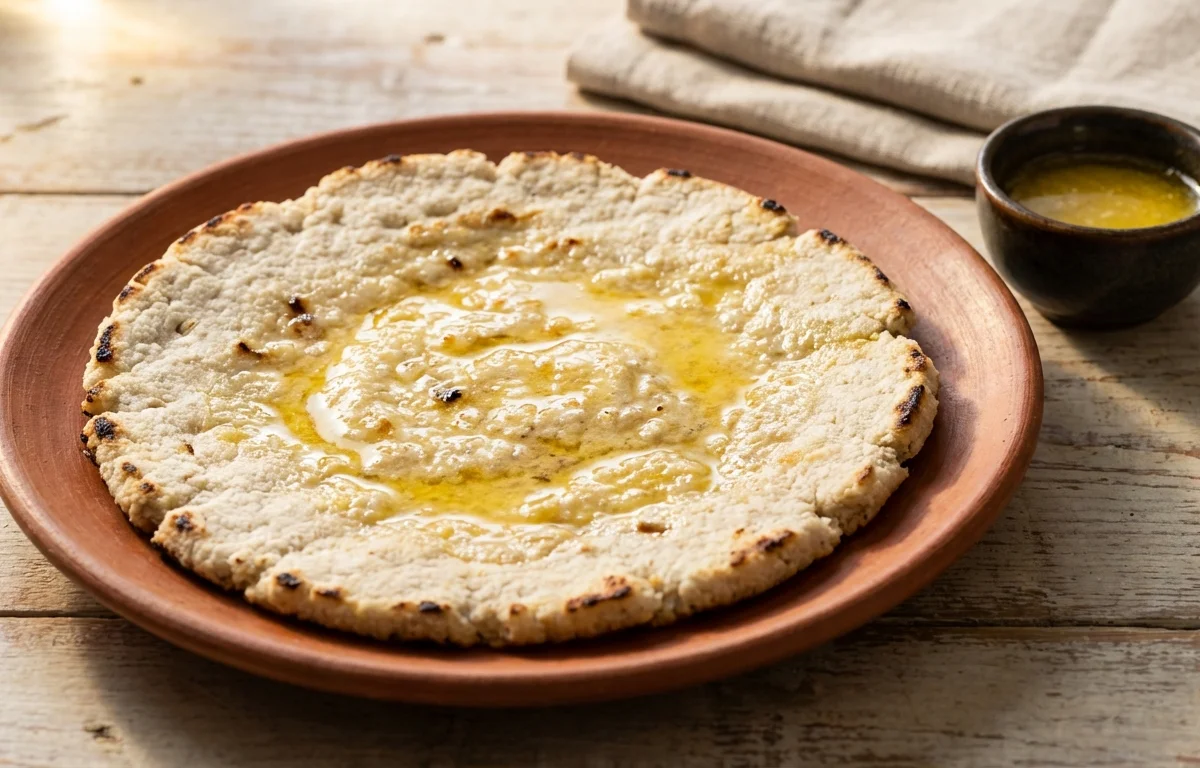
Jowar Rotla
A rustic Gujarati flatbread made with jowar flour, warm water, and a little salt. Pat it gently by hand and cook until lightly spotted and soft, perfect with shaak, yogurt, or a dab of ghee.
For 4 servings
- prep
Warm the water and measure the ingredients.
Keep the water comfortably hot but not boiling. Measure the jowar flour, salt, water, and ghee before you start so the dough can be handled while still warm.
- knead · ~6 min
Make the dough.
1.Add the jowar flour and salt to a wide bowl.2.Pour in most of the warm water a little at a time and mix with a spoon or fingertips.3.When cool enough to handle, gather into a dough and knead gently until smooth and soft.4.Add the remaining water only if needed to make a pliable dough that holds together without cracks.TIPJowar dough dries quickly, so work while it is still warm for easier shaping. - rest · ~10 min
Cover and rest the dough.
Cover the dough with a plate or cloth and let it rest for 10 minutes. This helps the flour hydrate and makes the rotla easier to pat.
- prep · ~8 min
Divide and shape the rotla.
1.Divide the dough into 4 equal portions and roll each into a smooth ball.2.Place one ball between your palms and flatten it slightly.3.Pat it gently on a clean surface or parchment, pressing outward to form a thick flatbread about 5 to 6 inches wide.4.Smooth any edge cracks with damp fingers.TIPIf the dough sticks, lightly moisten your hands instead of dusting with extra flour. - fry · ~2 min
Cook the first side on a hot tawa.
Heat a tawa over medium heat. Place one rotla on the hot surface and cook until the top starts to change color and the base gets light brown spots.
- fry · ~2 min
Flip and finish cooking the rotla.
1.Flip the rotla and cook the second side until spotted and set.2.Brush lightly with a little ghee.3.Flip once more and press the edges gently with a cloth or spatula so it cooks evenly.TIPKeep the heat medium; very high heat leaves the center undercooked while the outside darkens too fast. - serve
Cook the remaining rotla and serve hot.
Repeat with the remaining dough portions. Stack the cooked rotla in a cloth-lined container to keep them soft, then serve warm.
What to keep in mind.
7 tips from the recipe — small details that make a real difference to the final dish.
- 1Use comfortably hot water and knead while the dough is still warm; jowar binds much better before it cools.
- 2Keep the dough covered between rotla so the surface does not dry out and crack while shaping.
- 3Moisten your palms or fingertips lightly when patting; extra dry flour can make the rotla tough and dusty.
- 4If cracks form around the edges, press them together with damp fingers before lifting the rotla to the tawa.
- 5Cook on medium heat only; the right cue is light brown spots with a set center, not deep dark patches.
- 6Store cooked rotla in a cloth-lined container and stack them as they come off the tawa to help retain softness.
- 7Brush ghee after the second side sets, so it absorbs into the hot bread instead of burning on the pan.
Adapt it for your goals.
Vegan
Skip the ghee and brush with a little neutral oil, or serve plain, for a fully plant-based rotla.
low oilLow-oil
Cook the rotla dry on the tawa and leave off the final brushing for a lighter everyday version.
masalaMasala
Add a little ajwain, crushed cumin, or finely chopped green chili to the dough for more aroma and a spiced profile.
makai mixMakai-mix
Replace part of the jowar flour with makai flour for a slightly sweeter, more rustic texture.
Why this is on our healthy list.
Naturally Gluten-Free Grain
Jowar is naturally gluten-free, making this flatbread a good option for those avoiding wheat-based rotis.
Whole-Grain Fiber Support
Because the rotla is built mainly from jowar flour, it offers whole-grain fiber that can help with satiety and digestion.
Simple, Minimal Ingredients
This recipe uses just jowar, water, salt, and a little ghee, keeping the dish straightforward and less heavily processed.
Frequently asked questions
Usually the dough is too dry or too cool. Add a little warm water, knead again, and shape while the dough is still warm.



.webp)
.webp)
.webp)