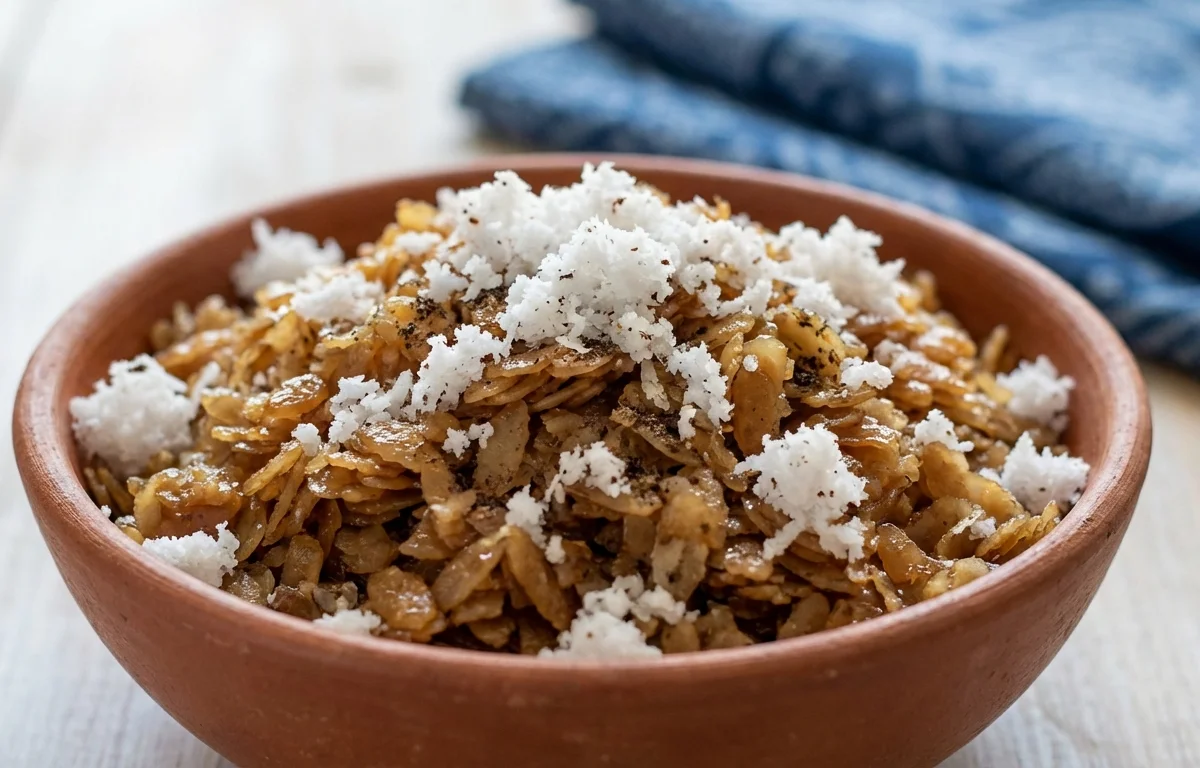
Kalayile Phovu
A simple Goan-style poha breakfast made with flattened rice, onions, green chili, and fresh coconut. It cooks quickly, stays light on the stomach, and tastes best with a squeeze of lime and fresh coriander.
For 4 servings
- prep · ~3 min
Rinse the poha.
Place the poha in a colander, rinse quickly under running water, and let it drain for a few minutes until soft but separate. Fluff it gently with your fingers.
TIPDo not soak the poha in water or it will turn mushy. - temper · ~2 min
Make the tempering.
1.Heat oil in a pan over medium heat.2.Add mustard seeds and let them splutter.3.Add urad dal and cook until lightly golden.4.Add curry leaves and green chili and fry for a few seconds. - saute · ~4 min
Cook the onion.
Add the chopped onion and sauté until soft and lightly translucent. Stir in the turmeric powder and mix well.
- mix · ~3 min
Add the poha and seasonings.
1.Add the drained poha to the pan and toss gently.2.Add salt and sugar and mix without breaking the flakes.3.Sprinkle in most of the grated coconut and combine well.TIPUse a light hand while mixing so the poha stays fluffy. - other · ~2 min
Warm through briefly.
Cook for 1 to 2 minutes on low heat, just until everything is heated through. Turn off the heat and add lime juice.
- garnish · ~1 min
Garnish with coconut and coriander.
Top with the remaining grated coconut and chopped coriander leaves.
- serve
Serve hot.
What to keep in mind.
7 tips from the recipe — small details that make a real difference to the final dish.
- 1Rinse the thick poha very quickly, then rest it in the colander so the flakes soften without turning pasty.
- 2Wait for the mustard seeds to fully splutter before adding urad dal; this gives the tempering its proper nutty aroma.
- 3Cook the onions only until translucent, not browned, so the poha keeps its light Goan breakfast character.
- 4Mix the poha with a flat spatula or your fingertips to keep the flakes separate and fluffy.
- 5Add the lime juice only after switching off the heat so its fresh acidity stays bright.
- 6Reserve some coconut for the final garnish; the contrast between warmed poha and fresh coconut is key to this dish.
- 7Kalayile Phovu is best eaten right away, but if reheating, sprinkle a little water first to soften the poha gently.
Adapt it for your goals.
Peanut-crunch
Add a small handful of roasted peanuts with the poha for extra crunch and a more filling breakfast.
jainJain
Skip the onion and increase coconut and coriander slightly for a no-onion version that still tastes fresh and light.
vegetable loadedVegetable-loaded
Add finely chopped carrots or green peas after the onions for more color and a slightly heartier morning dish.
low spiceLow-spice
Use one mild green chili or remove the seeds to keep the tempering aromatic without too much heat.
Why this is on our healthy list.
Light Breakfast Option
Poha cooks quickly and feels easy on the stomach, making this a gentle, satisfying morning meal.
Includes Healthy Plant Fats
Fresh coconut adds richness and helps make the dish more satisfying without relying on heavy sauces.
Digestive Aromatics
Curry leaves, green chili, onion, and lime bring flavor while keeping the dish lively and not overly rich.
Frequently asked questions
It was likely soaked too long or mixed too hard. For this recipe, rinse quickly, drain well, and toss gently.