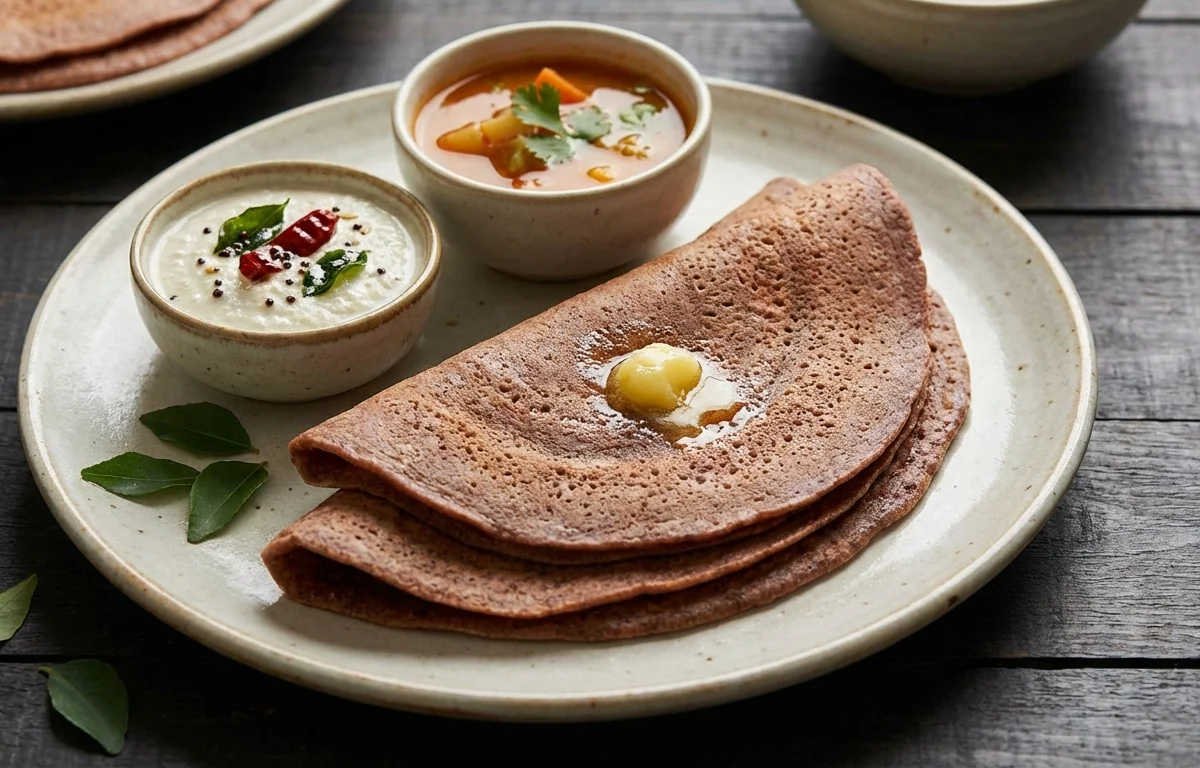
Kambu Dosa
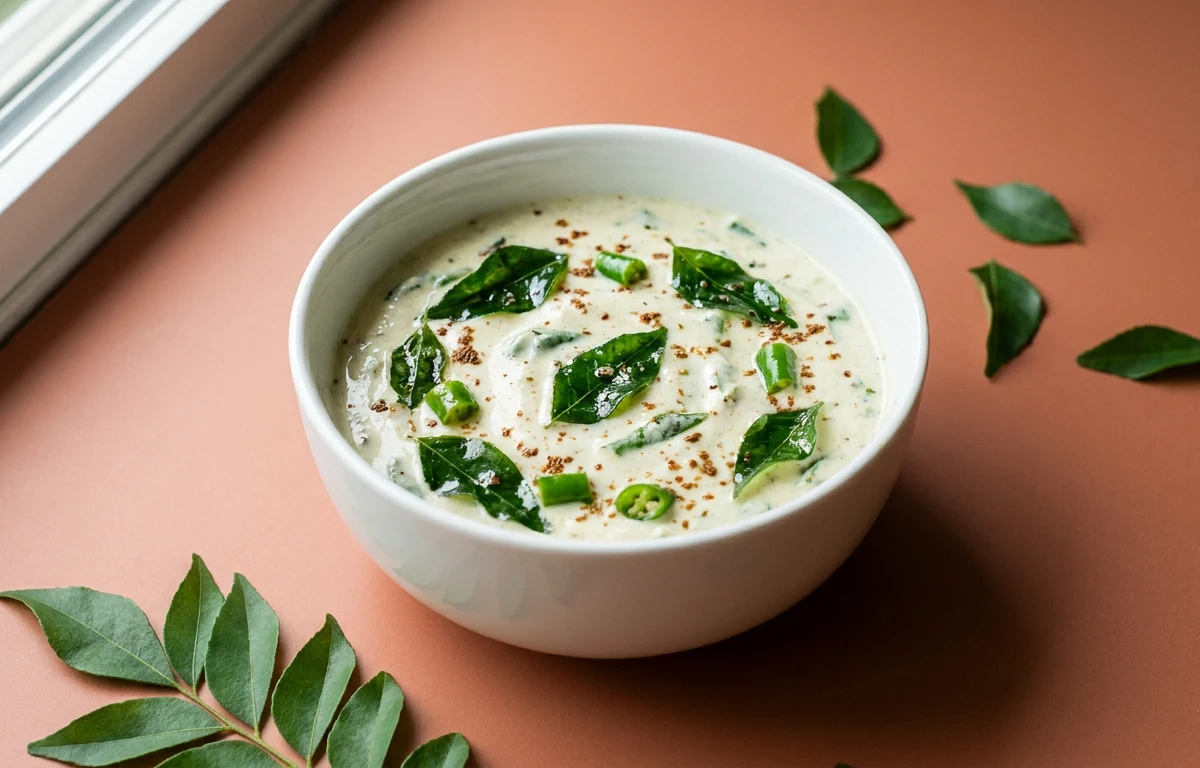
Thin, crisp pearl millet dosas with a mild earthy flavor and gentle tang from fermentation. This wholesome South Indian staple cooks up beautifully golden and pairs especially well with coconut chutney or sambar.
For 8 servings
- prep · ~360 min
Rinse and soak the grains and dal.
1.Rinse kambu and idli rice together 2 to 3 times until the water runs clearer.2.Rinse urad dal and fenugreek seeds together in a separate bowl.3.Soak both bowls with enough water for 6 hours.TIPSoaking them separately helps the batter grind smoother and ferment better. - mix · ~20 min
Grind the batter.
1.Drain the urad dal and fenugreek seeds, then grind with a little water to a light, smooth batter.2.Drain the kambu and rice, then grind with enough water to a slightly grainy but pourable batter.3.Combine both batters in a large bowl and mix well by hand for 1 to 2 minutes. - rest · ~480 min
Ferment the batter.
Cover the bowl loosely and leave the batter in a warm place for about 8 hours, or until it looks slightly risen and airy.
TIPDo not fill the bowl to the top; the batter needs room to rise. - mix · ~2 min
Season and thin the batter.
Add salt and mix gently. Add a little water if needed to get a thin dosa batter that spreads easily on the pan.
- fry · ~15 min
Cook the dosas.
1.Heat a dosa tawa over medium heat until hot.2.Pour a ladle of batter in the center and spread it outward in a thin circle.3.Drizzle a little oil around the edges and cook until the bottom turns golden and crisp.4.Flip and cook the second side for 30 to 45 seconds.TIPIf the batter sticks, lower the heat slightly and wipe the tawa lightly before the next dosa. - serve
Serve the kambu dosa hot.
What to keep in mind.
6 tips from the recipe — small details that make a real difference to the final dish.
- 1Mixing the combined batter by hand helps kick-start fermentation and gives a lighter dosa.
- 2After fermentation, stir gently; overmixing knocks out the trapped air that helps crispness.
- 3Aim for a thin, easily spreadable batter, since kambu batter thickens quickly as it rests.
- 4If the tawa is too hot, the batter will clump and refuse to spread; splash a little water to bring the heat down.
- 5For extra-crisp edges, drizzle oil only around the rim after spreading, not before pouring the batter.
- 6Fermented batter keeps well in the refrigerator for 2 to 3 days; thin slightly with water before using again.
Adapt it for your goals.
Instant-style
Use leftover fermented dosa batter as a starter when grinding to shorten fermentation time and add a deeper tang.
onion kambu dosaOnion-kambu-dosa
Sprinkle finely chopped onion, green chilli, and curry leaves over the spread batter for a more flavorful breakfast dosa.
low oilLow-oil
Cook on a well-seasoned cast-iron or nonstick tawa with minimal oil; you still get crisp dosas with less grease.
softer uttapam styleSofter-uttapam-style
Keep the batter slightly thicker and spread less for softer, thicker dosas that pair well with sambar.
Why this is on our healthy list.
Whole Millet Goodness
Pearl millet brings whole-grain character and more sustained energy than a fully rice-based dosa.
Plant Protein Support
Urad dal adds plant protein and makes the dosa more satisfying while also helping the batter ferment well.
Fermented and Easier to Digest
The fermented batter can be gentler on digestion and develops a pleasant natural tang without extra additives.
Frequently asked questions
Fermentation slows in cool weather. Keep the batter in a warm spot, use a roomy bowl, and avoid adding salt before fermenting.