
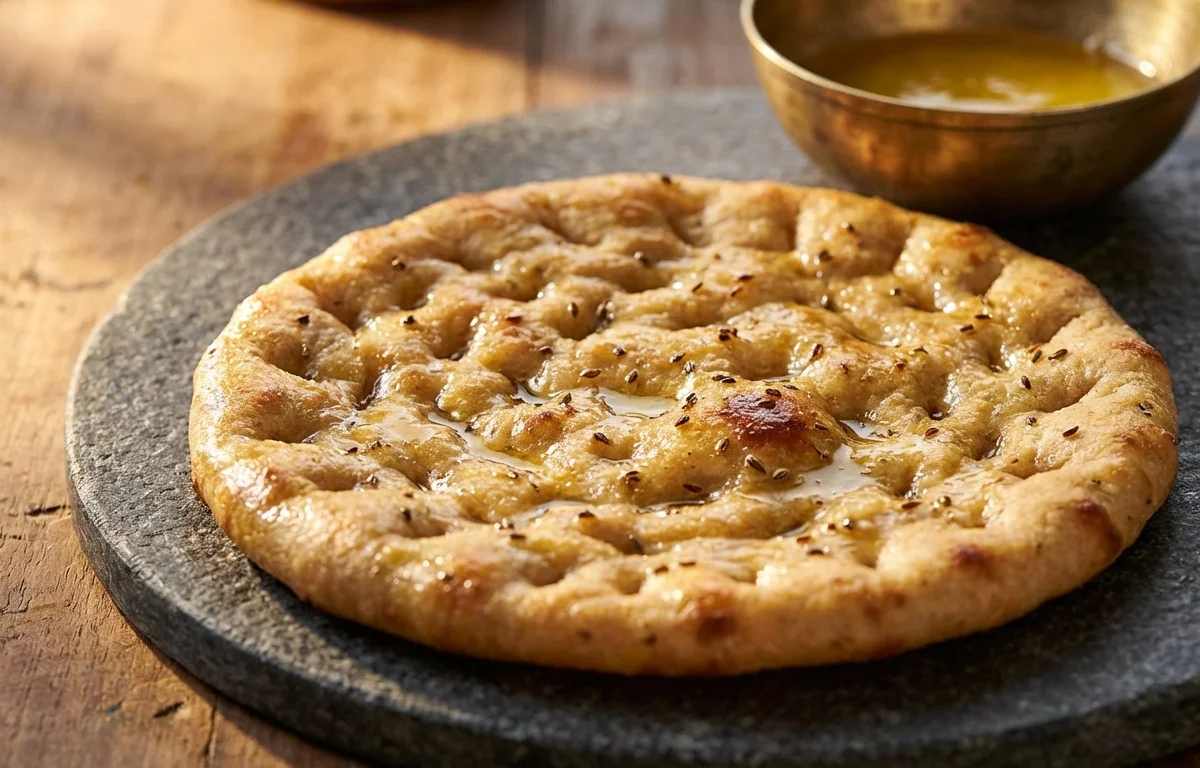
Khoba Roti
A thick Rajasthani whole wheat roti shaped by pinching the surface into a beautiful pattern, then cooked slowly with ghee until crisp outside and tender inside. It is hearty, rustic, and made to be enjoyed with dal or gatte ki sabzi.
For 4 servings
- knead · ~8 min
Knead the dough.
1.Add whole wheat flour and salt to a wide bowl and mix well.2.Rub 1 tbsp ghee into the flour until it feels slightly sandy.3.Add lukewarm water little by little and knead into a firm, smooth dough.4.Knead for 5 to 6 minutes so the dough becomes tight and even.TIPKeep the dough firmer than regular chapati dough so the roti holds its thick shape. - rest · ~15 min
Cover and rest the dough.
Cover the dough with a plate or damp cloth and let it rest for 15 minutes. This helps the flour hydrate and makes shaping easier.
- prep · ~10 min
Shape the khoba rotis.
1.Divide the dough into 4 equal balls.2.Flatten one ball into a thick disc about 4 to 5 inches wide.3.Use your thumb and forefinger to pinch the surface all over and create the traditional khoba pattern.4.Repeat with the remaining dough balls.TIPDo not make the discs thin; khoba roti is meant to be thick and rustic. - roast · ~8 min
Cook the rotis on low heat.
1.Heat a tawa or heavy pan over low to medium-low heat.2.Place one shaped roti on the hot pan and cook until the bottom gets light golden spots, about 3 to 4 minutes.3.Flip and cook the second side for another 3 to 4 minutes.4.Press gently around the edges so the thick roti cooks evenly.TIPLow heat is key here; high heat browns the outside before the center cooks through. - fry · ~10 min
Brush with ghee and finish cooking.
1.Brush a little ghee on both sides of the roti.2.Flip again and cook each side until deep golden with crisp spots, about 1 to 2 minutes per side.3.Remove the roti and cook the remaining rotis the same way. - serve
Serve hot with more ghee if desired.
What to keep in mind.
7 tips from the recipe — small details that make a real difference to the final dish.
- 1Keep the dough firmer than chapati dough so the thick rotis hold the khoba pattern while cooking.
- 2Resting is important here; the brief rest lets the whole wheat absorb water so pinching the surface is easier.
- 3Make the disc an even thickness, or the center will stay doughy while the edges turn too dark.
- 4Pinch deeply enough to create ridges, but do not tear through the dough or the roti can dry out.
- 5Cook on a heavy tawa over low heat; this roti needs slow roasting so the inside cooks before the crust crisps.
- 6Press around the edges after flipping because the thicker rim often cooks slower than the middle.
- 7Khoba roti is best served hot, but you can half-cook it first and finish with ghee just before serving.
Adapt it for your goals.
Low-ghee
Use less ghee in the finish and dry-roast a bit longer for a lighter version that still keeps the rustic texture.
ajwainAjwain
Add a small pinch of ajwain to the dough for a more aromatic roti that pairs especially well with dal.
multi grainMulti-grain
Replace part of the whole wheat flour with barley or millet flour for a more earthy, traditional Rajasthani-style variation.
stuffed gheeStuffed-ghee
Spread a little extra ghee inside before shaping thicker discs for a richer, more festive version.
Why this is on our healthy list.
Whole Grain Goodness
Made with whole wheat flour, this roti offers the bran and germ that make it more sustaining than refined flatbreads.
Simple Ingredient Dish
With just wheat flour, water, salt, and ghee, this recipe avoids highly processed ingredients and keeps the food straightforward.
Satisfying with Dal
Served with dal or gatte ki sabzi, khoba roti becomes part of a balanced, filling meal with grains and protein-rich accompaniments.
Frequently asked questions
A firmer dough helps the roti stay thick and rustic, and it keeps the pinched khoba design from flattening out on the tawa.



.webp)
.webp)
.webp)