Khotto
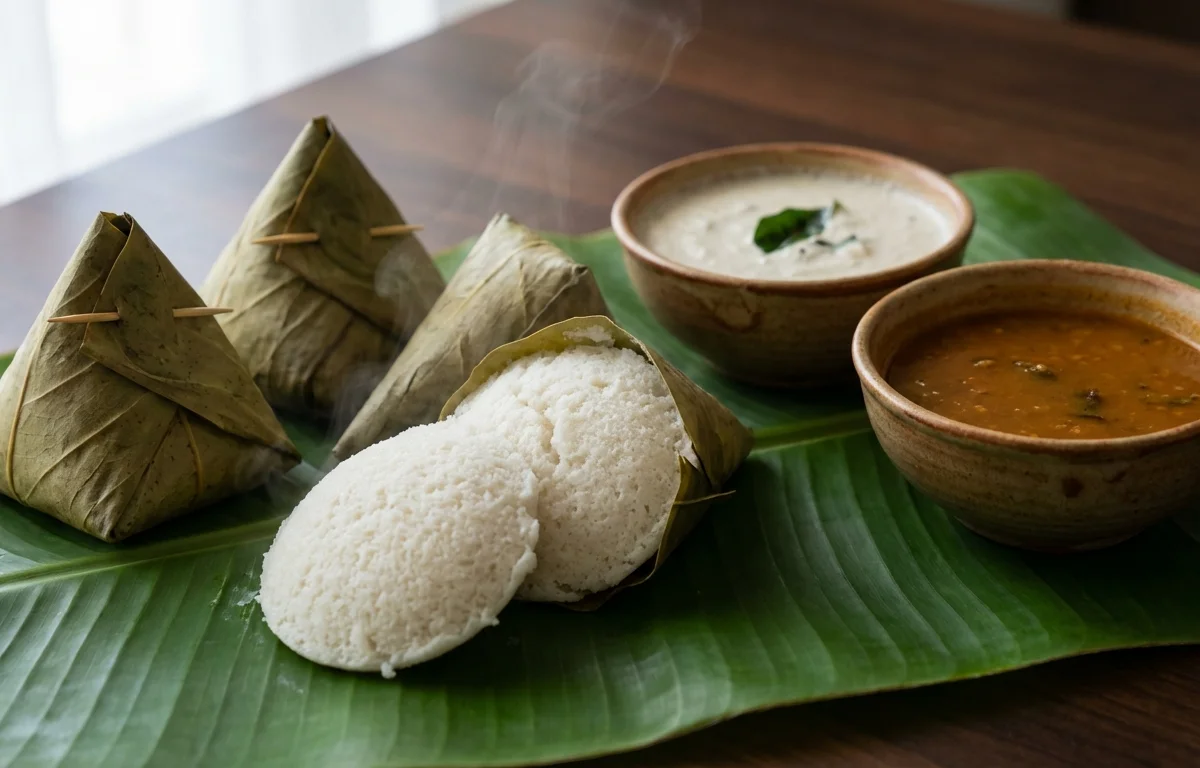
A rustic steamed rice and coconut cake from coastal western India, Khotto is gently spiced, lightly tangy, and traditionally wrapped before steaming. It comes out soft, moist, and perfect as a breakfast or teatime side.
For 8 servings
- prep · ~360 min
Soak the rice and dal.
Wash the rice and urad dal well. Soak them separately in enough water for 6 hours.
- mix · ~15 min
Grind the batter.
1.Drain the soaked rice and urad dal.2.Grind the urad dal with a little water to a smooth batter.3.Grind the rice with grated coconut and poha to a slightly coarse batter, adding water as needed.4.Mix both batters together in a large bowl.5.Add sugar and mix well.TIPKeep the rice batter slightly coarse so the steamed cakes hold their rustic texture. - rest · ~480 min
Ferment the batter.
Cover the bowl and leave the batter in a warm place for 8 hours or overnight, until it looks airy and lightly risen.
- prep · ~7 min
Prepare the banana leaf parcels.
1.Cut the banana leaves into medium squares.2.Pass each piece briefly over a low flame to soften it.3.Lightly grease the inner side with oil.4.Fold or shape them into small open parcels or cups. - mix · ~1 min
Season the batter.
Add salt to the fermented batter and mix gently. The batter should be thick but pourable.
- assemble · ~5 min
Fill the parcels.
Pour the batter into the prepared banana leaf parcels, filling each about three-quarters full so there is room to rise while steaming.
- steam · ~20 min
Steam the Khotto.
Arrange the filled parcels in a steamer and steam over medium heat until firm and cooked through, 18 to 20 minutes.
TIPDo not steam on very high heat or water may drip onto the batter and make the texture dense. - rest · ~5 min
Cool them briefly.
Let the steamed Khotto rest for 5 minutes before opening the parcels. This helps them set and release neatly from the leaves.
- serve
Serve warm.
Serve the Khotto warm in the leaf parcels or gently unwrap and place on a plate.
What to keep in mind.
7 tips from the recipe — small details that make a real difference to the final dish.
- 1Grind the urad dal very smooth, but keep the rice-coconut mixture slightly coarse for the traditional rustic crumb.
- 2Add salt only after fermentation; adding it earlier can slow the batter from turning airy and lightly risen.
- 3If your kitchen is cool, ferment the batter in the oven with just the light on to help it rise properly.
- 4Soften banana leaves briefly over a low flame only until flexible; overheating can make them tear while folding.
- 5Fill each leaf parcel only three-quarters full, because the batter expands as it steams.
- 6Steam over medium heat and keep the lid wrapped with a cloth if needed to prevent condensation from dripping onto the khotto.
- 7Khotto tastes best warm, but leftovers can be re-steamed for a few minutes to bring back their softness.
Adapt it for your goals.
Idli-mould
If banana leaves are unavailable, steam the batter in greased idli moulds for easier shaping, though you will lose some of the leaf aroma.
jaggery hintJaggery-hint
Replace the sugar with a little jaggery for a deeper, more rounded sweetness that pairs well with coconut.
mini khottoMini-khotto
Make smaller leaf parcels for teatime servings; they steam a little faster and are easier to serve as snacks.
extra coconutExtra-coconut
Increase the grated coconut slightly for a richer, softer cake with a more pronounced coastal flavor.
Why this is on our healthy list.
Fermented and Gentle
The fermented rice and urad dal batter is traditionally valued for being lighter and easier to digest than an unfermented mixture.
Plant Protein from Urad Dal
Urad dal adds plant protein to the rice base, making khotto more sustaining than a plain rice cake.
Energy-Rich Breakfast
Rice and poha provide steady carbohydrate energy, which suits khotto well as a filling breakfast or teatime dish.
Natural Fats from Coconut
Fresh coconut contributes richness and satiety while also helping keep the steamed cakes moist without much added oil.
Frequently asked questions
It should look slightly risen, airy, and a bit bubbly, with a mild tangy smell rather than a sharp sourness.