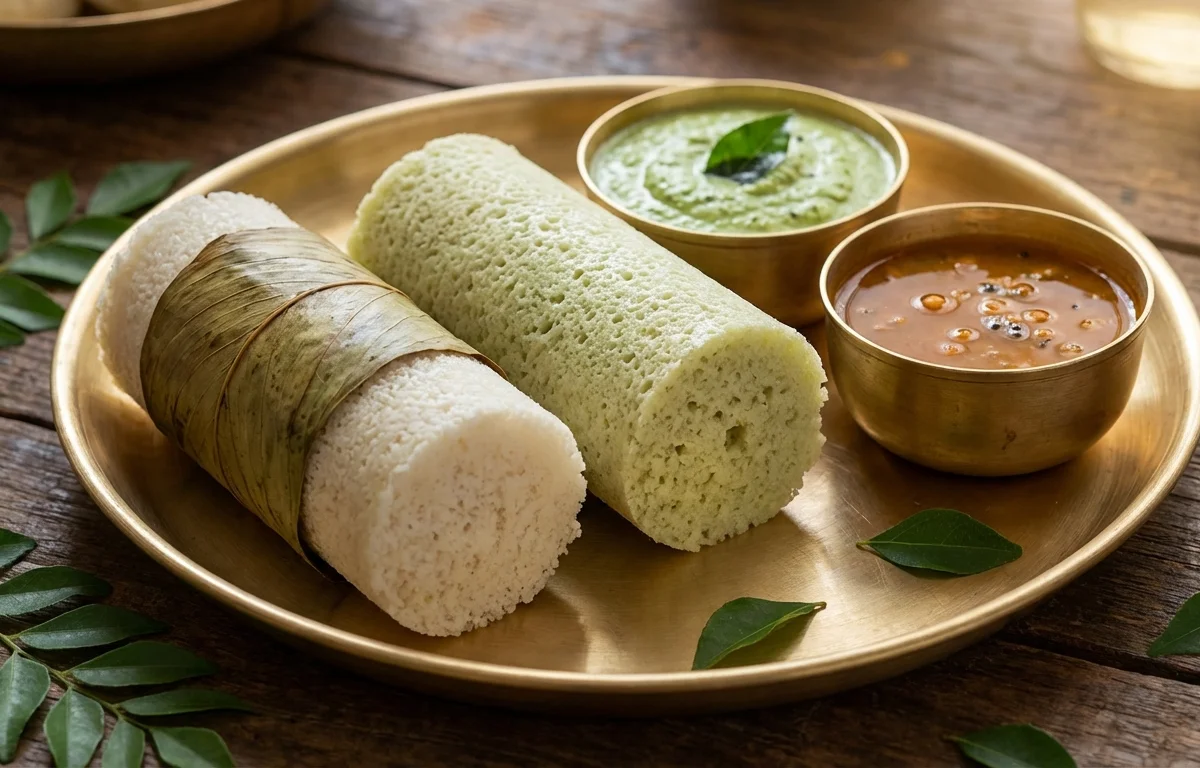
Kotte Kadubu
Fragrant steamed idlis from coastal Karnataka, traditionally set in jackfruit leaf cups. They turn out softly spongy with a gentle fermented tang and a lovely leaf aroma that makes them extra special with chutney or sambar.
For 8 servings
- prep · ~240 min
Soak the rice, dal, and poha.
1.Wash the idli rice well and soak it in plenty of water for 4 hours.2.Wash the urad dal and fenugreek seeds together and soak them for 4 hours.3.Soak the poha separately for 10 minutes just before grinding. - mix · ~25 min
Grind the batter.
1.Drain the urad dal and fenugreek seeds, then grind with a little water to a light, fluffy batter.2.Drain the rice and grind it with the soaked poha, adding water as needed, to a slightly grainy batter.3.Mix both batters in a large bowl until well combined and airy.TIPKeep the batter slightly thick so it holds shape well in the leaf cups. - rest · ~480 min
Ferment the batter.
Add salt and mix well with your hand. Cover the bowl and leave the batter in a warm place for 8 hours or until it rises and looks light.
TIPLeave enough room in the bowl because the batter expands as it ferments. - assemble · ~15 min
Shape the jackfruit leaf cups.
1.Arrange 4 jackfruit leaves in a cross pattern with the pointed ends meeting.2.Pin the sides together with toothpicks to make a small cup.3.Repeat to make 8 leaf cups and lightly grease the insides with coconut oil. - assemble · ~5 min
Fill the leaf cups with batter.
Stir the fermented batter gently once, then pour it into each leaf cup until about three-quarters full. Arrange the filled cups in a steamer plate.
- steam · ~18 min
Steam the kotte kadubu.
Steam over medium heat until the tops look set and a skewer comes out clean, 15 to 18 minutes. Let them stand for 2 minutes after steaming.
TIPDo not open the steamer in the first 10 minutes or the kadubu may sink. - serve
Unmold and serve hot.
Cool just enough to handle, then gently remove or open the leaf cups. Serve the kotte kadubu hot.
What to keep in mind.
7 tips from the recipe — small details that make a real difference to the final dish.
- 1Grind the urad dal very fluffy and the rice slightly coarse; that contrast gives kotte kadubu its classic spongy bite.
- 2Mix the fermented batter with your hand before resting; the warmth and natural microbes help fermentation start well.
- 3Keep the batter thicker than regular idli batter so it sits neatly in the jackfruit leaf cups without spreading.
- 4Fill each leaf cup only three-quarters full, since the batter rises and can overflow while steaming.
- 5Steam on medium heat, not high, so the centers cook through before the outer layer turns rubbery.
- 6Let the kadubu rest for 2 minutes after steaming; they release more cleanly from the leaves and finish setting inside.
- 7If making ahead, cool completely and refrigerate; re-steam for a few minutes rather than microwaving to keep them soft.
Adapt it for your goals.
No-jackfruit-leaf
Steam the same batter in idli molds or small steel cups when jackfruit leaves are unavailable; you lose the leaf aroma but keep the soft texture.
mini kadubuMini-kadubu
Make smaller leaf cups and reduce steaming time slightly for bite-size servings that work well for festive breakfast spreads.
milletMillet
Replace part of the idli rice with little millet or foxtail millet for an earthier taste and a more whole-grain style kadubu.
extra softExtra-soft
Increase poha slightly for a softer, more pillowy result, especially helpful if your rice variety makes firmer idlis.
Why this is on our healthy list.
Fermented and Easy on Digestion
The naturally fermented batter can be gentler to digest than unfermented batters and gives the kadubu their light texture.
Balanced Grain and Lentil Base
Idli rice paired with urad dal provides a satisfying mix of carbohydrates and plant protein in a traditional South Indian format.
Low Added Fat Cooking
These are steamed and use only a little coconut oil for greasing, making them lighter than many fried breakfast snacks.
Frequently asked questions
Use regular idli plates, banana leaf-lined cups, or small greased steel bowls. The texture will still be good, though the leaf fragrance will be different.