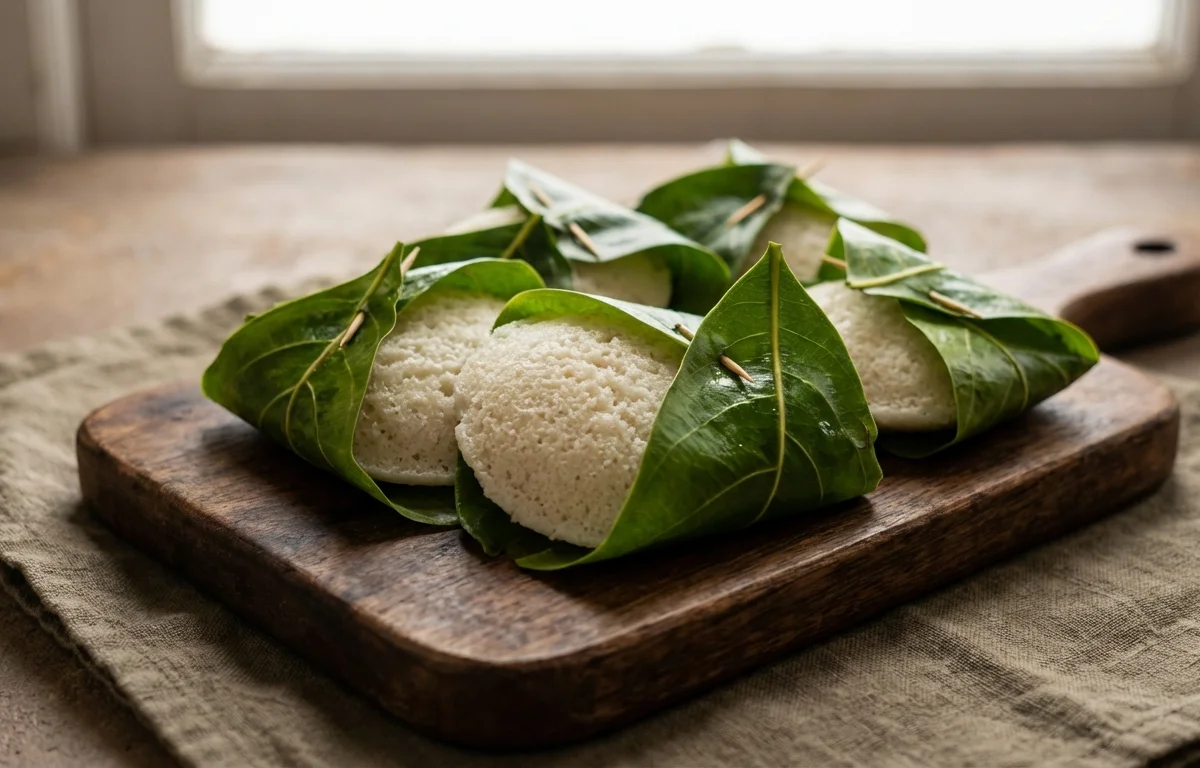
Kottige
Kottige is a soft, leaf-steamed rice cake from coastal Karnataka, made with a lightly fermented rice batter and gentle seasoning. The banana leaf wrap gives it a lovely aroma and keeps each piece moist and tender.
For 8 servings
- prep · ~360 min
Soak the rice and dal.
1.Wash the idli rice well and soak it in enough water for 6 hours.2.Wash the urad dal and fenugreek seeds together and soak them in enough water for 6 hours.3.Drain both separately before grinding.TIPKeeping the rice and dal separate while soaking and grinding gives a lighter batter. - mix · ~30 min
Grind the batter.
1.Grind the urad dal and fenugreek seeds with water to a smooth, fluffy batter.2.Grind the rice with grated coconut and water to a slightly grainy batter.3.Combine both batters in a large bowl and mix well by hand.4.Add salt and mix again until the batter looks airy and even. - rest · ~480 min
Ferment the batter.
Cover the bowl and leave the batter in a warm place for 8 hours or until it rises and turns light. Stir it gently once before shaping the kottige.
TIPDo not overmix after fermentation or the batter can lose some of its lift. - prep · ~10 min
Prepare the banana leaf packets.
1.Wipe the banana leaves clean and pass them briefly over a low flame to soften them.2.Cut them into medium rectangles large enough to fold around the batter.3.Brush each piece lightly with oil. - assemble · ~10 min
Shape the kottige.
1.Place one banana leaf piece on the work surface.2.Spoon a portion of batter into the center.3.Fold the leaf over the batter into a neat packet and press lightly to hold the shape.4.Repeat with the remaining batter and leaves. - steam · ~20 min
Steam the kottige.
Arrange the leaf packets in a steamer in a single layer. Steam on medium heat until the cakes are firm and cooked through.
TIPLeave a little space between packets so steam can circulate evenly. - rest · ~5 min
Cool briefly before opening.
Let the steamed packets rest for 5 minutes. This helps the cakes set and release more cleanly from the leaves.
- serve
Open the leaves and serve warm.
What to keep in mind.
7 tips from the recipe — small details that make a real difference to the final dish.
- 1Grind the urad dal very fluffy and the rice slightly grainy; that contrast gives kottige its soft yet delicate bite.
- 2Mix the combined batter by hand if possible, which helps aerate it and encourages a better ferment.
- 3Wilt banana leaves only briefly over low flame; overheating can crack or dry them out.
- 4Do not overfill each leaf packet, or the batter may spread and cook unevenly in the steamer.
- 5Steam on medium heat rather than high so the cakes set gently without turning dense or rubbery.
- 6Let the packets rest for 5 minutes after steaming before opening, so the kottige releases cleanly from the leaf.
- 7Leftover kottige can be refrigerated in the leaf packets and re-steamed for a few minutes to restore softness.
Adapt it for your goals.
Jaggery-sweet
Add melted jaggery and a little cardamom to the batter for a lightly sweet festive version with the same soft steamed texture.
no coconutNo-coconut
Skip the grated coconut for a plainer, lighter kottige if you want a cleaner rice flavour or longer storage.
mini kottigeMini-kottige
Make smaller leaf packets for snack-size portions; they steam faster and are easy to serve with chutney.
veganVegan
This recipe is naturally vegan; just use oil for greasing the leaves and serve with coconut chutney or vegetable saagu.
Why this is on our healthy list.
Fermented and Gentle
The lightly fermented rice and urad batter is traditionally valued for being easier to digest than an unfermented batter.
Plant-Based Protein
Urad dal contributes plant protein, making these steamed cakes more balanced than plain rice preparations.
Steamed, Not Fried
Because kottige is cooked by steaming with very little oil, it stays light while remaining moist and tender.
Natural Coconut Goodness
Fresh coconut adds richness, flavour, and satisfying texture along with naturally occurring fats from a whole ingredient.
Frequently asked questions
The batter should look slightly risen, airy, and lighter in texture. It should not smell sharply sour or collapse when stirred gently.