
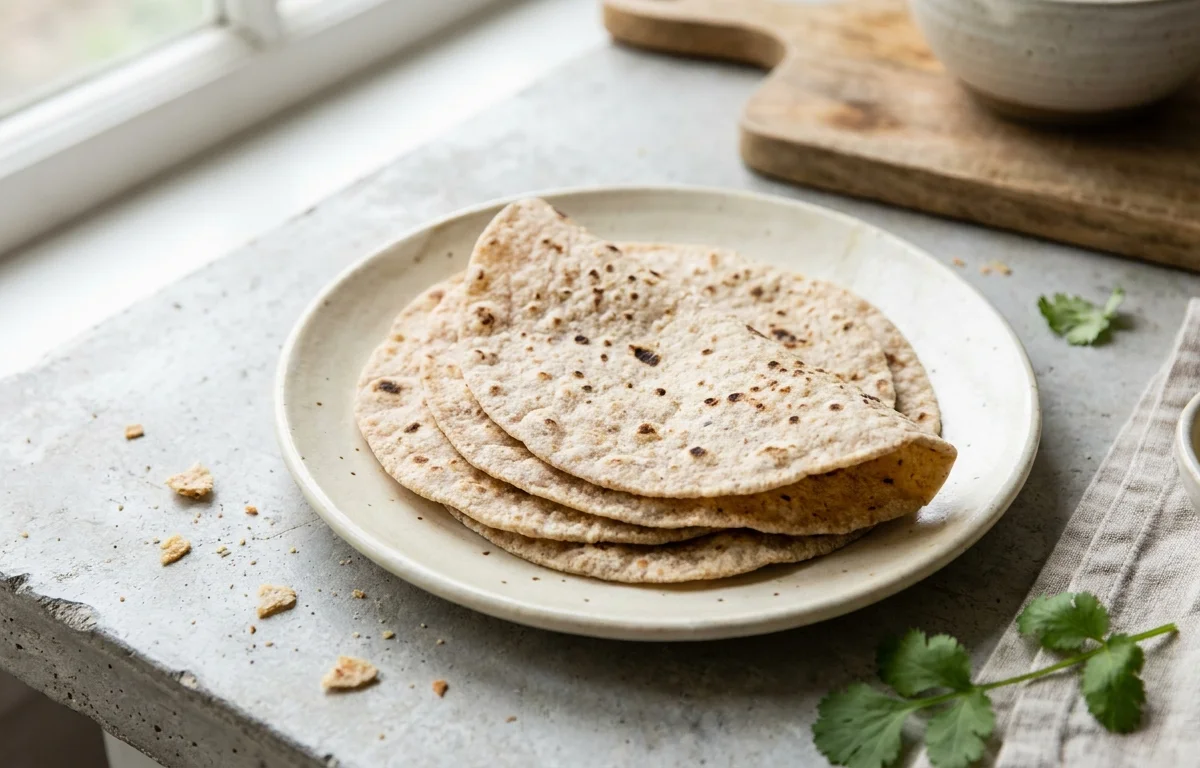
Low-Carb Roti
A soft, pliable, and incredibly satisfying flatbread made with a blend of almond and coconut flours. Perfect for anyone on a low-carb or diabetic-friendly diet, this roti pairs beautifully with your favorite Indian curries without the carb load.
For 8 servings
Combine the dry ingredients.
In a medium bowl, whisk together the almond flour, coconut flour, psyllium husk powder, flaxseed meal, and salt until well combined.
TIPMixing the dry ingredients thoroughly ensures an even texture in the final roti.Form the dough.
- Add the yogurt and ghee to the dry flour mixture. Mix with your fingertips until it resembles coarse crumbs.
- Gradually pour in the warm water, a little at a time, while mixing to form a soft dough.
- Knead for 1-2 minutes until the dough comes together. It will be slightly sticky.
TIPThe psyllium husk will absorb water and make the dough less sticky as it rests.Rest the dough.
Cover the dough with a damp cloth and let it rest for 10 minutes. This allows the flours to fully hydrate.
Divide and roll the rotis.
- Divide the rested dough into 8 equal-sized balls.
- Place one ball of dough between two large sheets of parchment paper.
- Using a rolling pin, gently roll it out into a thin circle, about 5-6 inches in diameter.
TIPParchment paper is essential as this dough is delicate and will stick to the rolling surface.Cook the roti.
- Heat a tawa or non-stick skillet over medium heat.
- Carefully peel the top layer of parchment paper off the roti. Place the roti, dough-side down, onto the hot tawa and then peel off the second sheet of paper.
- Cook for 60-90 seconds on the first side, until light brown spots appear.
- Flip and cook for another 60 seconds on the other side. Gently press with a spatula.
- Repeat for all the remaining dough balls.
Serve immediately.
Serve the low-carb rotis hot with your favorite dal or sabzi for a complete, healthy meal.
What to keep in mind.
5 tips from the recipe — small details that make a real difference to the final dish.
- 1Do not use high heat as almond flour can burn quickly. Medium heat is perfect for cooking these rotis.
- 2If the dough feels too sticky to handle, you can lightly grease your palms with a drop of ghee.
- 3These rotis are best eaten fresh. They can be stored in an airtight container for a day but may lose some of their softness.
- 4For a slightly different flavor, you can add a pinch of cumin powder or finely chopped cilantro to the dough.
- 5Don't over-knead the dough. Just mix until it comes together to keep the rotis soft.
Adapt it for your goals.
Vegan
Replace the ghee with coconut oil and use a plant-based, unsweetened yogurt to make this roti completely vegan.
kid friendlyKid friendly
Add a pinch of turmeric for color and some mild dried herbs like oregano to make it more appealing to kids. You can also use cookie cutters to make fun shapes.
high proteinHigh protein
Incorporate 2 tablespoons of unflavored pea or whey protein isolate into the dry ingredients to boost the protein content further.
Why this is on our healthy list.
Blood Sugar Friendly
With very few net carbs, this roti has a low glycemic index and helps prevent spikes in blood sugar levels, making it ideal for diabetics.
Rich in Dietary Fiber
The combination of psyllium husk, flaxseed, and coconut flour provides a high amount of dietary fiber, which aids digestion and promotes a feeling of fullness.
Good Source of Healthy Fats
Almond flour and flaxseed are excellent sources of monounsaturated fats and omega-3 fatty acids, which are beneficial for heart health.
Naturally Gluten-Free
This roti is made without any wheat flour, making it a great option for individuals with celiac disease or gluten sensitivity.
Frequently asked questions
Yes, this Low-Carb Roti is very healthy, especially for those managing blood sugar or following a low-carbohydrate diet. It's high in fiber, healthy fats, and has a minimal impact on glucose levels compared to traditional wheat roti.