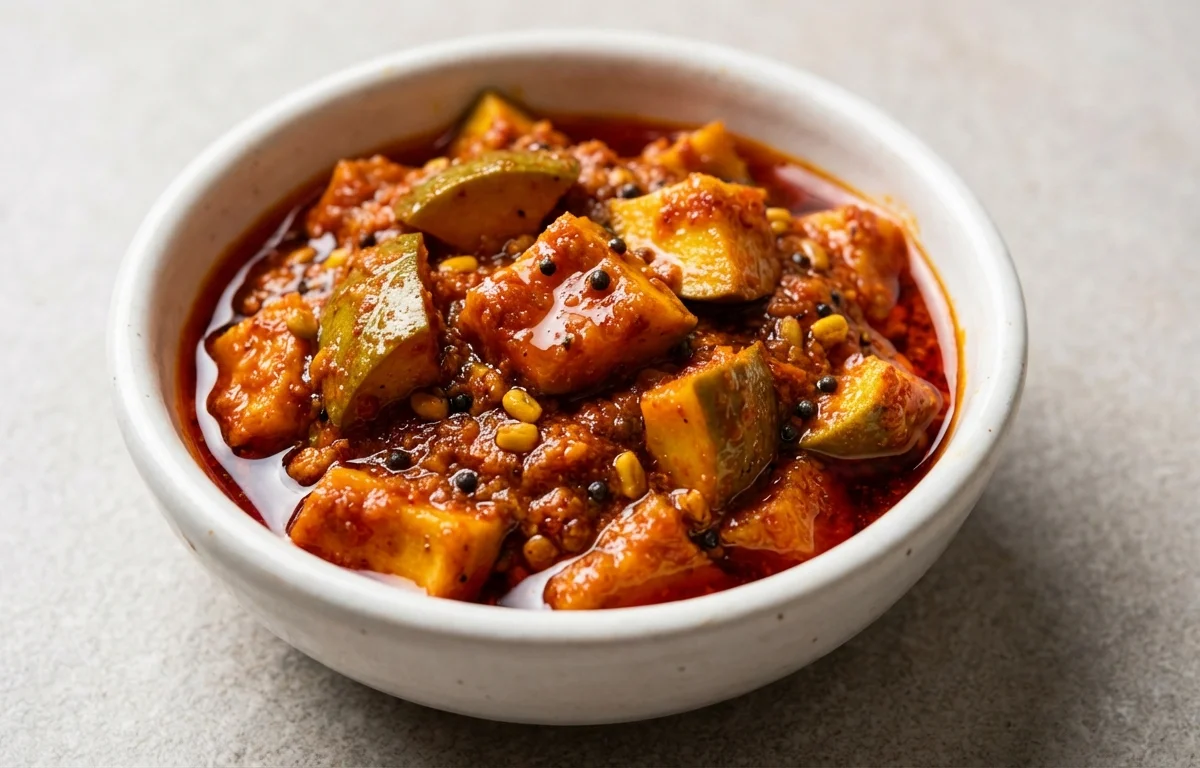
Maanga Oorugai
This classic South Indian raw mango pickle is sharp, spicy, and deeply savory. Small cubes of tart mango get coated in chili, mustard, and sesame oil, then rest until the flavors settle into a punchy side for curd rice or dal rice.
For 8 servings
- prep · ~10 min
Prep the mango.
Wash the raw mango well and wipe it completely dry. Cut away the flesh and chop it into small even cubes so the pickle seasons evenly.
TIPAny moisture on the mango can shorten the shelf life, so dry it very well before cutting. - roast · ~2 min
Roast and crush the fenugreek.
Dry roast the fenugreek seeds in a small pan over low heat until lightly fragrant, 30 to 45 seconds. Cool and crush them to a coarse powder.
- temper · ~1 min
Make the tempering.
1.Heat the sesame oil in a small pan over low heat.2.Add mustard seeds and let them splutter.3.Add asafoetida and switch off the heat right away.TIPKeep the heat low so the spices bloom in the oil without burning. - mix · ~3 min
Mix the pickle.
1.Place the mango cubes in a clean dry bowl.2.Add red chili powder, turmeric powder, salt, and the crushed fenugreek.3.Pour the warm tempering over the mango.4.Mix well until every piece is evenly coated. - rest · ~30 min
Rest the pickle.
Transfer the pickle to a clean dry glass jar and let it sit for at least 30 minutes before serving. Stir once or twice so the mango releases a little juice and the masala settles well.
- serve
Serve with rice dishes.
What to keep in mind.
7 tips from the recipe — small details that make a real difference to the final dish.
- 1Choose a very sour, firm raw mango; softer or mildly sweet mangoes will turn the pickle flat and less crisp.
- 2Dry the mango, knife, board, bowl, and jar thoroughly before mixing to help the pickle keep well.
- 3Roast fenugreek only until lightly aromatic; if it darkens too much, the pickle can taste noticeably bitter.
- 4Let the tempered sesame oil cool slightly before pouring so the chili powder blooms without scorching.
- 5Stir the pickle once or twice during the first 30 minutes so the salt draws out mango juices and the masala coats evenly.
- 6Store in a clean glass jar and always use a dry spoon; moisture is the quickest way to spoil fresh oorugai.
- 7For the best texture, serve the same day or within a few days while the mango cubes still have a fresh bite.
Adapt it for your goals.
Garlic
Add a few finely chopped garlic cloves to the mango before pouring in the tempering for a stronger, savory pickle that pairs well with curd rice.
extra spicyExtra-spicy
Increase the red chili powder slightly for a hotter oorugai with more punch, especially good with bland rice and dal.
less oilLess-oil
Reduce the sesame oil a little for a lighter fresh pickle; best eaten sooner since the coating will be drier.
jaggery balancedJaggery-balanced
Add a tiny pinch of jaggery to soften the sharp sourness and bitterness without turning it into a sweet pickle.
Why this is on our healthy list.
Raw Mango Tang and Fiber
Raw mango adds natural tartness and fiber, making this condiment more than just a spicy side.
Spice-Based Digestive Support
Fenugreek, mustard, and asafoetida are traditional pickle spices valued for adding depth and aiding heavy rice meals.
Sesame Oil Richness
Sesame oil gives satisfying richness and helps carry the aromas of the tempered spices through the pickle.
Frequently asked questions
At least 30 minutes helps the salt pull out some mango juice and allows the spices to settle, but it tastes even better after a few hours.