
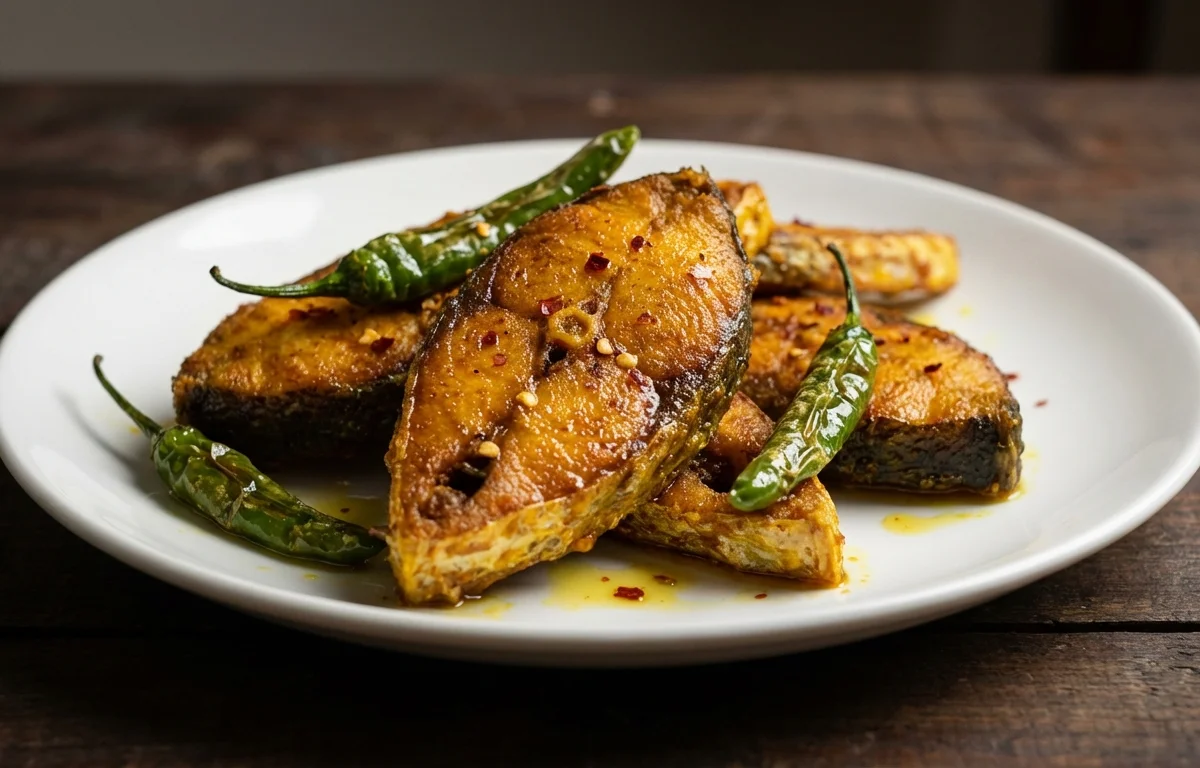
Maas Bhaja
A rustic Bengali delicacy where tender mutton pieces are marinated with bold spices and slow-cooked in their own juices until deeply caramelized. No water, no frills — just rich, dark, intensely flavorful meat with a slight char that pairs brilliantly with plain rice and dal.
For 4 servings
- prep · ~15 min
Marinate the mutton.
In a mixing bowl, combine mutton pieces with turmeric powder, red chili powder, cumin powder, coriander powder, salt, and chopped garlic. Mix thoroughly to coat every piece. Set aside for 15 minutes at room temperature.
TIPDon't add water — the mutton releases its own juices during cooking. - fry · ~10 min
Sear the mutton in mustard oil.
1.Heat mustard oil in a kadai over high heat until it reaches its smoking point.2.Reduce heat to medium and carefully add marinated mutton pieces in a single layer.3.Stir frequently until the mutton pieces are browned on all sides and the oil separates (8-10 minutes).TIPLet the mustard oil smoke fully then cool slightly — this removes its raw pungency. - saute · ~12 min
Add sliced onions and aromatics.
1.Add finely sliced onions to the pan and stir well to combine.2.Add grated ginger and slit green chilies.3.Sauté on medium-high heat until onions turn golden brown and slightly crisp at the edges (10-12 minutes).TIPStir constantly once onions are in — they can burn quickly at this stage. - simmer · ~40 min
Slow-cook in its own juices.
1.Reduce heat to the lowest setting and cover the kadai with a tight-fitting lid.2.Let the mutton cook in the moisture released by the onions and meat — do not add any water.3.Check and stir every 10 minutes. Cook until mutton is tender and the juices have completely dried up (35-40 minutes).TIPIf the meat sticks to the bottom, add 1-2 tablespoons of water only if absolutely necessary. - fry · ~7 min
Fry until dark and caramelized.
Once the mutton is tender and water has evaporated, increase heat to medium. Stir continuously and fry the mutton in the remaining oil until the pieces turn deep brown, slightly crisp on the edges, and the oil separates completely (5-7 minutes).
TIPThe darker the fry, the better the flavor — this is what makes Maas Bhaja unique. - garnish
Finish with garam masala and garnish.
Turn off the heat. Sprinkle garam masala and chopped coriander leaves over the cooked mutton. Toss quickly to combine the residual heat releases the garam masala's aroma.
- serve
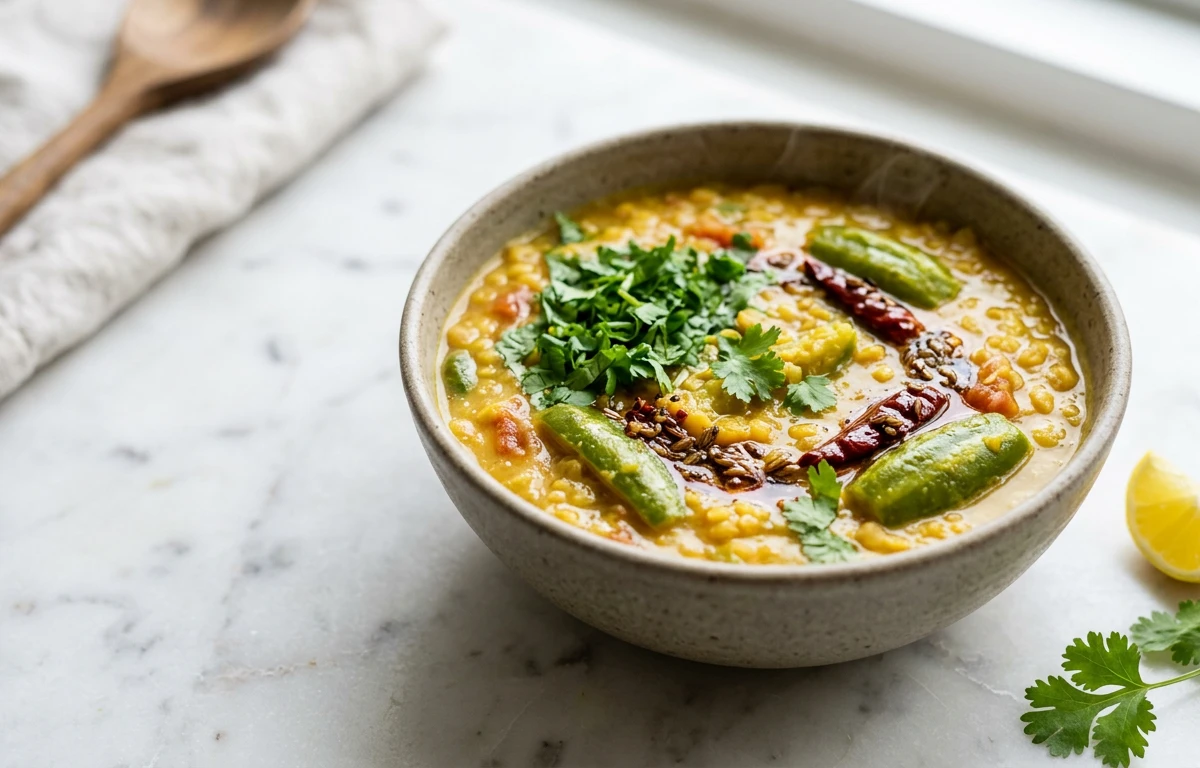
Serve hot with steamed rice and dal.
Transfer Maas Bhaja to a serving bowl. Serve immediately with steamed white rice and a side of dal for a classic Bengali comfort meal.
What to keep in mind.
6 tips from the recipe — small details that make a real difference to the final dish.
- 1Use a heavy-bottomed kadai or wok to ensure even heat and prevent scorching during the long slow-fry.
- 2Don't rush the browning in step 5—the deep caramelization is what gives Maas Bhaja its signature dark, intense flavor.
- 3Bone-in mutton (goat meat) is essential; the bones add depth and help the meat stay moist without added water.
- 4Let the finished dish rest for 5 minutes off the heat before serving—this allows the juices to redistribute and the meat to relax.
- 5For maximum flavor, use fresh, cold-pressed mustard oil and never skip the smoking step—it transforms the oil's character.
- 6If the onions start to catch before the meat is tender, add 1-2 tablespoons of water immediately, then continue covered on low.
Adapt it for your goals.
Chicken version
Replace mutton with bone-in chicken (chicken curry cut). Reduce the covered simmer in step 4 to 20–25 minutes, as chicken cooks faster. The result is a lighter, quicker Maas Bhaja with the same caramelized finish.
extra spicyExtra-spicy
Increase red chili powder to 1 teaspoon and add 2 extra slit green chilies. Perfect for those who love intense heat without altering the traditional method.
no onion garlicNo-onion garlic
For those following a satvik or Jain diet, skip the onion and garlic entirely. Use 1 tablespoon asafoetida (hing) sautéed in the oil at the start, and add ½ cup finely chopped raw papaya as a natural tenderiser.
Why this is on our healthy list.
Rich in Iron
Mutton (goat meat) is a dense source of heme iron, which is easily absorbed by the body and supports healthy red blood cell production.
Natural Collagen Source
Cooking bone-in mutton slowly releases collagen and gelatin from the bones, which may support joint health and skin elasticity.
Zero Added Water
This recipe uses no added water, concentrating the natural nutrients of the meat and spices without dilution, making it a protein-dense meal.
Anti-Inflammatory Spices
Turmeric, ginger, and garlic used in this dish contain curcumin and gingerol, compounds known for their natural anti-inflammatory properties.
Frequently asked questions
Yes. Use bone-in lamb or beef chuck. Mutton (goat) is traditional and leaner, but lamb will work; you may need to drain excess fat after the first sear.


-curry.webp)
.webp)