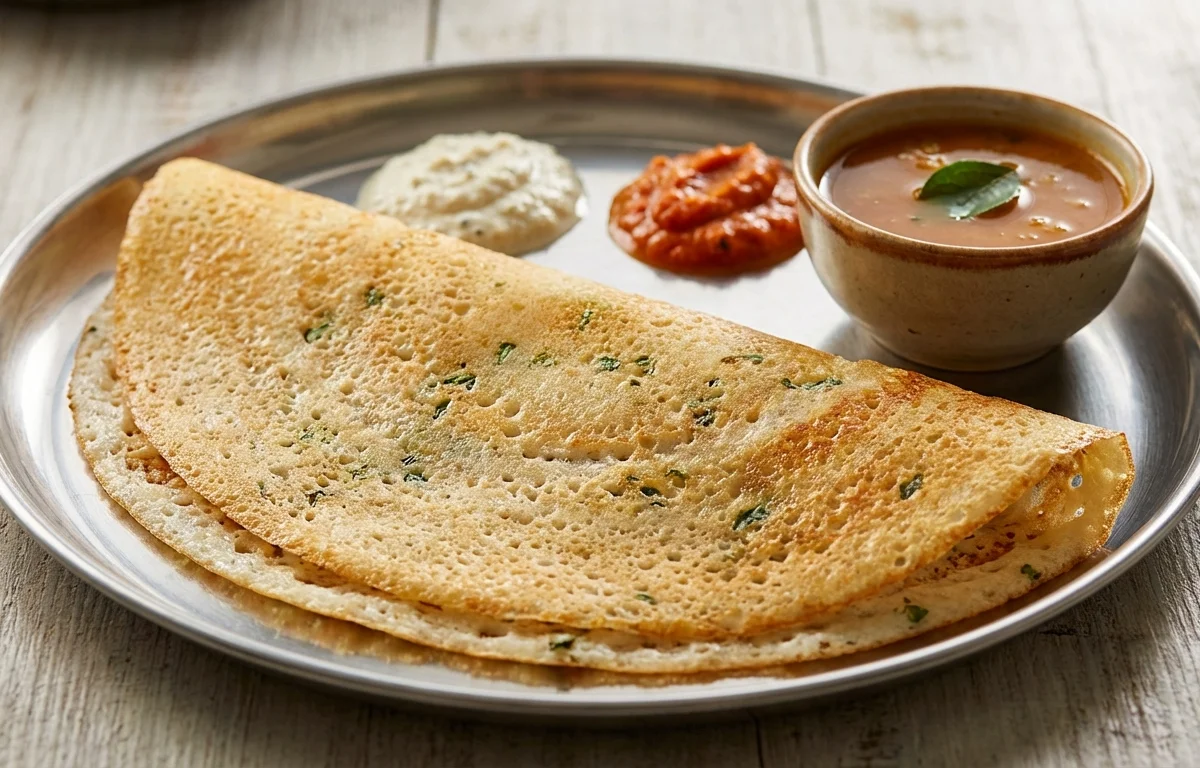
Menthe Dosa
A homestyle Karnataka dosa made with rice, urad dal, and fenugreek seeds for a light tang and gentle earthy flavor. The batter ferments overnight, then cooks into thin, golden dosas that are crisp at the edges and soft in the middle.
For 8 servings
- prep · ~360 min
Wash and soak the rice, dal, and fenugreek.
1.Rinse the rice 2 to 3 times until the water runs clearer.2.Rinse the urad dal and fenugreek seeds together.3.Soak the rice in plenty of water in one bowl for 6 hours.4.Soak the urad dal and fenugreek seeds in another bowl for 6 hours. - prep · ~20 min
Soak the poha.
About 20 minutes before grinding, rinse the poha lightly and soak it in a little water until soft.
- mix · ~20 min
Grind the batter.
1.Drain the soaked urad dal and fenugreek seeds, reserving a little soaking water if needed.2.Grind them with water to a smooth, fluffy batter.3.Drain the rice and grind it with the soaked poha and enough water to a slightly grainy batter.4.Mix both batters well in a large bowl until smooth and airy.TIPKeep the batter thick yet pourable. A very thin batter will not ferment well or spread evenly. - rest · ~480 min
Ferment the batter overnight.
Cover the bowl loosely and leave the batter in a warm place for about 8 hours, until it looks risen and lightly bubbly.
TIPLeave enough space in the bowl because the batter expands as it ferments. - mix · ~2 min
Add salt and adjust the batter.
Stir the fermented batter gently. Add the salt and enough water, if needed, to make a smooth batter that spreads easily on a hot tawa.
- fry · ~4 min
Cook the dosas.
1.Heat a tawa over medium heat and lightly grease it with a little oil.2.Pour a ladle of batter in the center and spread it outward in a thin circle.3.Drizzle a little oil around the edges and on top.4.Cook until the bottom turns golden and crisp, then fold and remove.TIPIf the tawa is too hot, the batter will not spread well. Lower the heat briefly, then pour the next dosa. - serve
Serve the menthe dosa hot.
What to keep in mind.
7 tips from the recipe — small details that make a real difference to the final dish.
- 1Grind the urad dal very fluffy and the rice slightly coarse; that contrast gives Menthe Dosa its soft center and crisp lacey edges.
- 2Fenugreek can turn bitter if overused, so stick close to the measured amount for the right earthy note and better fermentation.
- 3After fermentation, stir the batter gently instead of beating it hard, so you do not knock out the trapped air.
- 4If the batter sticks while spreading, the tawa is either too hot or not seasoned enough; cool it briefly and wipe with a lightly oiled cloth.
- 5For thinner, crisper dosas, adjust with a little water only after fermentation until the batter flows easily from the ladle.
- 6Make the first dosa as a test: if it comes out pale and soft, cook on slightly higher heat; if it sets before spreading, lower the heat.
- 7Fermented batter keeps well in the fridge for 2 to 3 days; bring it closer to room temperature before making dosas for easier spreading.
Adapt it for your goals.
Low-oil
Use a well-seasoned cast-iron or nonstick tawa and brush on just a few drops of oil for a lighter everyday dosa.
extra crispyExtra-crispy
Thin the batter slightly more and spread it wider on a medium-hot tawa to get more crackly, golden edges.
soft settu styleSoft-settu-style
Keep the batter a bit thicker and spread it less thin for softer dosas that pair well with vegetable saagu or chutney.
milletMillet
Replace part of the rice with little millet or foxtail millet for a nuttier flavor and a more wholesome variation.
Why this is on our healthy list.
Fermented and Easier to Digest
The overnight fermentation can make the rice and dal batter lighter and often gentler to digest than an unfermented batter.
Balanced Rice-and-Dal Base
Using both rice and urad dal gives the dosa a better balance of carbohydrates and plant protein than rice alone.
Fenugreek Adds Functional Value
Fenugreek seeds bring their distinctive earthy flavor along with traditional digestive and culinary benefits in this classic batter.
Frequently asked questions
The usual reasons are a cold room, batter that was ground too thin, or under-ground urad dal. Keep it in a warm spot and make sure the dal batter is smooth and airy.