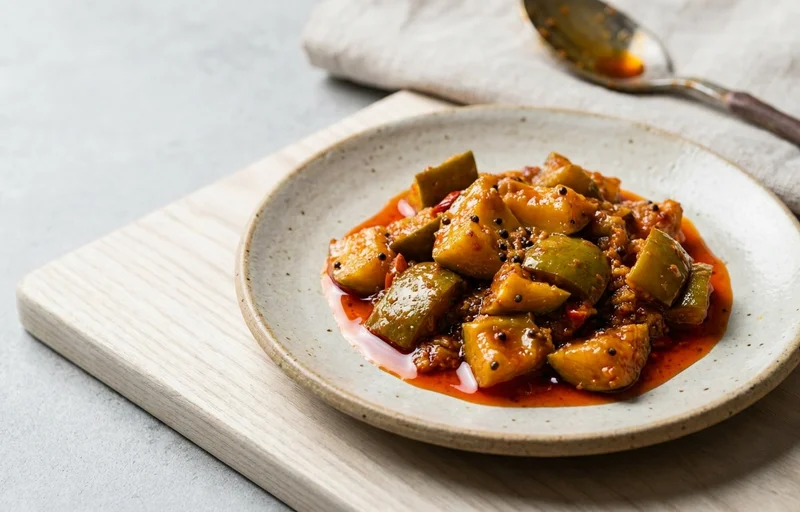
Oora Mirapakaya
A fiery Andhra-style side made with green chilies steeped in tangy yogurt, then pan-cooked until lightly blistered. It brings sharp heat, gentle sourness, and plenty of character to a simple rice and dal meal.
For 4 servings
- prep · ~5 min
Prepare the chilies.
1.Wash the green chilies and pat them completely dry.2.Trim only the stem ends if needed.3.Make one long slit in each chili without separating the halves.TIPDry chilies well so the yogurt coats them properly and the oil does not splutter later. - mix · ~1 min
Mix the soaking yogurt.
Whisk the yogurt with salt and turmeric powder in a bowl until smooth and evenly mixed.
- rest · ~480 min
Soak the chilies in the yogurt.
Add the slit chilies to the yogurt and turn well so they are fully coated. Cover and rest overnight or for about 8 hours so the chilies soften slightly and take on the sour flavor.
- fry · ~10 min
Pan-cook the soaked chilies.
1.Heat oil in a wide pan over medium heat.2.Lift the chilies from the yogurt and place them in the pan in a single layer.3.Cook, turning a few times, until lightly blistered and softened on all sides.4.Spoon in 1 to 2 tbsp of the leftover yogurt and cook briefly until it clings to the chilies.TIPKeep the heat medium so the chilies soften and char lightly without burning the yogurt. - serve
Serve hot or warm with rice and dal.
What to keep in mind.
7 tips from the recipe — small details that make a real difference to the final dish.
- 1Use thick bajji chilies, not thin hot varieties, so they soften well without becoming too sharp.
- 2Pat the chilies fully dry before soaking; any surface water thins the yogurt and reduces adhesion.
- 3If your yogurt is very fresh, leave it out briefly or use slightly tang curd for the classic oora mirapakaya taste.
- 4After soaking, let excess yogurt drip off before the chilies hit the pan to avoid sputtering and scorching.
- 5Cook in a single layer and turn gently so the slit chilies blister evenly without tearing apart.
- 6Add only a spoon or two of the leftover yogurt at the end; too much can split and make the pan watery.
- 7These keep well refrigerated for a day or two and taste excellent reheated alongside hot rice and pappu.
Adapt it for your goals.
Low-oil
Pan-sear in a well-seasoned skillet with less oil, adding the final spoon of yogurt only after the chilies have blistered.
milderMilder
Use larger bajji chilies with fewer seeds, or scrape some seeds out after slitting for gentler heat.
veganVegan
Swap the yogurt for a thick, tangy plant-based curd so you keep the sour soaking effect without dairy.
temperedTempered
Finish with a quick Andhra-style tempering of mustard seeds and curry leaves for extra aroma and texture.
Why this is on our healthy list.
Capsaicin-Rich Chilies
Green chilies bring capsaicin and antioxidants, adding bold flavor with very little bulk to the meal.
Yogurt Adds Protein and Calcium
The yogurt contributes dairy protein and calcium while also giving the dish its signature tangy body.
Light Side for Rice Meals
Because it uses only a little oil and simple ingredients, this works as a punchy side rather than a heavy fry.
Frequently asked questions
You can, but the dish will turn much hotter and the chilies may soften too quickly. Thick bajji chilies give better texture and a more balanced result.



.webp)