Pesarattu Upma
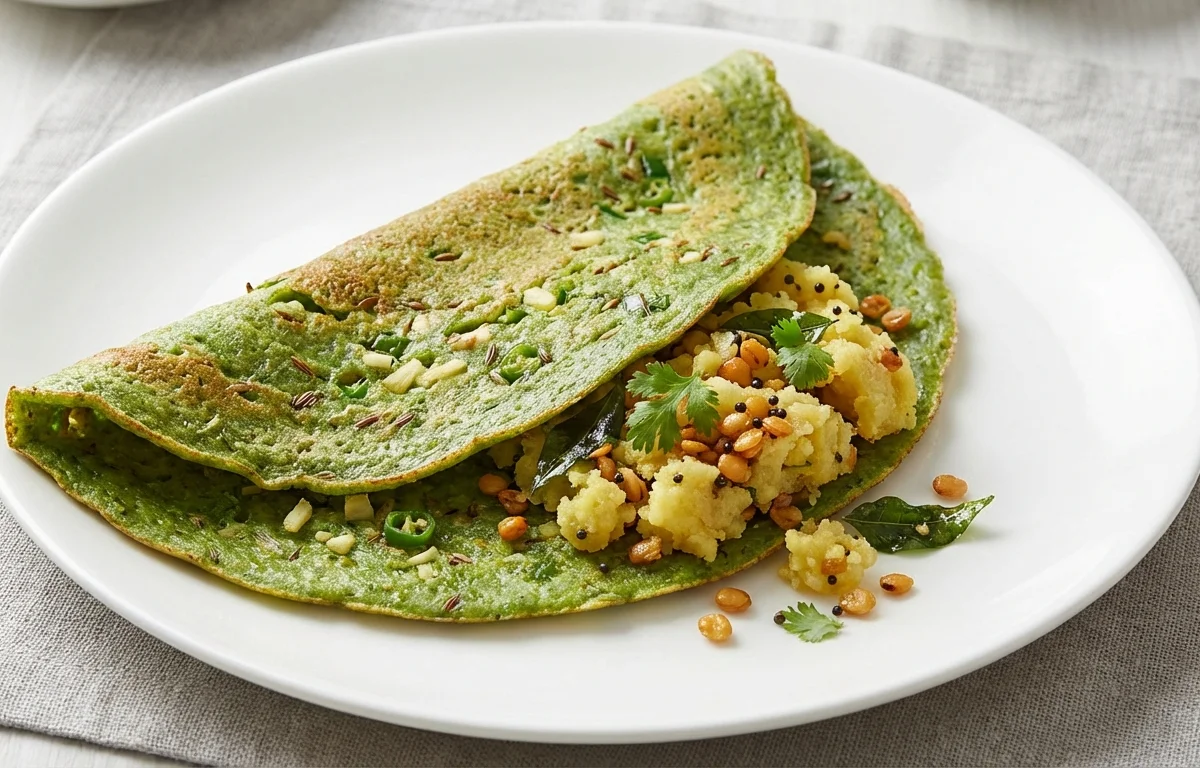
A classic Andhra breakfast combo where a crispy, golden-green moong dal crepe is stuffed with fluffy, lemony semolina upma. The earthy, nutty flavor of the whole moong dosa wraps around the savory upma, making each bite a perfect mix of crunch and softness. Served with a side of spicy ginger chutney or pickle.
For 4 servings
- prep
Soak the dal and rice for the batter.
Rinse the whole green moong dal and rice together under running water. Transfer to a bowl, cover with fresh water, and let soak for 4 hours.
TIPA full 4-hour soak ensures the dal grinds to a smooth, fluffy batter. - mix
Grind the pesarattu batter.
1.Drain the soaked dal and rice completely.2.Transfer to a blender or wet grinder along with 1-inch piece of ginger, 2 green chilies, and a pinch of salt.3.Add water gradually (about 3/4 to 1 cup total) and grind to a slightly coarse, thick batter with fine semolina-like texture.4.Pour the batter into a bowl. It should be pouring consistency, not too thick. No fermentation is needed. - fry · ~4 min
Roast the semolina for upma.
Heat a heavy-bottomed pan over medium-low heat. Dry roast the semolina, stirring continuously, until it turns a light golden color and releases a nutty aroma, about 3 to 4 minutes. Transfer to a plate and set aside.
TIPStir constantly to prevent the rava from burning, which happens quickly. - temper · ~2 min
Make the tempering for the upma.
1.Heat the ghee in a deep pan or kadai over medium heat.2.Add the mustard seeds and let them splutter (30 seconds).3.Add the cumin seeds, urad dal, and chana dal. Sauté until the dals turn golden (1 minute).4.Toss in the curry leaves, chopped cashews, and the remaining inch of grated ginger with 2 slit green chilies. Sauté for 30 seconds until fragrant. - saute · ~3 min
Sauté the onions and cook the upma.
1.Add the finely chopped onion to the pan and cook until they turn translucent (3 to 4 minutes).2.Pour in the 2 cups of hot water, add 1/4 teaspoon of salt, and bring to a rolling boil.3.Lower the heat to a simmer and slowly pour the roasted semolina into the boiling water in a steady stream, stirring continuously with the other hand to prevent lumps.TIPUsing hot water ensures the upma cooks fast and stays fluffy. - mix · ~2 min
Finish and steam the upma.
1.Stir vigorously until the semolina absorbs all the water and the mixture thickens to a porridge-like consistency.2.Cover the pan tightly and cook on the lowest heat for 2 minutes to let it steam through.3.Turn off the heat, add the lemon juice and chopped coriander leaves, and mix gently with a fork to fluff it up. Keep warm.TIPFluffing with a fork gives the upma a light, separated texture. - fry · ~2 min
Cook the pesarattu dosa.
1.Heat a cast iron or non-stick griddle over medium-high heat. Sprinkle a few drops of water; they should sizzle immediately.2.Pour a ladleful of batter in the center. Using the back of the ladle, quickly spread it in a circular motion into a thin, large crepe.3.Drizzle 1 teaspoon of oil around the edges and a few drops in the center. Cook until the base turns golden and crisp (about 2 minutes).TIPDo not spread pesarattu too thick; it must be lacy and crisp at the edges. - assemble · ~1 min
Stuff the pesarattu with upma.
Place a generous scoop of the hot upma in the center of the cooked pesarattu while it is still on the griddle. Fold the sides over from both ends to form a wrap or roll. Press gently with the spatula for 30 seconds to warm through.
- serve
Serve the Pesarattu Upma hot.
Transfer the stuffed pesarattu to a plate. Repeat with the remaining batter and upma to make 4 stuffed pesarattus. Serve immediately with ginger chutney or achar.
TIPServe straight from the pan to the plate; pesarattu loses its crispness if left to sit.
What to keep in mind.
7 tips from the recipe — small details that make a real difference to the final dish.
- 1Soak the moong dal and rice for a full 4 hours to ensure a smooth, fluffy batter that grinds easily.
- 2Grind the batter to a slightly coarse, idli-dosa-like consistency — not too fine or too watery.
- 3Roast the semolina until it just turns light golden and smells nutty; over-roasting will make the upma gritty.
- 4Use hot water to cook the upma — it helps the semolina cook quickly and stay fluffy without lumps.
- 5When spreading pesarattu on the griddle, keep the crepe thin and lacy at the edges for maximum crispness.
- 6Stuff the upma while the pesarattu is still on the heat so the wrap stays warm and seals together.
- 7Serve the stuffed pesarattu immediately — it turns soggy and loses its crunch once it cools down.
Adapt it for your goals.
Vegan
Replace ghee in the upma tempering with coconut oil or neutral oil, and skip the cashews or use toasted peanuts instead.
High ProteinHigh-Protein
Swap the semolina in the upma with broken quinoa or rolled oats (roasted like the rava) for a higher-protein, gluten-free filling.
Keto/Low CarbKeto/Low-Carb
Replace the upma with a cauliflower rice 'upma' made by pulsing raw cauliflower florets, then tempering and cooking as you would semolina.
Spicy AndhraSpicy Andhra
Add 1–2 extra green chilies to the pesarattu batter and a pinch of red chili powder to the upma tempering for a fiery kick.
Why this is on our healthy list.
High in Plant Protein
Whole green moong dal is a rich source of plant-based protein, making this dish a filling and muscle-friendly breakfast.
Good Source of Dietary Fiber
The whole moong dal and semolina provide fiber that supports digestion and helps keep you full longer.
Rich in Essential Minerals
Moong dal supplies iron, magnesium, and potassium, which contribute to energy metabolism and heart health.
Contains Healthy Fats
Cashews and ghee offer beneficial monounsaturated fats and fat-soluble vitamins in moderate amounts.
Frequently asked questions
The batter may be too thick or the griddle not hot enough. Thin the batter slightly with water and ensure the griddle sizzles before spreading.



.webp)