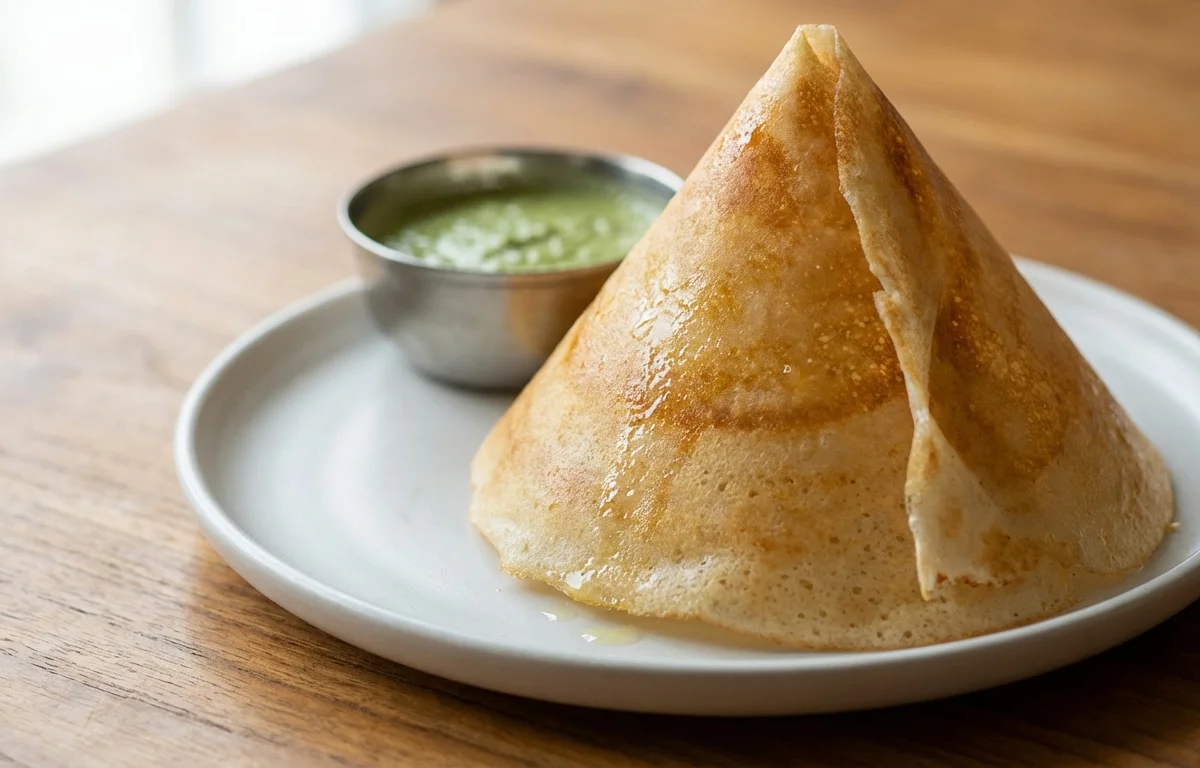
Paper Dosa
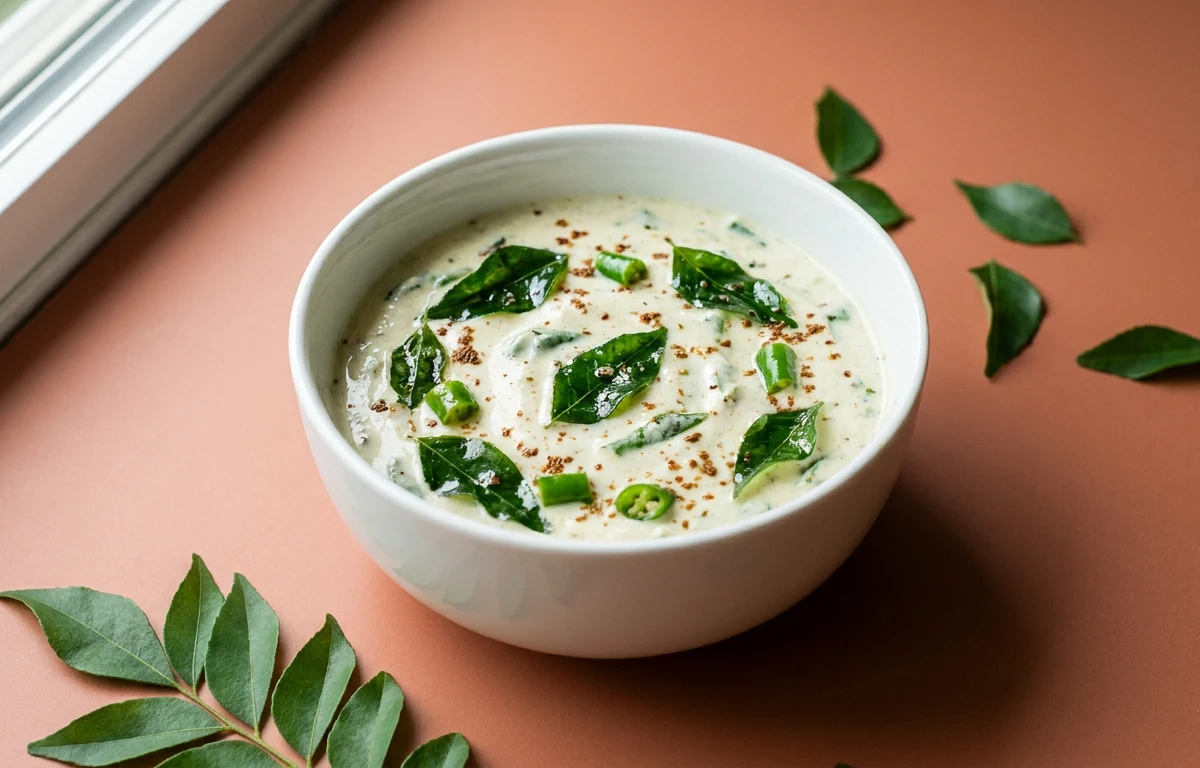
A whisper-thin, extra-crispy South Indian crepe that shatters delicately with each bite. Made from a fermented rice and lentil batter, this dosa stretches across the entire griddle, turning golden and lacy at the edges. Best enjoyed straight off the hot tawa with coconut chutney and a bowl of piping hot sambar.
For 8 servings
- prep
Soak the rice and dal separately.
1.Rinse 2 cups rice in several changes of water until water runs clear.2.Rinse ½ cup urad dal and ½ tsp fenugreek seeds together until water runs clear.3.Soak rice in enough water to cover by 2 inches in one bowl.4.Soak urad dal and fenugreek seeds mixture in enough water to cover by 2 inches in another bowl.5.Soak ¼ cup poha in a separate small bowl with just enough water to cover, for 10 minutes. - prep
Grind the batters.
1.Drain the urad dal mixture, reserving the soaking water.2.In a wet grinder or high-speed blender, grind the dal with the soaked poha into a smooth, fluffy batter.3.Add reserved water a tablespoon at a time — just enough to keep the stones moving.4.Transfer to a large mixing bowl.5.Drain the rice and grind it to a slightly coarse, fine rava-like texture.6.Add the rice batter to the dal batter in the mixing bowl.TIPA wet grinder yields the fluffiest batter. If using a blender, work in small batches and avoid overheating. - mix
Mix and ferment the batter.
1.Add ½ tsp salt to the combined batter.2.Using a clean hand, mix the batter in one direction only for 2 minutes to incorporate air.3.The batter should be thick but flowing — not runny.4.Cover the bowl loosely with a lid or cloth and place in a warm spot (oven with light on or warm corner of kitchen).5.Let ferment undisturbed for 10-12 hours, or until the batter has doubled in volume and smells pleasantly tangy.TIPIf the weather is cold, place the bowl in the oven with just the light bulb on for gentle warmth. - prep
Prepare the batter for making dosas.
1.Once fermented, gently stir the batter. Do not knock out all the air.2.Check consistency — the batter should be thinner than regular dosa batter.3.Add a splash of water (2-3 tbsp) and mix. The batter should spread easily but not be runny like water.4.Heat a large cast iron tawa over medium-high heat.TIPThe batter should be slightly thinner than pancake batter — this thinness is what gives the paper dosa its signature crackling crispness. - prep
Season the tawa.
1.Once the tawa is hot, sprinkle a few drops of water — they should sizzle and evaporate instantly.2.Using a halved raw onion or a cloth dipped in oil, wipe the surface of the tawa lightly.3.Ensure the tawa is uniformly greased but not pooled with oil.TIPThe onion trick creates a non-stick patina and adds a subtle flavor. Wipe the tawa with onion before each dosa. - fry
Pour and spread the paper dosa.
1.Fill a flat ladle or small katori almost to the brim with batter.2.Pour the batter in the center of the hot tawa.3.Quickly, using the back of the ladle, spread the batter outward in spiral, concentric circles to form a thin, even disc about 12-14 inches wide.4.Work quickly — the batter sets fast.5.Drizzle 1 tsp oil around the edges and in the center of the dosa.TIPDo not press too hard — keep a light hand to avoid tearing the batter. The goal is a translucent, lacy crepe. - fry · ~2 min
Cook the dosa until golden and crisp.
1.Lower the heat to medium-low once the dosa is spread.2.Let the dosa cook undisturbed. The edges will start to lift and turn golden brown within 1-2 minutes.3.Check the underside — it should be golden and crisp with brown spots.4.Do not flip — a paper dosa is traditionally cooked only on one side for maximum crispness.TIPPatience is key. Resist the urge to flip or peek too often; the steam from the batter cooks the top side gently. - assemble
Fold and remove the dosa.
1.Once the dosa is fully crisp, slide a flat silicone spatula gently under it, working from the edges to the center.2.The paper dosa can be folded in half or rolled, but traditionally it is served as a dramatic long cylinder.3.Fold the left and right edges towards the center, then roll from the bottom to the top to form a long, crisp roll.4.Remove to a serving plate. Do not stack paper dosas — they will lose crispness. - serve
Serve immediately with coconut chutney and sambar.
Serve the paper dosa immediately — it stays crisp only for a few minutes. Repeat with the remaining batter, wiping the tawa with oil between dosas.
TIPKeep the tawa hot but not smoking. If dosa batter starts sticking, rub with oil or onion again.
What to keep in mind.
7 tips from the recipe — small details that make a real difference to the final dish.
- 1Use a wet grinder for the fluffiest, most aerated batter essential for paper-thin dosas.
- 2Adjust batter consistency with a splash of water so it spreads easily without being runny.
- 3Wipe the tawa with a halved onion before each dosa for a non-stick patina and subtle flavor.
- 4Spread the batter in quick, concentric spirals with a light hand to avoid tearing.
- 5Cook only on one side until the edges lift and the underside is golden with brown spots.
- 6Serve immediately — paper dosa stays crisp for only a few minutes after cooking.
- 7Do not stack cooked dosas; lay them singly on a rack to preserve crispness.
Adapt it for your goals.
Ghee Roast Paper Dosa
Swap the oil drizzle with melted ghee for a richer, nuttier flavor and deeper golden hue. The ghee caramelizes slightly, adding a buttery crunch.
Ragi (Finger Millet) Paper DosaRagi (Finger Millet) Paper Dosa
Replace half the rice with ragi flour for a gluten-free, iron-rich twist. The batter will be darker and the dosa slightly more rustic but still thin.
Stuffed Paper DosaStuffed Paper Dosa
Once the dosa is cooked, place a small mound of spiced potato masala at one end and roll it up tightly to create a classic masala paper dosa.
Cheese Paper DosaCheese Paper Dosa
Just before the dosa finishes cooking, sprinkle grated mozzarella or cheddar over the surface. Fold and serve — the melted cheese adds a gooey contrast.
Why this is on our healthy list.
Naturally Gluten-Free
Made entirely from rice, lentils, and poha, this dosa is free from wheat and gluten, making it suitable for gluten-sensitive diets.
Fermented Goodness
The 10-12 hour fermentation produces natural probiotics and breaks down anti-nutrients in lentils, improving digestibility and nutrient absorption.
Plant-Based Protein
Urad dal (black gram lentils) is rich in plant protein, making this a great option for vegetarian and vegan meals.
Low in Refined Sugar
This savoury crepe contains no added sugars, relying only on natural carbohydrates from rice and lentils for energy.
Frequently asked questions
Fermentation requires a warm environment (around 28-32°C). In cold weather, place the batter in an oven with the light bulb on or near a warm stove. Also ensure the urad dal is fresh and the salt is added only after fermentation.