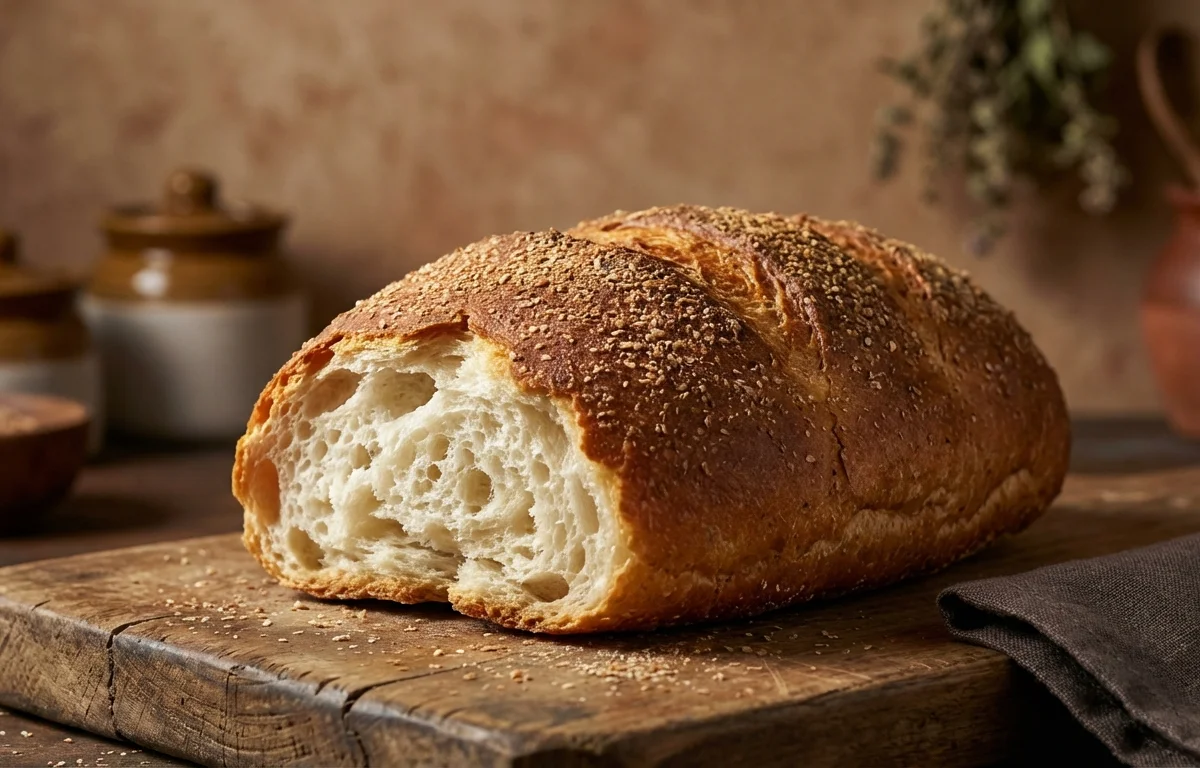
Pauruti
A soft, lightly sweet Indian-style milk bread with a tender crumb and thin golden crust. This everyday loaf is perfect for toast, buttered slices, or turning into sandwiches with a nostalgic bakery-style taste.
For 8 servings
- mix · ~10 min
Bloom the yeast.
1.Pour the lukewarm milk into a bowl.2.Add sugar and active dry yeast.3.Stir lightly and let it stand until foamy, about 8 to 10 minutes.TIPIf the yeast does not foam, the milk may be too hot or the yeast may be old. - knead · ~10 min
Knead the dough.
1.Add all-purpose flour and salt to a large bowl and mix once.2.Pour in the yeast mixture and add softened butter.3.Mix into a shaggy dough, then knead for 8 to 10 minutes until smooth and soft.TIPThe dough should feel soft and slightly tacky, not dry. - rest · ~60 min
Let the dough rise.
Shape the dough into a ball and place it in a lightly greased bowl. Cover and let it rise in a warm spot until doubled in size, about 1 hour.
- assemble · ~5 min
Shape the loaf.
1.Grease a loaf pan with a little butter.2.Punch down the dough gently and flatten it into a rectangle.3.Roll it tightly into a log and place it seam-side down in the loaf pan. - rest · ~30 min
Proof the shaped dough.
Cover the pan loosely and let the dough rise again until it crowns slightly over the rim, about 25 to 30 minutes.
- bake · ~30 min
Bake the pauruti.
Bake in a preheated oven at 180°C until the top is golden brown and the loaf sounds hollow when tapped, 28 to 30 minutes.
TIPIf the loaf browns too quickly, cover it loosely with foil for the last 10 minutes. - rest · ~30 min
Cool the loaf before slicing.
Remove the bread from the pan and cool on a rack for at least 30 minutes so the crumb sets properly.
- serve
Slice and serve.
What to keep in mind.
8 tips from the recipe — small details that make a real difference to the final dish.
- 1Use milk that feels just warm, not hot; overheated milk can weaken or kill the yeast.
- 2Keep the dough slightly tacky while kneading; adding too much extra flour will make the loaf dense.
- 3Roll the flattened dough tightly into a log to get an even bakery-style crumb without big air gaps.
- 4For a neat sandwich loaf, stop the second proof when the dough just crowns over the pan rim.
- 5If the top colors fast, tent with foil so the center finishes baking without a dark crust.
- 6Brush the hot loaf lightly with butter after baking for a softer crust and classic pauruti shine.
- 7Cool fully before slicing; cutting too early can compress the tender milk-bread crumb.
- 8Store wrapped at room temperature for 2 days, or slice and freeze for quick toast.
Adapt it for your goals.
Egg-wash-finish
Brush the top with egg wash before baking for a deeper golden crust and a more polished bakery look.
milk powderMilk-powder
Add a spoonful of milk powder to the flour for a richer dairy flavor and an even softer crumb.
whole wheatWhole-wheat
Replace part of the all-purpose flour with whole wheat flour for a heartier loaf with a nuttier taste.
sweet bun styleSweet-bun-style
Increase the sugar slightly and shape into buns instead of a loaf for softer, sweeter tea-time bread.
Why this is on our healthy list.
Calcium From Milk
The milk in this loaf contributes calcium and dairy nutrients while also helping create a tender crumb.
Energy-Giving Carbohydrates
Flour and a small amount of sugar provide quick, practical energy, making this bread useful for breakfast or snacks.
More Satisfying Than Plain Bread
Milk and butter add richness and some protein and fat, which can make slices feel more filling than very lean bread.
Frequently asked questions
The milk may have been too hot or too cool, or the yeast may be old. Start again with fresh yeast and lukewarm milk.