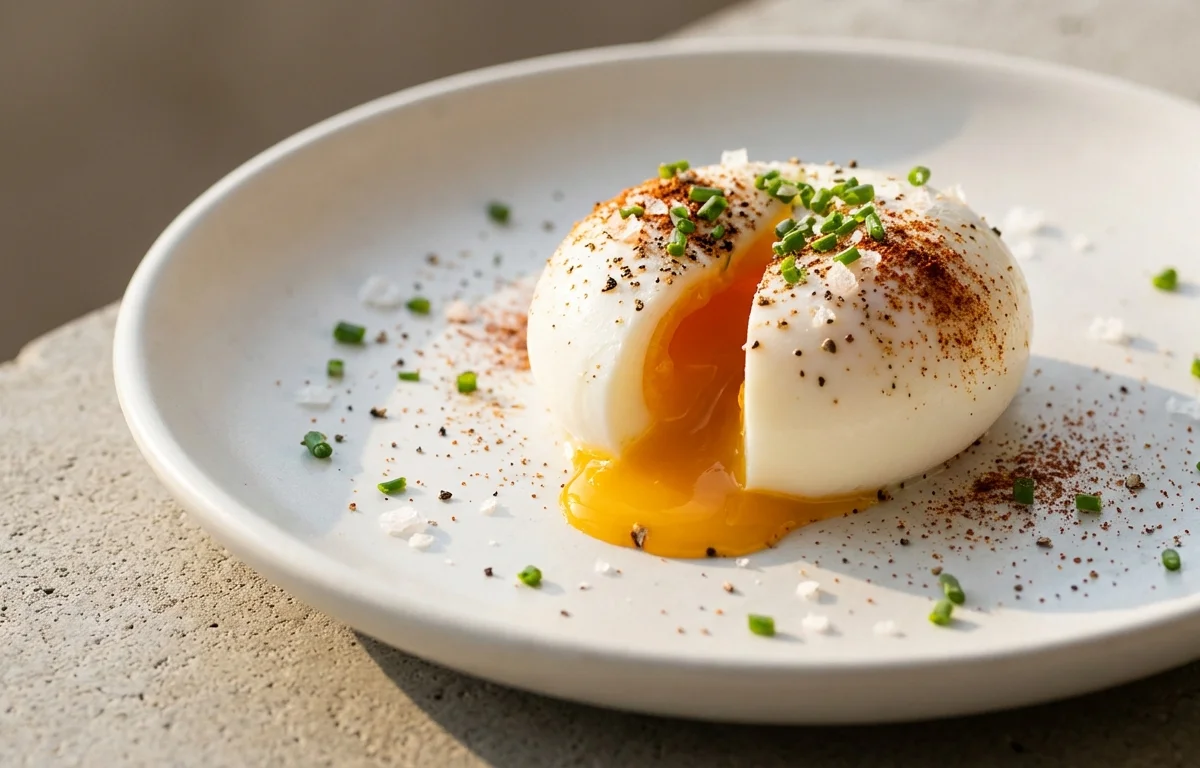
Poached Egg
A gently cooked egg with a tender white and a soft, runny center. It is quick to make, light on the stomach, and easy to pair with toast, sautéed vegetables, rice bowls, or simple Indian breakfasts.
For 4 servings
- prep
Crack each egg into a small bowl.
Keep the yolks whole and set the bowls near the stove so the eggs can slide into the water smoothly.
- boil · ~3 min
Heat the water and add the vinegar.
Pour the water into a wide pan and bring it to a gentle simmer, not a full boil. Stir in the vinegar once small bubbles begin to appear at the bottom.
TIPA gentle simmer keeps the whites neat. Rapid boiling can break the eggs apart. - other · ~1 min
Create a swirl and add the eggs.
1.Use a spoon to make a gentle whirlpool in the simmering water.2.Slide one egg into the center of the swirl.3.Repeat with the remaining eggs one by one, keeping the heat low.TIPIf the pan is small, poach the eggs in two batches so they do not stick together. - simmer · ~4 min
Poach until the whites are set.
Cook the eggs for 3 to 4 minutes for runny yolks, or 5 minutes for firmer centers. The whites should look set and the yolks should still feel soft.
- assemble
Lift the eggs out and drain briefly.
Use a slotted spoon to remove each poached egg and let the extra water drip off for a few seconds before placing it on a plate or over the dish you are serving.
- garnish
Season with salt and black pepper.
- serve
Serve the poached eggs right away.
What to keep in mind.
7 tips from the recipe — small details that make a real difference to the final dish.
- 1Use the freshest eggs you can find; older whites spread more in the water and look ragged.
- 2Keep the water at a bare simmer with tiny bubbles, not a rolling boil, so the whites stay wrapped around the yolk.
- 3Cracking each egg into a bowl first makes it much easier to slide in gently without breaking the yolk.
- 4Swirl the water only lightly; a strong whirlpool can tear delicate whites instead of shaping them.
- 5If wispy edges form, trim them with the slotted spoon after lifting the egg out for a neater finish.
- 6For serving on toast or rice, rest the egg on a clean cloth or paper briefly so excess water does not make the base soggy.
- 7Poached eggs are best eaten immediately, but you can hold them in cool water and rewarm for 30 to 60 seconds in hot water before serving.
Adapt it for your goals.
Firm-yolk
Poach for about 5 minutes instead of 3 to 4 if you want a more set center for sandwiches, grain bowls, or children who prefer less runny eggs.
spiced indianSpiced-indian
Season with black pepper, a pinch of roasted cumin powder, and red chilli flakes after poaching for a more Indian-style finish.
low sodiumLow-sodium
Skip the finishing salt and rely on black pepper or a squeeze of lemon at serving if you want a lighter, lower-sodium version.
batch prepBatch-prep
Poach ahead, chill in cold water, and rewarm briefly before serving if you need eggs ready for multiple plates at breakfast or brunch.
Why this is on our healthy list.
Protein-Rich Breakfast
Eggs provide high-quality protein that can help make this simple dish satisfying without needing heavy cooking fats.
Light Cooking Method
Poaching cooks the eggs in water rather than oil or butter, making it a lighter option for toast, bowls, or breakfast plates.
Nutrient-Dense and Simple
With eggs as the main ingredient, this dish offers naturally occurring nutrients in a minimal, easy-to-digest preparation.
Frequently asked questions
A little vinegar helps the egg white set more quickly, which keeps the poached egg compact and reduces feathery strands in the water.