
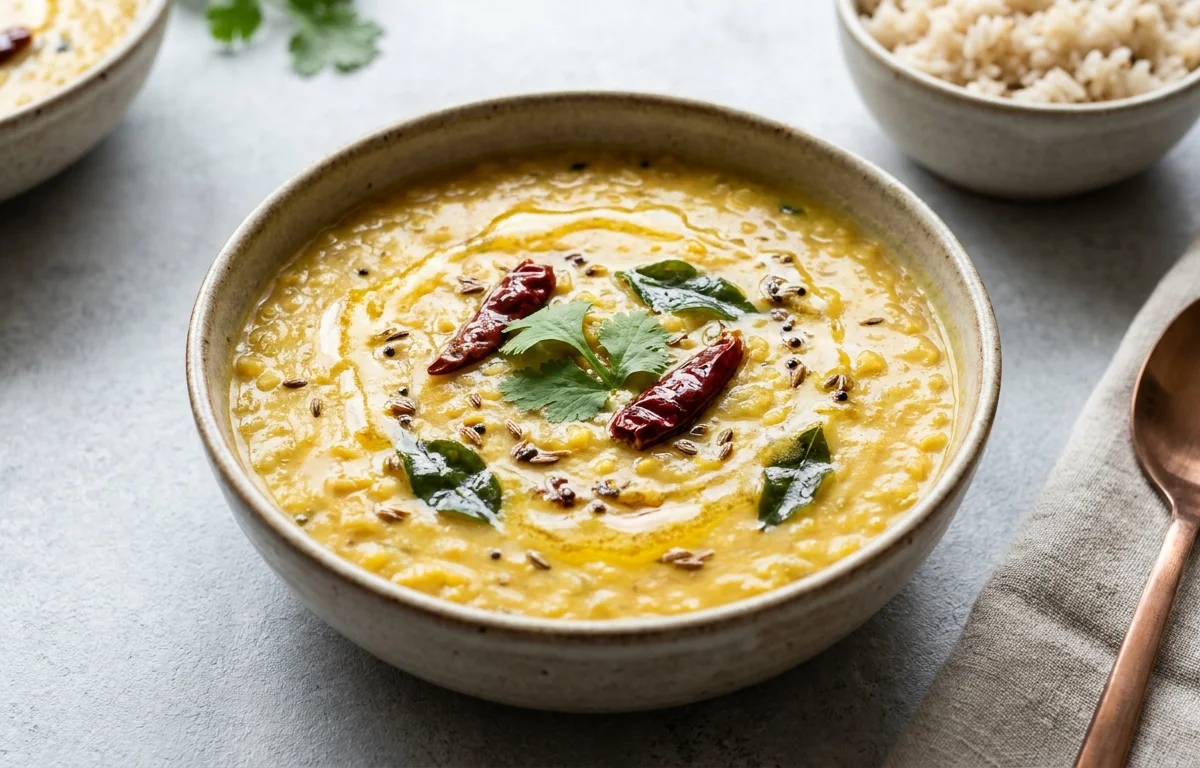
Pressure Cooker Dal Tadka
A comforting, everyday Indian lentil dish where toor dal is pressure cooked until soft, then finished with a sizzling tempering of cumin, garlic, and red chili. The smoky aroma from the tadka transforms simple dal into something deeply satisfying — perfect with steamed rice or roti.
For 4 servings
- prep · ~2 min
Rinse and drain the dal.
1.Place 1 cup toor dal in a bowl and wash under running water 2-3 times until water runs clear.2.Drain completely and set aside. - pressure cook · ~12 min
Pressure cook the dal.
1.Add drained dal to the pressure cooker with 3 cups water and a pinch of turmeric.2.Close the lid, put on the weight, and cook on medium-high heat.3.After the first whistle, reduce heat to low and cook for 3-4 more whistles (about 10-12 minutes).4.Turn off heat and let pressure release naturally.TIPDon't force-open the cooker — natural release lets the dal cook evenly and stay creamy. - mix · ~3 min
Mash and season the dal.
1.Once pressure drops, open the lid and mash the dal with a ladle until smooth.2.Add salt and stir well. If dal is too thick, add some hot water to reach your preferred consistency.3.Return to low heat and let it simmer gently while you prepare the tadka. - temper · ~8 min
Make the tadka.
1.Heat 1 tbsp ghee in a small tadka pan over medium heat until it shimmers.2.Add cumin seeds and let them crackle and turn golden (about 30 seconds).3.Add chopped garlic, dried red chili pieces, and a pinch of asafoetida. Sauté until garlic is lightly browned.4.Add chopped onion and sauté until translucent and edges start to brown (4-5 minutes).5.Add chopped tomato, slit green chili, and a pinch of red chili powder. Cook until tomato softens and ghee separates at the edges (3-4 minutes).TIPUse medium heat — high heat burns garlic and makes it bitter. - simmer · ~3 min
Pour tadka over dal and simmer.
1.Carefully pour the sizzling tadka over the simmering dal — it should splutter dramatically.2.Stir well to combine. Sprinkle garam masala on top.3.Let it bubble gently on low heat for 2-3 minutes so the flavors meld together. - garnish
Garnish with fresh coriander leaves and serve hot.
What to keep in mind.
6 tips from the recipe — small details that make a real difference to the final dish.
- 1For extra smokiness, make the tadka in a small steel ladle held directly over the stove flame before pouring over the dal.
- 2If you don't have a pressure cooker, soak the toor dal for 30 minutes, then simmer in a pot for 35-40 minutes until soft.
- 3Always use ghee for the tadka — butter burns, and oil won't give the same nutty aroma.
- 4Let the cumin seeds crackle fully before adding garlic; if added too early, they release less flavor.
- 5Add a pinch of baking soda while pressure cooking the dal if you want it to mash even creamier (optional).
- 6Leftover dal thickens overnight; thin it with a splash of hot water when reheating to bring back the right consistency.
Adapt it for your goals.
Vegan
Replace ghee with coconut oil or any neutral oil. The tadka will still be aromatic and the dal remains rich and comforting.
high proteinHigh-protein
Add 1/4 cup of masoor dal (red lentils) along with toor dal. It cooks quickly and boosts protein content without changing the texture much.
low oilLow-oil
Reduce ghee to 1 tsp and dry-roast cumin and garlic before adding a splash of water to deglaze. Less fat but still flavorful.
kashmiri styleKashmiri-style
Add 1 pinch of fennel powder and 1 small stick of cinnamon to the tadka. This gives a sweeter, warmer spice profile.
Why this is on our healthy list.
Rich in Plant Protein
Toor dal is a excellent source of plant-based protein, making this dish a hearty and satisfying meal for vegetarians and vegans.
Packed with Fiber
Split pigeon peas are high in dietary fiber, which aids digestion and helps maintain steady blood sugar levels.
Anti-Inflammatory Spices
Turmeric and garlic both contain compounds with anti-inflammatory properties, supporting overall wellness.
Good for Gut Health
Asafoetida (hing) is traditionally used in Indian cooking to aid digestion and reduce bloating, especially with legumes.
Frequently asked questions
Dal thickens as it sits; add hot water gradually while simmering to adjust. If it's too thin, mash more dal or simmer uncovered longer.


