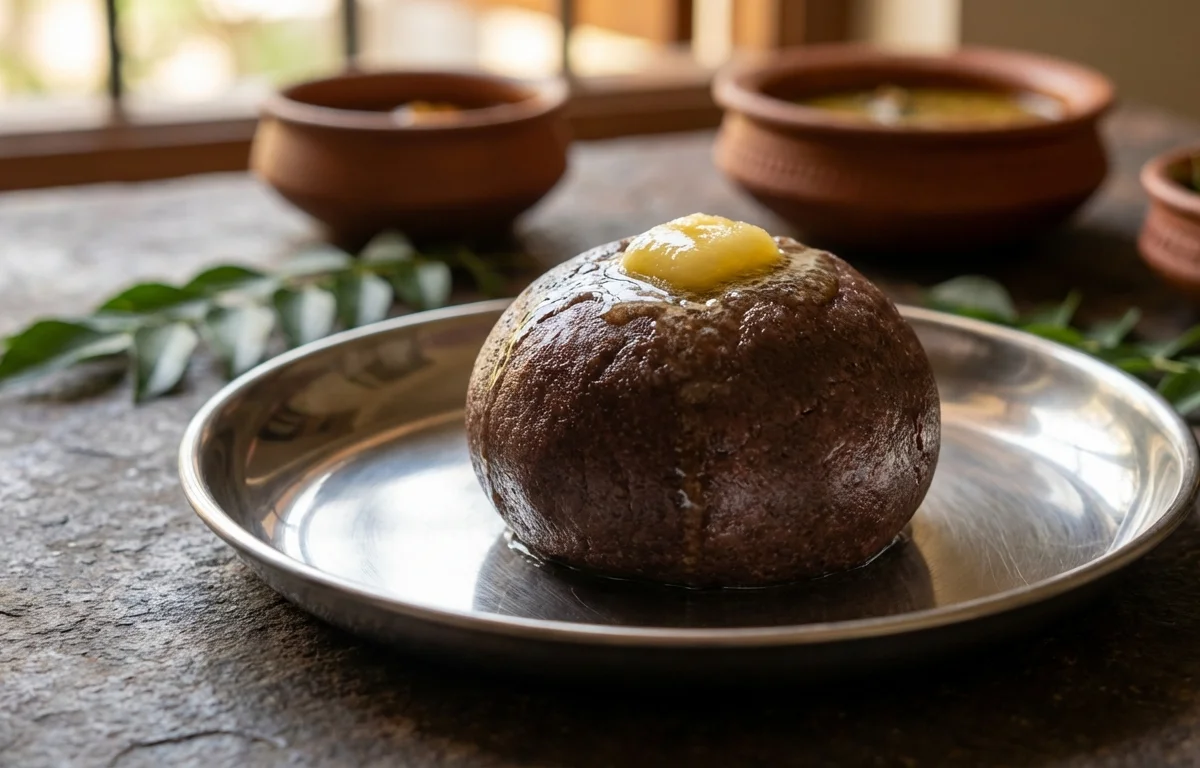
Ragi Mudde
Soft, hearty finger millet balls from Karnataka made with just flour, water, and a little salt. They are filling, earthy, and traditionally served hot with sambar, saaru, or a simple curry.
For 4 servings
- boil · ~5 min
Boil the water with salt.
Add water and salt to a heavy pot and bring it to a steady boil over medium-high heat.
- mix · ~1 min
Add some ragi flour and make a base.
Sprinkle about 2 tbsp of the ragi flour into the boiling water and stir well to make a thin base. This helps the mudde come together smoothly.
- mix · ~1 min
Add the remaining flour without stirring at first.
Lower the heat and add the rest of the ragi flour in the center so it forms a mound. Let it sit for 1 minute so the steam starts cooking the flour.
TIPDo not stir as soon as all the flour goes in, or lumps can form. - mix · ~5 min
Beat the mixture until smooth and thick.
Using a strong wooden spoon, mix and beat the flour into the water until thick, smooth, and lump-free. Cook for a few minutes, turning and pressing the dough against the sides of the pot.
TIPUse medium heat and keep beating firmly so the flour cooks evenly. - rest · ~2 min
Cover and rest the dough briefly.
Cover the pot and let the cooked ragi mixture rest on very low heat for 2 minutes.
- assemble · ~3 min
Shape the hot dough into mudde.
1.Grease your palms lightly with ghee.2.While the dough is still hot, divide it into 4 portions.3.Shape each portion into a smooth round ball.TIPWet or grease your hands lightly so the hot dough does not stick. - serve
Serve the ragi mudde hot.
What to keep in mind.
7 tips from the recipe — small details that make a real difference to the final dish.
- 1Use a heavy-bottomed pot so the thick ragi mixture cooks evenly and does not catch at the base.
- 2That first 2-tablespoon slurry is key; it helps the final dough turn smooth instead of grainy or lumpy.
- 3After adding the flour mound, wait the full minute before mixing so steam can hydrate the center.
- 4Beat with a sturdy wooden spoon or mathu-like masher; the dough gets very stiff as it cooks.
- 5The mudde is ready when it pulls together in one mass and the raw flour smell is gone.
- 6Shape the balls while still hot-warm; once the dough cools, the surface can crack and turn less smooth.
- 7Serve immediately with thin saaru, sambar, or bassaru, since mudde firms up as it sits.
Adapt it for your goals.
Vegan
Skip the ghee and grease your hands lightly with water or neutral oil for shaping; ideal if serving the mudde with a plant-based curry.
softer textureSofter-texture
Use a little extra water for a looser dough if you prefer mudde that is easier to shape and softer to eat with saaru.
mini muddeMini-mudde
Shape into smaller balls instead of large ones for easier portioning and serving, especially for children or first-time eaters.
Why this is on our healthy list.
Naturally Gluten-Free Grain
Ragi is a millet, so this dish suits those looking for a wheat-free staple without using refined flour.
Rich in Fiber
Finger millet is known for its fiber content, making this simple dish hearty and satisfying when paired with sambar or curry.
Wholesome Minimal Ingredients
Made from ragi flour, water, and salt, this is a simple traditional preparation with no deep-frying or heavy seasoning.
Frequently asked questions
Lumps usually happen if all the flour is stirred in immediately. Let the flour mound steam briefly first, then beat firmly until fully smooth.