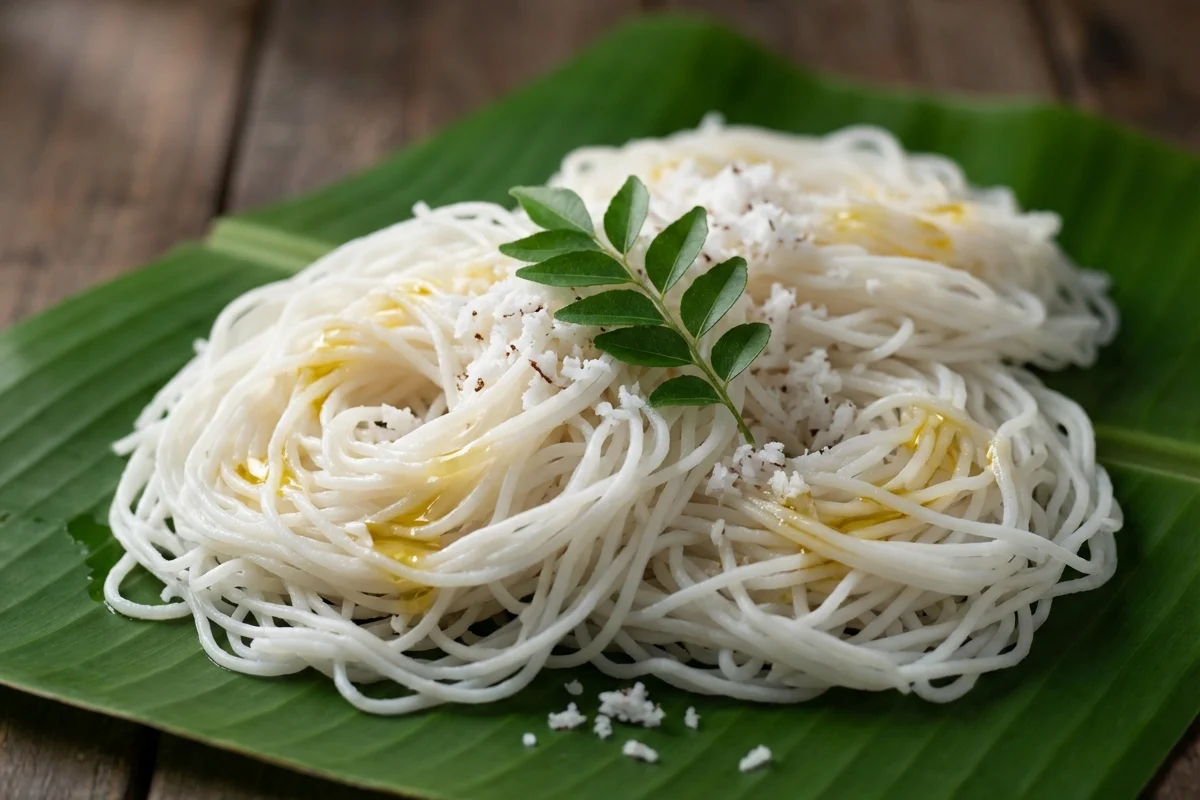
Santhakai
Santhakai is a soft South Indian string hopper style dish made from rice flour dough pressed into fine noodle-like strands and gently steamed. Light, comforting, and simple, it is lovely with coconut, milagai podi, or a mild kurma.
For 4 servings
- prep
Grease the steaming plates lightly.
Brush the idiyappam or steaming plates with a little sesame oil so the pressed strands release easily after steaming.
- boil · ~5 min
Boil the water with salt.
Heat water in a pan and bring it to a gentle boil. Stir in the salt so it dissolves fully.
- mix · ~3 min
Mix the rice flour with hot water.
1.Place the rice flour in a wide bowl.2.Pour the hot salted water in gradually while mixing with a spoon.3.Add the sesame oil and bring the mixture together into a rough dough.TIPAdd the water little by little. The dough should be soft and pressable, not runny. - knead · ~3 min
Knead the dough until smooth.
When cool enough to handle, knead the dough for 2 to 3 minutes until smooth and crack-free. Keep it covered so it does not dry out.
TIPPress the dough while still warm for the smoothest strands. - assemble · ~5 min
Press the dough into thin strands.
1.Fill the santhakai or idiyappam press with a portion of the warm dough.2.Press it in circles onto the greased steaming plates.3.Make 4 medium nests, leaving a little space between them. - steam · ~10 min
Steam the santhakai until cooked.
Place the plates in a steamer and cook over medium heat until the strands turn soft and set.
TIPDo not oversteam or the strands can turn dry and firm. - rest · ~2 min
Let them rest briefly.
Turn off the heat and rest the steamed santhakai for 2 minutes so they lift off neatly.
- serve
Serve the santhakai warm.
Lift them gently from the plates and serve warm. They pair well with coconut, milagai podi mixed with sesame oil, or a light vegetable kurma.
What to keep in mind.
7 tips from the recipe — small details that make a real difference to the final dish.
- 1Use boiling hot water to hydrate the rice flour so the dough becomes smooth and presses without breaking.
- 2Knead while the dough is still warm; once it cools fully, santhakai tends to crack in the press.
- 3Keep the dough covered with a damp cloth between batches to prevent the surface from drying out.
- 4If the strands break while pressing, knead in a spoonful of hot water until the dough softens again.
- 5Grease the plates lightly, not heavily, or the nests can slide and lose their shape while steaming.
- 6Steam only until the strands turn soft and set; oversteaming makes them dry and slightly chewy.
- 7Let the nests rest for 2 minutes after steaming so they release cleanly without tearing.
Adapt it for your goals.
Coconut-finished
Toss the hot santhakai with fresh grated coconut and a drizzle of sesame oil for a mild, comforting breakfast-style version.
kurma styleKurma-style
Serve with a light vegetable kurma to turn it into a fuller meal with more moisture and savory spice.
milagai podiMilagai-podi
Mix milagai podi with sesame oil and spoon it over the strands for a more pungent, fiery finish.
mini nestsMini-nests
Press smaller nests instead of medium ones; they steam a bit faster and are easier to portion for tiffin or breakfast.
Why this is on our healthy list.
Light Steamed Preparation
Because santhakai is steamed rather than fried, it stays light and easy to pair with simple sides like coconut or mild kurma.
Simple Ingredient List
Made with rice flour, water, salt, and a little sesame oil, this dish is gentle, minimal, and suitable when you want plain comfort food.
Naturally Gluten-Free Base
Rice flour forms the main dough, making the base of this dish naturally free from wheat-based ingredients.
Frequently asked questions
The dough is usually too dry or too cool. Knead it again while warm and add a little hot water until it becomes smooth and pliable.