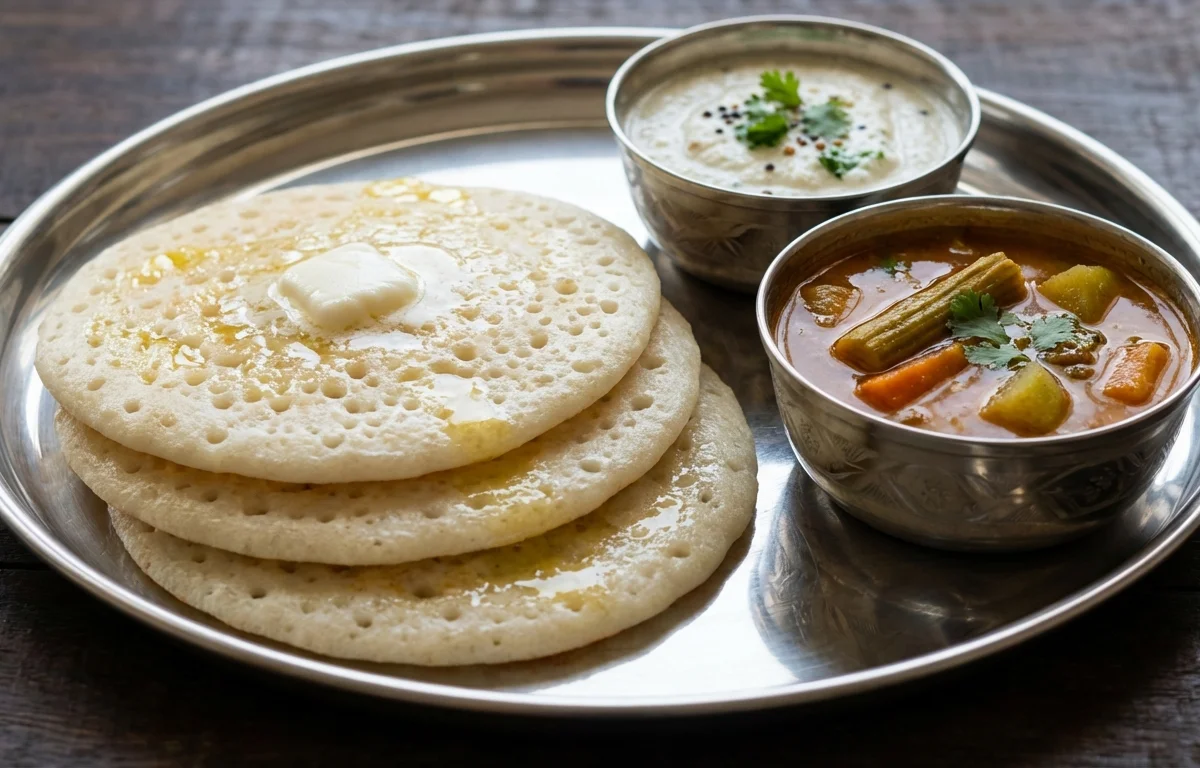
Set Dosa
Soft, spongy dosas served in a small stack, set dosa is a Karnataka favorite with a mild tang from fermentation. These thick little dosas cook up tender and pair beautifully with chutney and vegetable saagu.
For 12 servings
- prep · ~360 min
Soak the rice, dal, and poha.
1.Rinse the rice well and soak it in enough water for 6 hours.2.Rinse the urad dal and fenugreek seeds together and soak them in enough water for 6 hours.3.Rinse the poha quickly and soak it in water for 20 minutes before grinding.TIPUse thick poha for a softer, fluffier set dosa. - mix · ~20 min
Grind the batter.
1.Drain the urad dal and fenugreek seeds, then grind them with water to a smooth, fluffy batter.2.Drain the rice and poha, then grind them with water to a smooth but slightly thick batter.3.Combine both batters in a large bowl and mix well by hand for 1 to 2 minutes. - rest · ~480 min
Ferment the batter.
Add sugar to the batter and mix well. Cover loosely and let it ferment in a warm place for 8 hours, until airy and slightly risen.
TIPLeave enough space in the bowl because the batter will rise as it ferments. - mix · ~1 min
Season the batter.
Add salt to the fermented batter and mix gently without knocking out too much air. The batter should be thick yet pourable, a little thicker than regular dosa batter.
- fry · ~25 min
Cook the set dosas.
1.Heat a dosa tawa over medium heat and lightly grease it with a little oil.2.Pour a small ladle of batter onto the tawa and spread it gently into a thick 4 to 5 inch circle.3.Drizzle a few drops of oil around the edges, cover, and cook until the top looks set and the bottom turns light golden.4.Remove without flipping and repeat with the remaining batter to make 12 dosas.TIPKeep the heat medium and do not spread the batter too thin, or the dosas will lose their signature soft texture. - serve
Serve the set dosas hot.
What to keep in mind.
7 tips from the recipe — small details that make a real difference to the final dish.
- 1Grind the urad dal until very fluffy; that trapped air is what gives set dosa its signature sponge.
- 2Mix the combined batter by hand for a minute or two to help kick-start fermentation naturally.
- 3After fermentation, stir gently only enough to add salt; overmixing will deflate the airy batter.
- 4Keep the batter slightly thicker than regular dosa batter so it holds a small, puffy 4- to 5-inch round.
- 5Cook on medium heat with a lid; the trapped steam sets the top without needing to flip the dosa.
- 6If the batter is sour enough but too thick after fermenting, add water a tablespoon at a time, not all at once.
- 7Set dosas are best served fresh, but leftover batter keeps well refrigerated for a day and may need a light stir before cooking.
Adapt it for your goals.
Millet
Replace part of the rice with little millet or foxtail millet for a nuttier flavor and a more whole-grain style set dosa.
jaggery touchJaggery-touch
Swap the sugar for a little jaggery to encourage fermentation while adding a gentler, deeper sweetness.
mini set dosaMini-set-dosa
Make smaller rounds for tiffin-style serving; they cook quickly and are ideal for stacking with chutney and saagu.
low oilLow-oil
Use a well-seasoned cast-iron or nonstick tawa and brush on only a thin film of oil around the edges.
Why this is on our healthy list.
Fermented for easier digestion
The naturally fermented rice-and-dal batter can be gentler on digestion and develops beneficial acidity and flavor.
Balanced rice and lentil base
Rice provides energy while urad dal adds plant protein, making set dosa more balanced than a plain rice-only dish.
Light and soft breakfast option
Because the dosas are steamed under a lid and use only a little oil, they stay soft without heavy frying.
Frequently asked questions
Usually the batter was not ground fluffy enough, did not ferment well, or was spread too thin. Keep the batter thick, airy, and cook covered on medium heat.