
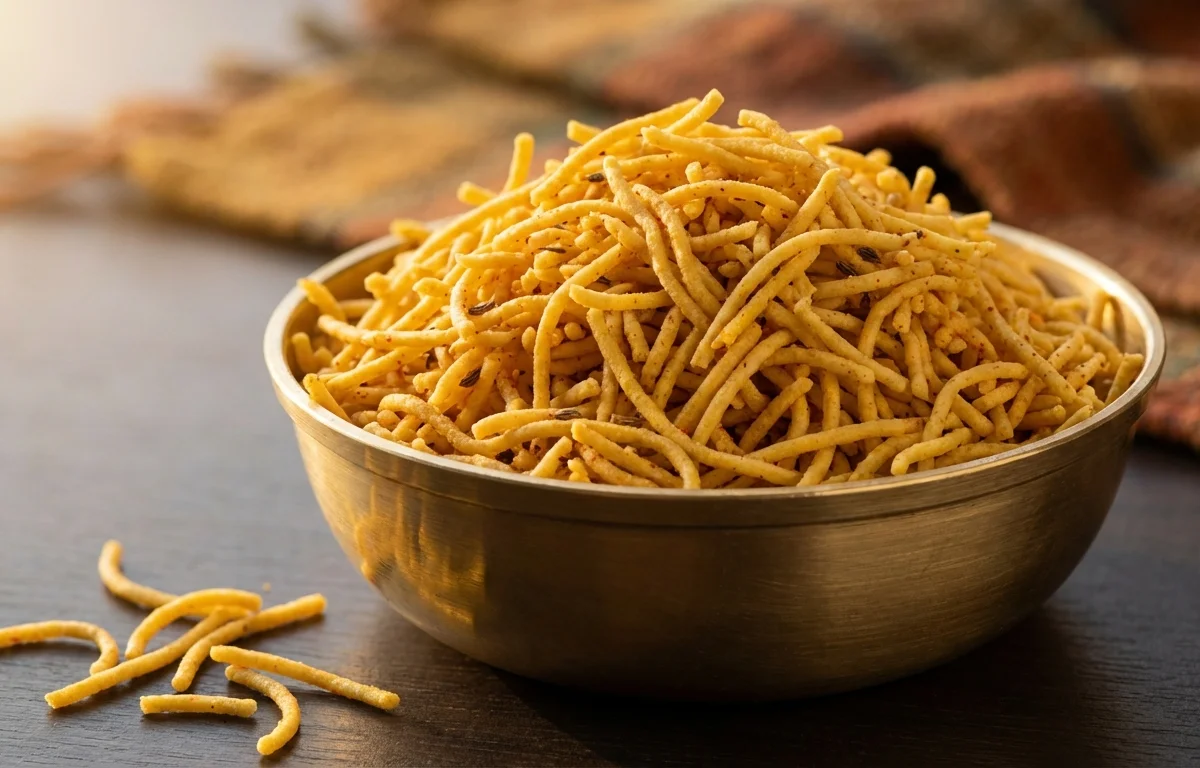
Sev
Crispy, golden strands of deep-fried gram flour dough, subtly spiced with carom seeds and black pepper. This classic Gujarati snack is a staple in Indian households, perfect with chai or as a crunchy topping for chaats.
For 4 servings
- prep · ~10 min
Prepare the sev dough.
1.In a large mixing bowl, combine 2 cups besan, 0.5 tsp salt, 1 tsp ajwain, 1 pinch black pepper, and 1 pinch turmeric powder.2.Add 2 tbsp hot oil and rub it into the flour with your fingertips until it resembles coarse crumbs.3.Gradually add 0.5 cup warm water, mixing continuously, until a soft, smooth, and slightly sticky dough forms.4.Knead the dough for 2-3 minutes. Cover with a damp cloth and set aside.TIPHot oil creates the moyan that makes the sev crispy and flaky. Do not skip this step. - fry · ~5 min
Heat oil for deep frying.
1.Pour 2 cups of oil into a large kadhai and place over medium heat.2.Check the oil temperature by dropping a tiny piece of dough into it; if it rises to the surface steadily without browning too quickly, the oil is ready.TIPMaintain medium heat — the oil should be around 170°C (340°F). Too hot and the sev will burn; too cool and it will be greasy. - fry · ~4 min
Press and fry the sev.
1.Grease the inside of the sev press and fit it with the fine sev plate.2.Fill the press with a portion of the dough and close it tightly.3.Hold the press over the hot oil and rotate the handle in a circular motion to extrude thin strands directly into the oil.4.Fry for 1.5 to 2 minutes, turning once with a slotted spoon, until light golden and crisp.5.Remove the fried sev with a slotted spoon and drain on paper towels.TIPDo not overcrowd the kadhai. Fry in small batches so the strands cook evenly and stay separate. - rest · ~15 min
Cool the sev completely.
Spread the fried sev on paper towels and allow it to cool to room temperature. The strands will become even crispier as they cool.
TIPDo not store until completely cool, or the sev will lose its crunch and become chewy. - assemble · ~1 min
Break and store the sev.
1.Once fully cooled, gently break the long sev strands into smaller, bite-sized pieces.2.Store in an airtight container at room temperature to retain crispness.
What to keep in mind.
6 tips from the recipe — small details that make a real difference to the final dish.
- 1Use a fine-holed sev press plate for thin, delicate strands that fry evenly.
- 2Rub the hot oil into the besan thoroughly until it feels like breadcrumbs for a flaky texture.
- 3Test oil temperature with a dough piece; if it sizzles and rises slowly, it's perfect.
- 4Fry in small batches to prevent strands from clumping and ensure even cooking.
- 5Cool sev completely on paper towels before breaking or storing to lock in crunch.
- 6Store in an airtight container with a silica gel packet to maintain crispness for weeks.
Adapt it for your goals.
Spicy sev
Add 1 tsp red chili powder and ½ tsp cayenne to the dry ingredients for a fiery kick; perfect for chaat toppings.
herb sevHerb sev
Mix in 2 tbsp finely chopped fresh curry leaves or coriander into the dough for an herby, fragrant twist.
low oil baked sevLow-oil baked sev
Bake extruded strands on a greased tray at 180°C (350°F) for 12–15 minutes for a lighter, less greasy version.
garlic sevGarlic sev
Add 1 tsp finely grated garlic and ½ tsp asafoetida to the dough for a pungent, savory variation that pairs well with yogurt.
Why this is on our healthy list.
High in Plant Protein
Chickpea flour (besan) is a rich source of plant-based protein, supporting muscle repair and satiety.
Good Source of Fiber
Besan provides dietary fiber that aids digestion and helps maintain stable blood sugar levels.
Contains Digestive Spices
Carom seeds (ajwain) and black pepper stimulate digestive enzymes and reduce bloating after meals.
Low Glycemic Index
Chickpea flour has a low GI, making sev a more balanced snack option compared to refined flour snacks.
Frequently asked questions
Soft sev usually means the oil was too cool (below 160°C) or the dough was over-kneaded; maintain oil at 170°C and knead only until smooth.


