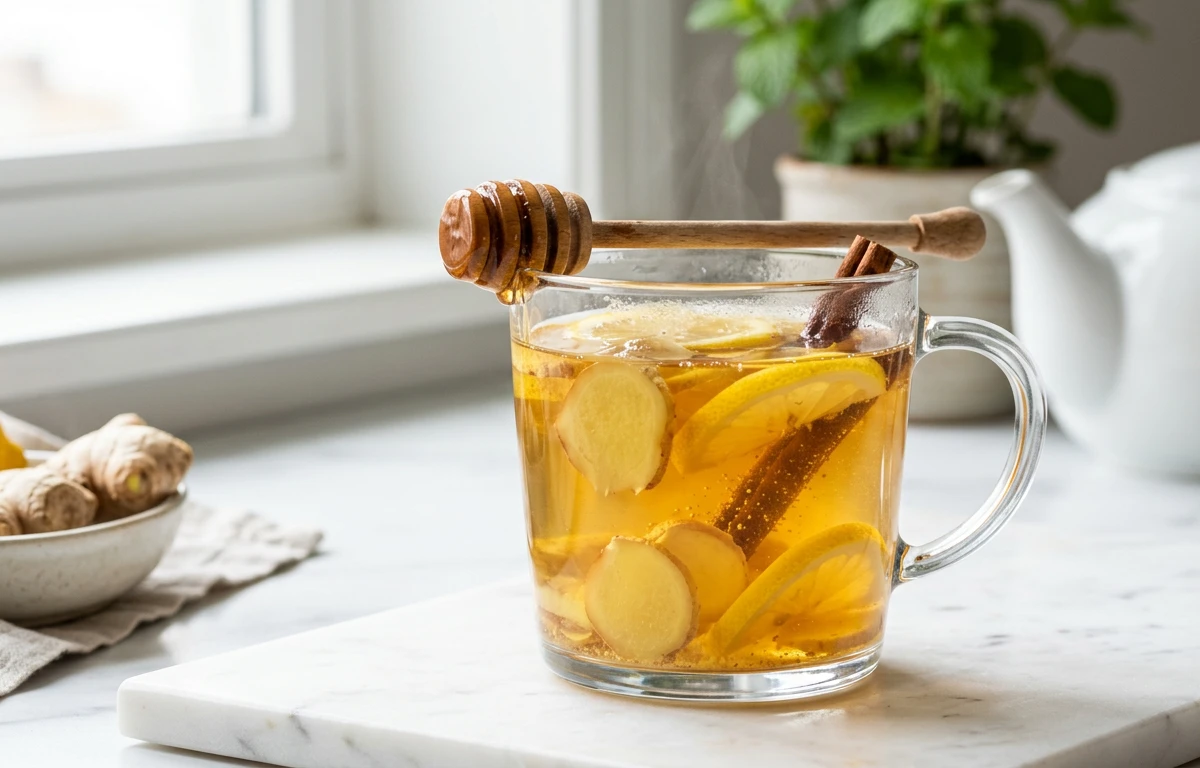
Simple Fresh Ginger Tea
A warm, soothing cup of freshly brewed ginger tea with a spicy kick. The sharp, aromatic notes of crushed ginger steeped with tea leaves create a comforting drink that warms you from the inside out. Perfect for chilly mornings or whenever you need a gentle pick-me-up.
For 2 servings
- prep · ~1 min
Crush or grate the ginger.
Peel a 2-inch piece of fresh ginger and crush it lightly with a mortar and pestle, or grate it coarsely. Crushing releases more oils for a stronger ginger flavor.
TIPDon't slice the ginger — crushing or grating exposes more surface area and gives a bolder, spicier brew. - boil · ~6 min
Boil water with ginger.
Pour 2 cups of water into a small saucepan. Add the crushed ginger and bring to a rolling boil over medium-high heat. Once boiling, reduce heat to medium and let it bubble gently for 4 to 5 minutes so the water absorbs the ginger's sharp, spicy notes.
TIPThe longer you boil the ginger, the stronger and more pungent the tea will be. For a milder cup, reduce the boiling time to 2 minutes. - boil · ~3 min
Add tea leaves and brew.
Add the tea leaves to the simmering ginger water. Let it boil for another 2 to 3 minutes until the liquid turns a deep amber-brown. The bubbles should push the leaves around the surface — this aeration develops a fuller body.
TIPWatch the color — when it turns a rich dark brown, it's ready. Over-brewing makes the tea bitter. - mix · ~1 min
Strain and stir in sugar.
Place a tea strainer over a teapot or directly over serving cups. Pour the tea through the strainer to catch all the ginger bits and tea leaves. Add sugar and a tiny pinch of salt while the tea is still hot, then stir well to dissolve.
TIPThat pinch of salt is the secret — it rounds out the bitterness and makes the ginger taste brighter without making the tea salty. - serve
Serve piping hot.
Pour into cups and serve immediately while steaming hot. The warmth carries the ginger's aromatic oils best when it's fresh off the stove.
What to keep in mind.
7 tips from the recipe — small details that make a real difference to the final dish.
- 1Crush rather than slice ginger to release maximum essential oils for a bolder brew.
- 2Boil ginger for 4–5 minutes for a strong spicy kick; reduce to 2 minutes for a milder cup.
- 3Watch the tea color: a deep amber-brown signals readiness; over-brewing turns it bitter.
- 4Add that tiny pinch of salt — it mellows bitterness and brightens the ginger's flavor.
- 5Strain through a fine mesh sieve to catch all ginger fibers and loose tea leaves.
- 6Serve immediately; the aromatic oils dissipate quickly as the tea cools.
- 7For a creamy variation, finish with a splash of warm milk after straining.
Adapt it for your goals.
Milk Chai (Doodh Chai)
After straining, stir in 1/4 cup warm milk per cup. This softens the ginger bite and creates a creamy, comforting chai that's popular in Indian households.
Lemon Ginger TeaLemon-Ginger Tea
Add a squeeze of fresh lemon juice after straining. The acidity brightens the ginger and adds a citrusy note — excellent for sore throats or cold mornings.
Turmeric Ginger TeaTurmeric Ginger Tea
Add 1/2 teaspoon of grated fresh turmeric or 1/4 teaspoon turmeric powder along with the ginger. This gives an earthy, anti-inflammatory twist and a golden color.
Honey SweetenedHoney-Sweetened
Replace sugar with 1–2 teaspoons of raw honey after the tea has cooled slightly (below 140°F) to preserve honey's enzymes. A natural, floral sweetness.
Iced Ginger TeaIced Ginger Tea
Brew double-strength (double the ginger and tea leaves), strain, sweeten, then pour over ice. A refreshing summer drink that keeps the spicy kick.
Why this is on our healthy list.
Soothes Digestion
Ginger is traditionally used to ease nausea, bloating, and indigestion. This warm tea can help settle the stomach after a meal.
Anti-Inflammatory Properties
Ginger contains gingerols and shogaols, compounds known for their anti-inflammatory effects, which may help reduce muscle soreness and joint discomfort.
Modest Source of Antioxidants
Black tea and ginger both provide antioxidants like catechins and polyphenols that help combat oxidative stress in the body.
Warming & Comforting
The spicy heat of ginger improves circulation and provides a natural warming sensation, making it a cozy choice for cold days or when feeling under the weather.
Frequently asked questions
A tiny pinch of salt doesn't make the tea salty — it rounds out any bitterness from the black tea and makes the ginger flavor taste brighter and more aromatic.