
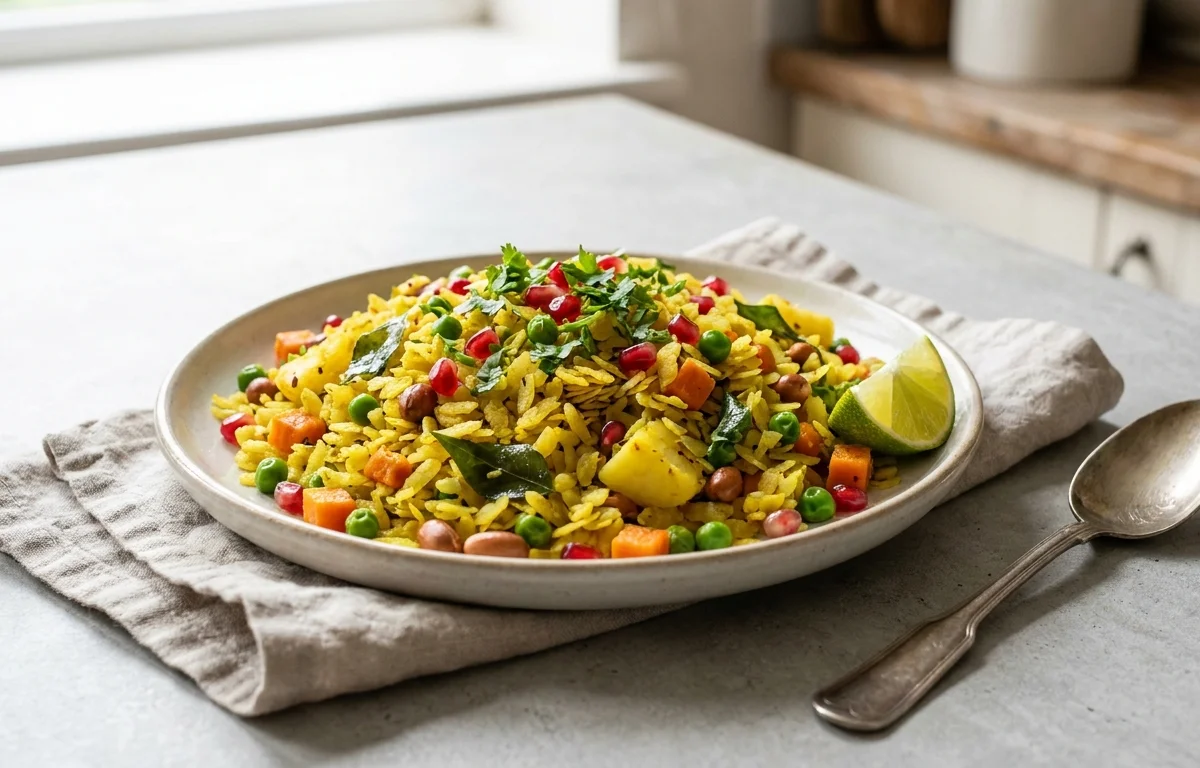
Simple Vegetable Poha
Light, fluffy flattened rice tossed with a colorful medley of vegetables, crunchy peanuts, and a gentle tempering of mustard seeds and curry leaves. This quick breakfast from Maharashtra comes together in under 20 minutes — mildly spiced, perfectly soft, and finished with a bright squeeze of lemon.
For 4 servings
- prep · ~5 min
Rinse and drain the poha.
1.Place 2 cups poha in a colander or large bowl.2.Rinse gently under running water for 30 seconds until all flakes are moist.3.Drain completely and let sit for 5 minutes — poha should be soft and fluffy, not mushy.TIPPress a grain between your fingers — it should mash easily. If it feels dry, sprinkle a few more drops of water. - temper · ~3 min
Make the tempering.
1.Heat 2 tbsp oil in a large kadhai or pan over medium heat.2.Add 1 tsp mustard seeds and let crackle for 30 seconds.3.Add 0.5 tsp cumin seeds and 3 tbsp peanuts — sauté for 1 minute until peanuts turn light golden.4.Add 8 curry leaves and 2 slit green chilies — stir for 30 seconds until fragrant.TIPKeep the heat medium — high heat burns the peanuts and spices. - saute · ~9 min
Cook the vegetables.
1.Add 2 finely chopped onions and sauté for 3–4 minutes until translucent.2.Add 1 diced potato and cook for 3 minutes until slightly tender, stirring occasionally.3.Add diced carrot and 0.25 cup green peas — sauté for 2 minutes.4.Sprinkle 1 pinch turmeric, 0.5 tsp salt, and 1 tsp sugar — stir to coat evenly.TIPDice the potato small (pea-sized) so it cooks quickly without needing extra water. - mix · ~3 min
Fold in the soft poha.
1.Add the drained poha to the pan with vegetables.2.Gently fold everything together until the poha is evenly yellow from the turmeric.3.Cover and steam on low heat for 2 minutes — this fluffs up the poha.TIPFold gently — over-mixing turns poha into a sticky mush. - garnish · ~1 min
Finish with lemon, coconut, and coriander.
1.Turn off the heat.2.Squeeze 2 tbsp fresh lemon juice over the poha and fold gently.3.Sprinkle 3 tbsp fresh grated coconut and 3 tbsp chopped coriander leaves on top.TIPAdd lemon juice only after turning off the heat — cooking it makes it bitter. - serve
Serve hot with extra coconut and a lemon wedge.
What to keep in mind.
6 tips from the recipe — small details that make a real difference to the final dish.
- 1Use thick poha (flattened rice) for this recipe; thin poha turns mushy and clumps together.
- 2Rinse poha gently and let it rest for exactly 5 minutes so it softens without becoming soggy.
- 3Dice potatoes into very small cubes (pea-sized) so they cook through in the short sauté time.
- 4Add the lemon juice only after turning off the heat to keep its bright, fresh flavor.
- 5Toast the peanuts until they turn light golden for a deep nutty crunch that contrasts with the soft poha.
- 6Fold the poha into the vegetables with a light hand — over-stirring breaks the flakes and makes it pasty.
Adapt it for your goals.
Protein-packed
Add 1/2 cup of roasted chickpeas or crumbled paneer after mixing the poha for a more filling breakfast with extra protein and a delightful chew.
no onion garlic (Jain style)No-onion-garlic (Jain style)
Skip the onions and substitute with extra diced potatoes and carrots; the turmeric and peanuts still provide plenty of flavor, making it suitable for Jain dietary restrictions.
spicySpicy
Increase the green chilies to 4 or add a pinch of red chili powder with the turmeric for those who prefer a fiery kick.
Why this is on our healthy list.
Light and Energizing
Flattened rice is easy to digest and provides quick, sustained energy, making this an ideal breakfast that doesn't weigh you down.
Good Source of Plant Protein
Peanuts add a boost of plant-based protein and healthy fats, helping to keep you full and satisfied until your next meal.
Rich in Fiber and Vitamins
Carrots, peas, and potatoes contribute dietary fiber plus vitamins A and C, supporting digestion and immune health.
Low in Saturated Fat
This dish uses only a moderate amount of vegetable oil for tempering, keeping saturated fat low while still delivering rich flavor from peanuts and spices.
Frequently asked questions
Always use thick poha (also called 'poha' or 'chivda' variety) — the thin variety will become mushy and clump together when mixed with vegetables.


