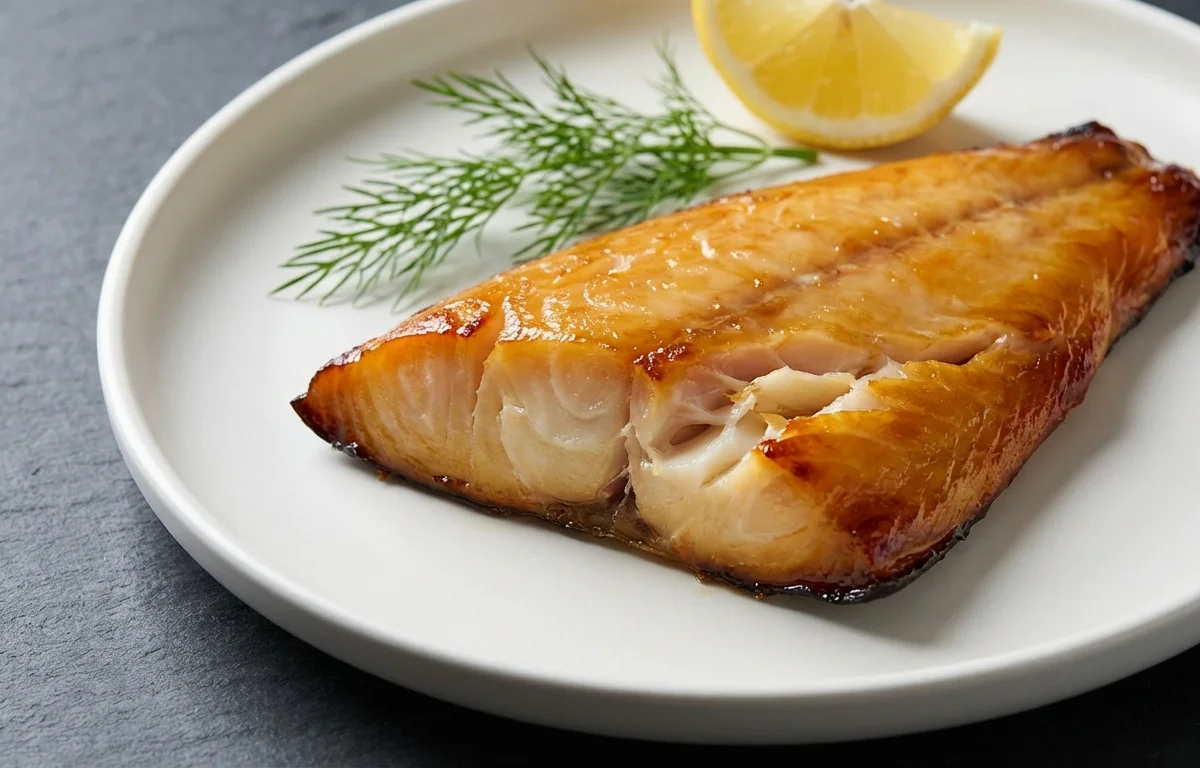
Smoked Sablefish
Rich, buttery sablefish infused with gentle alderwood smoke until silky and flaky. A Pacific Northwest classic with a lacquered honey-soy glaze that balances the fish's natural oils. Ready in under two hours including brine time.
For 4 servings
- prep · ~45 min
Brine the sablefish.
Dissolve brown sugar and salt in 4 cups cold water. Submerge sablefish fillets in the brine and refrigerate for 45 minutes. Remove, rinse briefly under cold water, and pat completely dry with paper towels.
- prep · ~30 min
Form the pellicle.
Place the brined fillets skin-side down on a wire rack set over a baking sheet. Refrigerate uncovered for 30 minutes until the surface feels slightly tacky. This tacky layer helps the smoke adhere.
TIPA good pellicle is key for smoke penetration. Don't skip this step. - prep · ~2 min
Make the glaze.
In a small saucepan over low heat, combine soy sauce, honey, grated ginger, minced garlic, and rice vinegar. Warm gently until honey dissolves and mixture is fragrant, about 2 minutes. Set aside.
- roast · ~5 min
Fire up the smoker and load the wood chips.
Preheat smoker to 200°F for a gentle, slow smoke. Drain the soaked alder wood chips and add them to the smoker box or directly onto the coals. Wait until you see a thin, steady stream of smoke.
TIPThin blue smoke is what you want — billowing white smoke turns bitter. - roast · ~60 min
Smoke the fish.
Place fillets on the smoker grate skin-side down, away from direct heat. Smoke at 200°F for 60 minutes, maintaining consistent temperature and smoke. The low temperature keeps the fish silky.
- roast · ~20 min
Glaze and finish smoking.
Brush the tops of the fillets generously with the honey-soy glaze. Increase smoker temperature to 225°F and continue smoking for 15-20 minutes until the fish reaches an internal temperature of 145°F and flakes easily.
TIPUse the instant-read thermometer from the thickest part — sablefish is forgiving but shines at exactly 145°F. - serve · ~5 min
Rest and serve.
Transfer fillets to a platter and let them rest for 5 minutes. Season with a pinch of freshly ground black pepper and serve with lemon wedges on the side.
TIPFlake the fish into large pieces with a fork. The skin should lift off cleanly.
What to keep in mind.
6 tips from the recipe — small details that make a real difference to the final dish.
- 1Pat the fish thoroughly dry after brining to ensure the pellicle forms evenly.
- 2Do not exceed 200°F during the first hour—low heat keeps the flesh silky and prevents albumin from seeping out.
- 3Alder wood is traditional for Pacific Northwest fish; apple or cherry wood are mild alternatives.
- 4Brush glaze only in the final 15–20 minutes to avoid burning the sugars.
- 5Let the smoked fish rest 5 minutes before serving so the juices redistribute evenly.
- 6Store leftovers in an airtight container in the fridge for up to 3 days; reheat gently at 275°F to avoid drying.
Adapt it for your goals.
Maple-bourbon glaze
Substitute honey with maple syrup and add 1 tablespoon bourbon to the glaze for a sweet-smoky Southern twist that pairs beautifully with the fish's richness.
no soy versionNo-soy version
Replace soy sauce with coconut aminos for a gluten-free, lower-sodium option; the flavor becomes slightly sweeter but still complements the smoke.
herb crustedHerb-crusted
Sprinkle a mix of dried dill, thyme, and lemon zest over the pellicle before smoking for an aromatic herb layer that contrasts the rich fish.
Why this is on our healthy list.
Rich in Omega-3 Fatty Acids
Sablefish is one of the highest sources of EPA and DHA omega-3s, which support heart health and reduce inflammation.
High-Quality Protein
Each serving provides around 20–25 grams of complete protein, essential for muscle repair and satiety.
Low in Saturated Fat
The healthy unsaturated fats in sablefish promote better cholesterol balance compared to red meat.
Source of Selenium
Sablefish delivers selenium, a key antioxidant mineral that supports thyroid function and immune defense.
Frequently asked questions
Yes, but thaw them completely in the fridge and pat very dry before brining to ensure even seasoning and smoke absorption.