
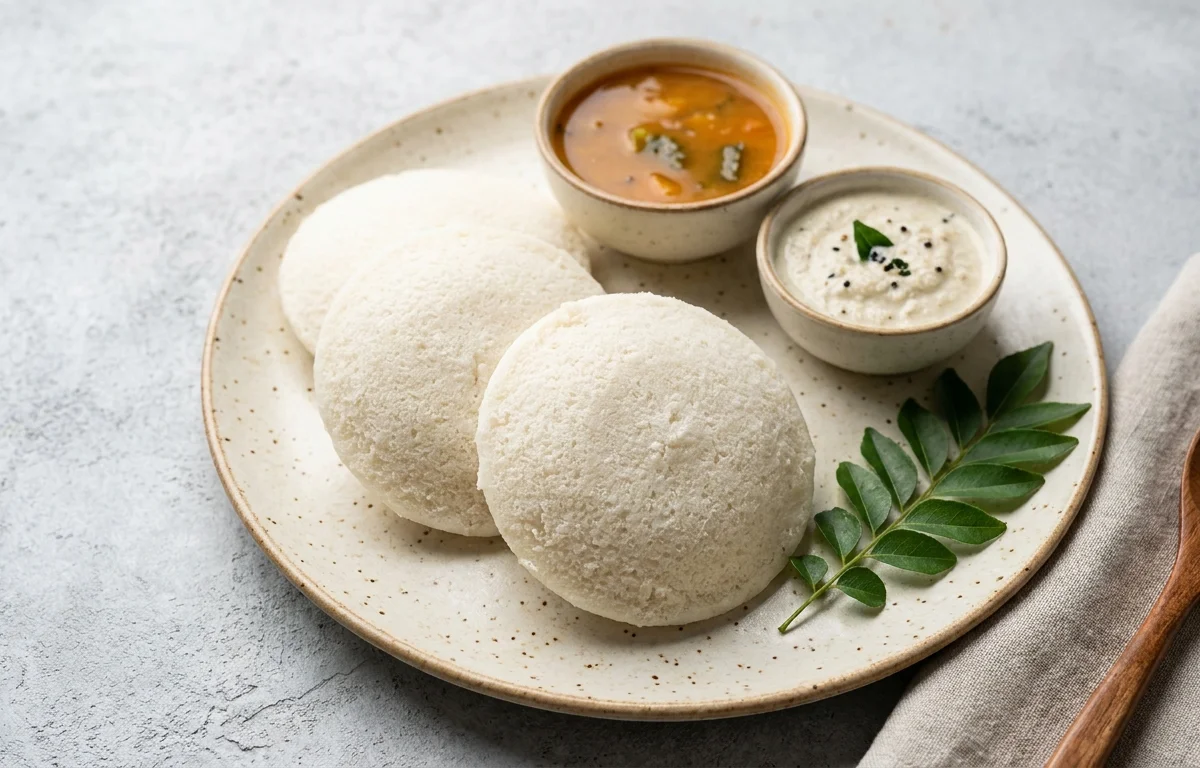
Soft Idli
Soft, pillowy steamed rice cakes with a slightly tangy flavor from natural fermentation. This South Indian breakfast classic is light on the stomach and pairs beautifully with coconut chutney and sambar.
For 6 servings
- prep
Soak the rice and lentils separately.
1.Wash 2 cups idli rice in water 3-4 times until water runs clear. Soak in 1.5 cups water.2.Wash 0.5 cup urad dal and 0.5 tsp fenugreek seeds together. Soak in 1 cup water.3.Let both soak for 5 hours at room temperature.TIPLong soaking helps the dal grind fluffy and gives softer idlis. - mix · ~20 min
Grind the batter.
1.Drain the urad dal, reserving the soaking water. Grind in a wet grinder adding water little by little until light, smooth, and fluffy. This takes about 15-20 minutes.2.Transfer the dal batter to a large mixing bowl.3.Drain the rice and grind it coarsely — slightly grainy texture is fine. Add water as needed to get a thick pouring consistency.4.Mix both batters together with clean hands. Add 0.5 tsp salt and combine well.TIPUsing your hands to mix introduces warmth that aids fermentation. The batter should feel slightly thicker than pancake batter. - rest
Ferment the batter overnight.
Cover the bowl with a lid or cloth and place in a warm spot for 8 hours or overnight. The batter should double in volume and have a pleasant sour aroma.
TIPIn cold weather, place the bowl inside an oven with just the light on for gentle warmth. - prep · ~5 min
Prepare the idli steamer.
1.Pour 2 cups water into the idli steamer or pressure cooker base. Bring to a boil over medium-high heat.2.Lightly grease the idli moulds with oil.3.Gently stir the fermented batter once — do not over-mix or deflate it completely.TIPDo not beat the batter after fermentation. A gentle stir preserves the air pockets that make idlis soft. - steam · ~12 min
Steam the idlis.
1.Pour batter into each mould, filling them about three-quarters full.2.Place the moulds in the steamer and close the lid. If using a pressure cooker, do NOT put the weight on.3.Steam on medium-high heat for 10-12 minutes.4.Turn off the heat and let them rest for 2 minutes before opening the lid.TIPA toothpick inserted into the centre should come out clean. Over-steaming makes idlis dry and hard. - prep
Remove and serve hot.
1.Take out the idli plates and let them cool for 1 minute.2.Use a wet spoon or spatula to gently scoop out each idli.3.Serve immediately with coconut chutney and sambar.TIPDip the spoon in water each time you scoop — it prevents sticking and gives you perfect, whole idlis.
What to keep in mind.
7 tips from the recipe — small details that make a real difference to the final dish.
- 1Soak the rice and urad dal separately for at least 5 hours to ensure proper grinding and fluffiness.
- 2Use a wet grinder for the urad dal to achieve a light, airy batter; mix the rice batter coarsely for texture.
- 3Ferment the batter in a warm spot (like an oven with just the light on) for 8–12 hours until doubled and tangy.
- 4Stir the fermented batter gently with your hands — a light touch preserves the air bubbles for soft idlis.
- 5Do not fill idli moulds more than three-quarters full, as the batter will rise during steaming.
- 6Rest the steamed idlis for 2 minutes inside the cooker before opening the lid to prevent them from collapsing.
- 7Dip a spoon in water before scooping out each idli to prevent sticking and keep them intact.
Adapt it for your goals.
Ragi idli
Replace half the idli rice with ragi (finger millet) flour for a nutrient-dense, earthy-flavored idli that’s higher in fiber and calcium.
vegan oil freeVegan oil-free
Skip oil for greasing moulds; use a non-stick idli plate or line with a banana leaf for a completely oil-free, vegan version.
high protein quinoa idliHigh-protein quinoa idli
Substitute idli rice with an equal quantity of quinoa (soaked overnight) for a gluten-free, high-protein alternative with a slightly nutty taste.
jain idliJain idli
Omit fenugreek seeds and add a pinch of asafoetida (hing) to the batter to mimic the flavor while keeping the recipe onion-garlic-free for Jain dietary restrictions.
spiced vegetable idliSpiced vegetable idli
Fold finely grated carrot, chopped coriander, and a pinch of grated ginger into the fermented batter before steaming for added color, texture, and subtle warmth.
Why this is on our healthy list.
Naturally Fermented for Gut Health
The overnight fermentation of urad dal and rice develops beneficial probiotics and enzymes that aid digestion and improve nutrient absorption.
Good Source of Plant Protein
Urad dal is rich in protein and essential amino acids, making these idlis a satisfying, vegetarian protein option.
Low in Fat, High in Carbohydrates
Steamed with minimal oil, idlis are a light, low-fat breakfast that provides steady energy from complex carbohydrates.
Contains Fenugreek for Metabolism
Fenugreek seeds are known to support healthy blood sugar levels and aid digestion, adding a subtle health boost to every bite.
Gluten-Free Naturally
Made from rice and lentils, this recipe is gluten-free and suitable for those with celiac disease or gluten sensitivity.
Rich in Essential Minerals
Idli rice and urad dal provide important minerals like iron, magnesium, and B-vitamins that support energy production and overall wellbeing.
Frequently asked questions
Over-mixing the fermented batter or not fermenting long enough can deflate the air bubbles. Also, avoid adding too much water while grinding; the batter should be thick, not runny.


