Spaghetti Bolognese
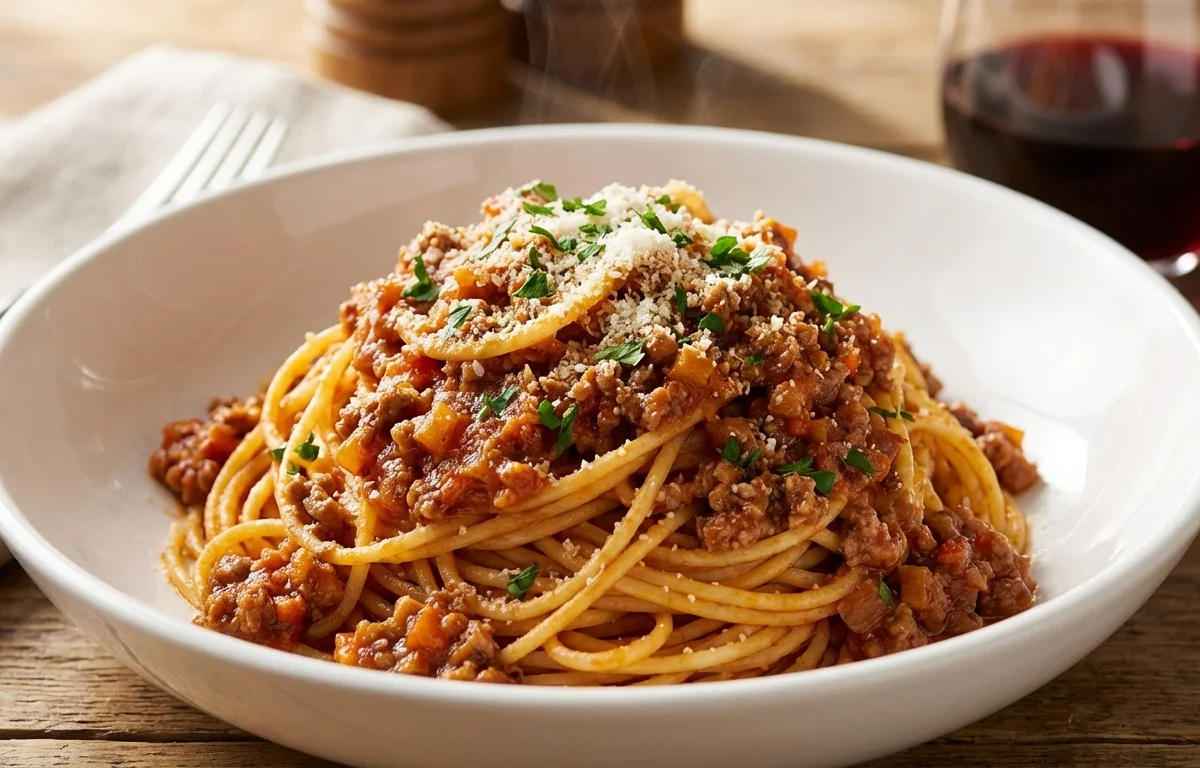
A rich, slow-simmered meat sauce clinging to every strand of perfectly cooked spaghetti. Ground beef and aromatic vegetables meld into a hearty, savory ragu with just a hint of tomato. This is pure comfort food that fills the kitchen with an irresistible aroma.
For 4 servings
- prep · ~10 min
Prep the vegetables.
1.Finely chop the onion.2.Finely dice the carrot and celery stalk.3.Mince the garlic cloves. - saute · ~8 min
Brown the ground beef.
1.Heat olive oil in a large skillet over medium-high heat.2.Add ground beef and break it apart with a wooden spoon.3.Cook until well browned and no pink remains, about 8 minutes.4.Transfer beef to a plate with a slotted spoon, leaving the fat in the pan.TIPLet the beef develop a deep brown crust — that's where the flavor lives. Don't stir it constantly. - saute · ~7 min
Sauté the aromatic vegetables.
1.Add onion, carrot, and celery to the same skillet.2.Cook over medium heat until softened and onion is translucent, about 5 to 7 minutes.3.Add garlic and cook until fragrant, about 30 seconds.TIPScrape up the browned bits from the bottom of the pan — they add incredible depth. - saute · ~2 min
Bloom the tomato paste.
Stir in the tomato paste and cook for 2 minutes, stirring constantly. This caramelizes the paste and removes the raw tin flavor.
- simmer · ~30 min
Simmer the Bolognese sauce.
1.Return the browned beef to the skillet.2.Pour in the crushed tomatoes and water.3.Add bay leaves, dried oregano, black pepper, and 0.5 tsp salt.4.Bring to a gentle boil, then reduce heat to low.5.Cover partially and simmer for 25 to 30 minutes, stirring occasionally, until the sauce is rich and thickened.TIPA longer simmer deepens the flavor. If you have time, let it go for up to an hour, adding a splash of water if it gets too thick. - boil · ~12 min
Cook the spaghetti.
1.While the sauce simmers, bring a large pot of water to a rolling boil.2.Add 1 tbsp salt to the boiling water.3.Add spaghetti and cook according to package directions until al dente.4.Reserve 0.5 cup of pasta water, then drain the spaghetti in a colander.TIPSalting the pasta water is your only chance to season the spaghetti itself. Make it taste like the sea. - assemble · ~2 min
Combine the spaghetti and sauce.
1.Remove bay leaves from the sauce and discard.2.Add the drained spaghetti directly to the skillet with the sauce.3.Toss well, adding a splash of reserved pasta water to loosen the sauce and help it cling to the pasta. - serve · ~1 min
Plate and garnish.
Divide the spaghetti among bowls. Top with grated parmesan cheese and torn fresh basil leaves. Serve immediately while hot.
TIPWarm the bowls briefly before serving to keep the pasta hot until the last bite.
What to keep in mind.
5 tips from the recipe — small details that make a real difference to the final dish.
- 1Brown the beef in batches if needed to avoid steaming instead of searing.
- 2Finely dice the carrot, celery, and onion so they melt into the sauce.
- 3Bloom the tomato paste for a full 2 minutes to deepen its color and flavor.
- 4Reserve pasta water before draining — the starch helps the sauce cling to spaghetti.
- 5Toss the spaghetti with the sauce in the skillet over low heat for even coating.
Adapt it for your goals.
Mushroom bolognese
Replace half the ground beef with finely chopped mushrooms for a deeper umami flavor and reduced meat content.
lighter sauceLighter sauce
Use ground turkey or chicken instead of beef, and replace half the crushed tomatoes with low-sodium broth for a leaner, brighter sauce.
gluten freeGluten-free
Swap the spaghetti for your favorite gluten-free pasta (like chickpea or rice noodles) — the sauce is naturally gluten-free.
extra herbyExtra-herby
Stir in a handful of fresh chopped parsley and a teaspoon of fresh thyme along with the oregano for a more aromatic sauce.
Why this is on our healthy list.
Rich in Lycopene
The cooked crushed tomatoes provide lycopene, an antioxidant that is better absorbed when tomatoes are heated.
Good Source of Fiber
The carrot, celery, and onion contribute dietary fiber, supporting healthy digestion.
High-Quality Protein
Lean ground beef supplies complete protein, essential for muscle repair and satiety.
Frequently asked questions
Yes, dried spaghetti is standard and works perfectly — just cook it to al dente according to package directions.