
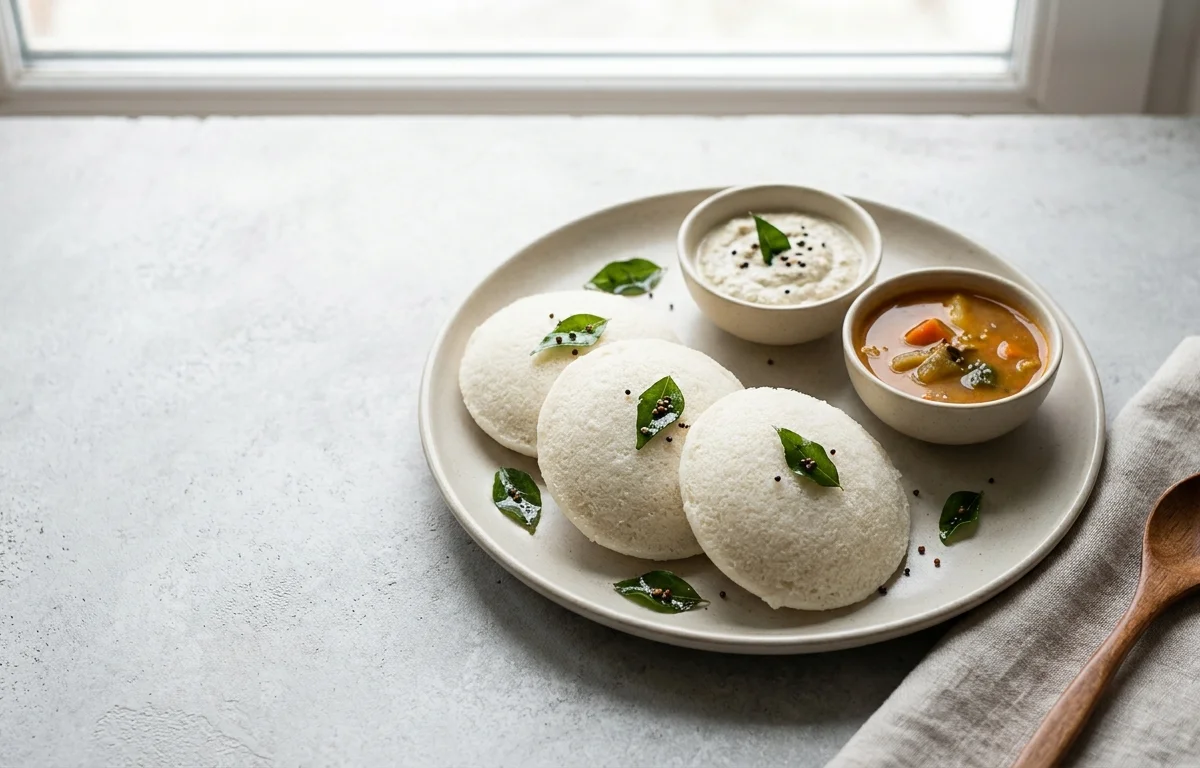
Steamed Idli
Soft, pillowy steamed rice cakes with a slightly tangy flavor from natural fermentation. A beloved South Indian breakfast staple that melts in your mouth, perfect with coconut chutney and piping hot sambar. These cloud-like cakes are surprisingly simple to make at home with just two basic ingredients and some patience.
For 4 servings
- prep
Soak the rice and dal separately.
1.Wash idli rice in 3-4 changes of water until water runs clear.2.Soak rice in 2 cups water for 4 hours.3.Wash urad dal and fenugreek seeds together.4.Soak dal mixture in 1.5 cups water for 4 hours.TIPSoaking softens the grains for a smoother batter. Don't rush this step. - prep · ~25 min
Grind the urad dal to a fluffy paste.
1.Drain soaked urad dal, reserving the soaking water.2.Transfer dal to a wet grinder or blender.3.Add reserved water little by little, grinding for 20-25 minutes until light and fluffy.4.The batter should be smooth, airy, and almost double in volume.TIPThe fluffier the urad dal batter, the softer your idlis. Test: drop a small blob in water — it should float. - prep · ~20 min
Grind the rice to a slightly coarse paste.
1.Drain soaked rice and transfer to grinder.2.Add cold water gradually, grinding for 15-20 minutes.3.Aim for a slightly grainy texture — not as fine as the dal batter.4.The batter should feel like fine semolina between fingers. - mix · ~5 min
Combine batters and mix by hand.
1.In a large bowl, combine both batters.2.Add salt and mix thoroughly with clean hands for 5 minutes.3.The warmth of your hand helps kickstart fermentation.4.Batter should coat the back of a spoon but still flow slowly.TIPMixing by hand introduces beneficial bacteria that aid fermentation. - rest · ~600 min
Ferment the batter overnight.
1.Cover the bowl with a lid or cloth.2.Place in a warm spot (oven with light on, or a warm corner of kitchen).3.Ferment for 8-10 hours or until batter has risen and smells pleasantly sour.4.Batter should double in volume with tiny air bubbles on top.TIPIn cold weather, place the batter in an oven with just the light on. The gentle warmth is perfect for fermentation. - prep · ~5 min
Prepare the steamer and grease moulds.
1.Add water to the idli steamer base and bring to a rolling boil.2.Lightly grease each idli mould with oil.3.Gently stir the fermented batter once — do not overmix or deflate.4.Pour batter into each mould, filling about three-quarters full.TIPDon't overmix after fermentation — you'll lose all those precious air bubbles that make idlis soft. - steam · ~12 min
Steam the idlis for 10-12 minutes.
1.Place the idli stand in the steamer.2.Cover with lid and steam on medium-high heat for 10-12 minutes.3.Check doneness: insert a toothpick or knife — it should come out clean.4.If stuck, the idlis need another 2 minutes.TIPResist the urge to open the lid during the first 8 minutes — the sudden temperature drop can deflate your idlis. - rest · ~3 min
Cool slightly before unmoulding.
1.Remove the idli stand from the steamer.2.Let rest for 2-3 minutes — idlis will shrink slightly from the sides.3.Run a spoon dipped in water around each idli.4.Gently scoop onto a plate.TIPCooling briefly prevents idlis from sticking to the mould and tearing apart. - serve
Serve hot with coconut chutney and sambar.
What to keep in mind.
7 tips from the recipe — small details that make a real difference to the final dish.
- 1Use a wet grinder for the fluffiest urad dal batter; blenders overheat and produce denser idlis.
- 2Test batter consistency: a drop of fermented batter should float in a glass of water — if it sinks, ferment longer.
- 3Never open the steamer lid during the first 8 minutes of steaming; the temperature drop collapses the air bubbles.
- 4If the batter hasn't doubled in volume after 10 hours, place the bowl in a warm oven (light on) or near a window for extra warmth.
- 5To prevent idlis from sticking, dip a spoon in cold water before scooping them out of the mould.
- 6Leftover idli batter keeps well in the fridge for 2-3 days; stir gently before using and bring to room temperature before steaming.
- 7For extra-soft idlis, add a pinch of baking soda to the fermented batter just before steaming (use only if batter is under-fermented).
Adapt it for your goals.
Rava Idli
Replace rice with coarse semolina (rava) — soak rava for 30 minutes, skip fermentation, and add yogurt and baking soda for instant, fluffy idlis. Great when you're short on time.
Vegetable IdliVegetable Idli
Fold in finely grated carrots, chopped coriander, and grated ginger into the fermented batter before steaming. Adds colour, texture, and a subtle sweetness, making idlis more wholesome.
Millet IdliMillet Idli
Substitute half the rice with foxtail millet or barnyard millet. Millet adds a nutty flavour and boosts fibre, ideal for a gluten-free, diabetic-friendly breakfast.
High Protein IdliHigh-Protein Idli
Replace 1/4 cup rice with an extra 1/4 cup urad dal or add soaked masoor dal (red lentils). Increases protein content and makes idlis even fluffier.
Idli with Sourdough StarterIdli with Sourdough Starter
Replace fenugreek seeds with 2 tablespoons active sourdough starter and reduce fermentation time to 6-8 hours. Brings a consistent tang and helps beginners achieve reliable fermentation.
Why this is on our healthy list.
Naturally Gluten-Free
Made entirely from rice and lentils, idlis contain no wheat or gluten, making them safe for people with celiac disease or gluten sensitivity.
Rich in Plant Protein
Urad dal (black gram) provides high-quality plant protein with essential amino acids, supporting muscle repair and satiety.
Supports Gut Health
The natural fermentation process creates probiotics (lactobacillus) that aid digestion and improve gut microbiome diversity.
Low in Fat & Cholesterol-Free
Steaming requires no oil inside the batter, and idlis are free from saturated fats and cholesterol — a heart-friendly breakfast.
Good Source of B Vitamins
Fermentation increases bioavailability of B-complex vitamins (especially B12 precursors and folate) from rice and lentils.
Mineral Boost from Fenugreek
Fenugreek seeds are rich in iron, magnesium, and soluble fibre, which aid blood sugar regulation and iron absorption.
Frequently asked questions
Dense idlis usually indicate under-fermentation (batter didn't double) or overmixing after fermentation. Also, grinding urad dal to a smooth, fluffy paste is critical — a grainy dal batter won't trap enough air.


