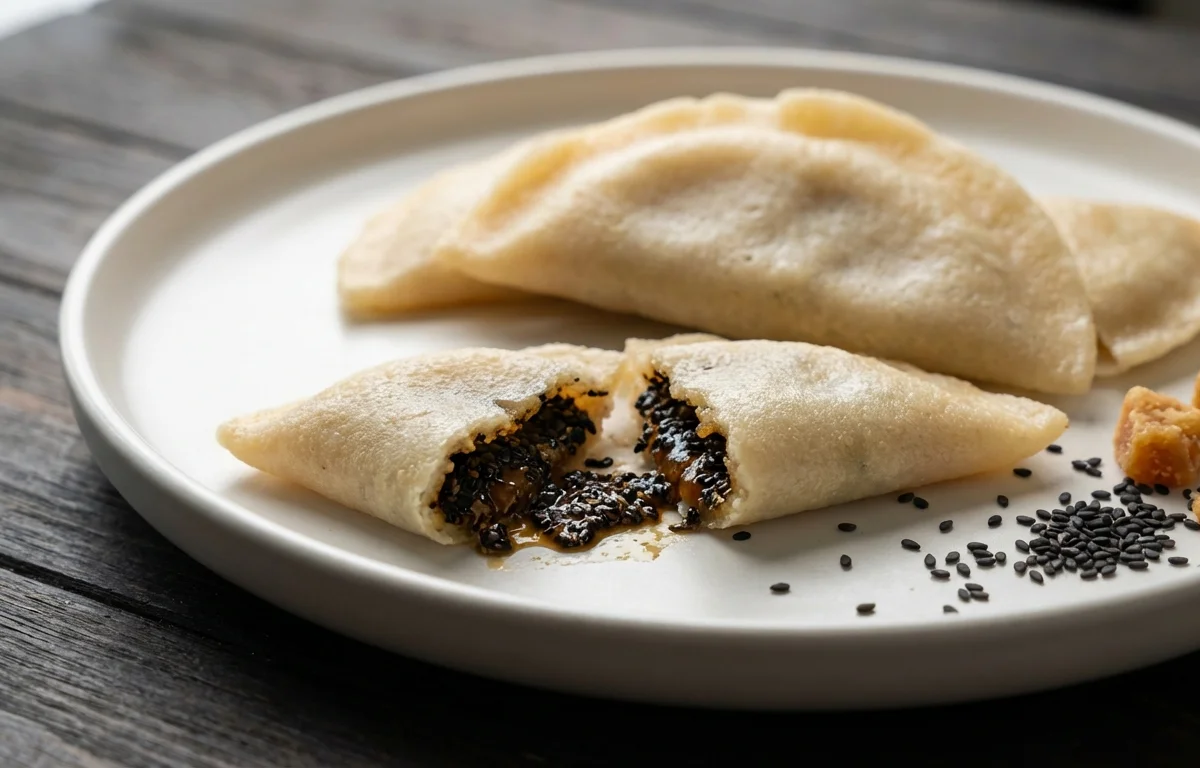
Til Pitha
A beloved Assamese winter sweet made with a thin rice wrapper and a fragrant filling of sesame and jaggery. It cooks up lightly crisp outside with a warm, nutty center that feels especially comforting with tea.
For 8 servings
- prep
Soak and drain the rice.
Wash the rice well, soak it in enough water for 4 hours, then drain completely. Spread it on a cloth for 15 to 20 minutes so it stays damp but not wet.
- mix · ~10 min
Grind the rice into a fine damp flour.
1.Add the drained rice to a grinder in batches.2.Sprinkle in a little water as needed and grind to a fine, slightly moist powder.3.Sieve the rice flour and regrind any coarse bits.4.Keep the flour covered so it does not dry out.TIPThe rice flour should feel soft and damp like fresh sand. If it is too wet, the wrapper will turn sticky instead of delicate. - roast
Roast the sesame seeds.
Heat a dry pan over low heat and roast the sesame seeds until aromatic and lightly popping, 2 to 3 minutes. Cool completely.
- mix
Make the filling.
Mix the cooled sesame seeds with grated jaggery until evenly combined. Break up any lumps so the filling stays loose and easy to spread.
- fry · ~3 min
Cook the first pitha.
1.Heat a flat pan or tawa over low heat and grease it very lightly with ghee.2.Sprinkle a thin even layer of damp rice flour in a small round, about 6 inches wide.3.As soon as the surface looks set, spread 2 to 3 tablespoons of sesame jaggery filling in a line across the center.4.Gently roll it up while still warm to make a tight cylinder.TIPKeep the heat low throughout. High heat browns the rice too fast and makes rolling difficult. - fry · ~15 min
Cook the remaining pitha.
Repeat with the remaining rice flour and filling to make 8 pitha, greasing the pan very lightly only when needed. Cook each one just until set and lightly crisp, not deeply browned.
- serve
Serve warm or at room temperature.
What to keep in mind.
7 tips from the recipe — small details that make a real difference to the final dish.
- 1Drain the soaked rice thoroughly; excess surface water makes the ground flour gummy instead of sandy.
- 2Cover the damp rice flour with a cloth between batches so the wrapper doesn't dry out and crack on the pan.
- 3Roast the sesame only until fragrant and just starting to pop; darker roasting can make the filling bitter.
- 4Break the jaggery very finely before mixing so the filling stays loose and spreads in an even line.
- 5Sprinkle the rice flour in a thin, even layer without pressing it down, or the pitha will turn dense.
- 6Roll each pitha while the wrapper is still warm and flexible; once it cools, it is more likely to split.
- 7If the pan gets too hot, lift it off the flame briefly before making the next pitha to prevent browning.
Adapt it for your goals.
Coconut-til
Add a little freshly grated coconut to the sesame-jaggery filling for a softer, richer center with classic winter sweet notes.
veganVegan
Replace the ghee with a neutral oil or coconut oil for greasing; the pitha will still cook and roll well.
low sweetLow-sweet
Reduce the jaggery slightly if you prefer the toasted sesame flavor to stand out more than the sweetness.
black sesameBlack-sesame
Use black sesame seeds for a deeper, earthier flavor and a more traditional rustic look.
Why this is on our healthy list.
Mineral-Rich Sesame
Sesame seeds bring healthy fats along with naturally occurring minerals, adding more nourishment than a plain sweet.
Naturally Gluten-Free
Made from rice, sesame, and jaggery, this pitha suits those avoiding wheat when prepared without cross-contact.
Lightly Cooked Sweet
The wrapper uses very little ghee and is cooked on a lightly greased pan, keeping the sweet relatively light in texture.
Frequently asked questions
The rice flour is likely too dry or the wrapper cooked too long. Keep the flour damp and roll the pitha as soon as the surface sets.