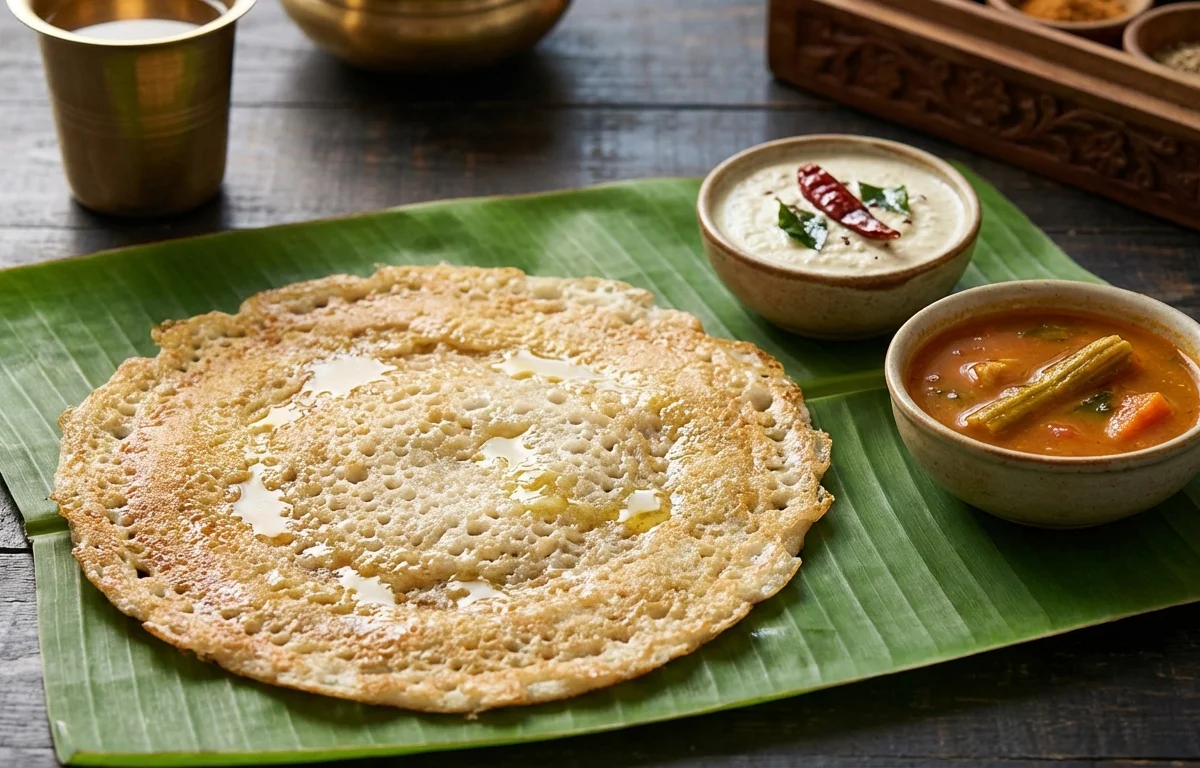
Uddina Pole
A rustic Karnataka flatbread made with urad dal and rice, ground into a smooth batter and cooked on a hot griddle. It turns soft in the center with lightly crisp edges and tastes wonderful with butter, chutney, or a simple vegetable side.
For 8 servings
- prep · ~240 min
Soak the dal and rice.
1.Wash the urad dal well until the water runs mostly clear.2.Wash the rice in the same way.3.Soak the urad dal and rice separately in enough water for 4 hours.TIPSeparate soaking helps the dal grind fluffy and the rice grind smooth. - mix · ~15 min
Grind the batter.
1.Drain the urad dal and rice.2.Grind the urad dal with a little water to a smooth, light batter.3.Grind the rice with grated coconut and a little water to a smooth batter.4.Mix both batters in a large bowl and add salt.TIPKeep the batter thick but pourable so the pole spreads easily without becoming thin like dosa. - rest · ~20 min
Rest the batter.
Let the batter sit for 15 to 20 minutes so it settles and thickens slightly before cooking.
- fry · ~4 min
Cook the uddina pole.
1.Heat a griddle over medium heat and grease it lightly with oil.2.Pour a ladle of batter onto the hot griddle and spread it gently into a medium-thick round.3.Drizzle a little oil around the edges and cook until the bottom turns light golden.4.Flip and cook the other side until done and lightly spotted.TIPCook on medium heat so the center cooks through before the outside gets too dark. - serve
Serve the uddina pole hot.
What to keep in mind.
7 tips from the recipe — small details that make a real difference to the final dish.
- 1Grind the urad dal very smooth and fluffy first; that trapped air helps the pole stay soft instead of dense.
- 2Keep the rice-coconut batter slightly grainier than the dal batter for better texture and lightly crisp edges.
- 3If the batter spreads too fast on the tawa, stir in a spoon of rice flour or rest it a little longer.
- 4Use medium heat throughout; high heat browns the outside before the thick center cooks through.
- 5Grease the griddle lightly between each pole so the surface stays soft with crisp edges, not greasy.
- 6Flip only after the edges look set and the underside is light golden, otherwise the pole can tear.
- 7The batter can be refrigerated for a day; stir well and thin with a splash of water before cooking.
Adapt it for your goals.
Onion-green-chilli
Mix finely chopped onion, green chilli, and curry leaves into the batter for a more savory breakfast-style pole.
low oilLow-oil
Cook on a well-seasoned cast-iron or nonstick tawa with minimal oil if you want a lighter everyday version.
jaggery coconutJaggery-coconut
Add a little jaggery to the batter for a mildly sweet version that pairs well with ghee for breakfast.
milletMillet
Replace part of the rice with little millet or foxtail millet for a nuttier taste and a more wholesome texture.
Why this is on our healthy list.
Protein from Urad Dal
Urad dal adds plant protein, making this flatbread more sustaining than a rice-only tawa bread.
Gentle Energy Source
Rice provides easy-to-digest carbohydrates, which makes uddina pole suitable for a comforting breakfast or light meal.
Naturally Satiating
The combination of lentils, rice, and coconut gives a balanced texture and helps the dish feel filling.
Frequently asked questions
It is better to grind them separately. Urad dal becomes fluffy when ground alone, while rice and coconut need a different texture.