Ukda Rice
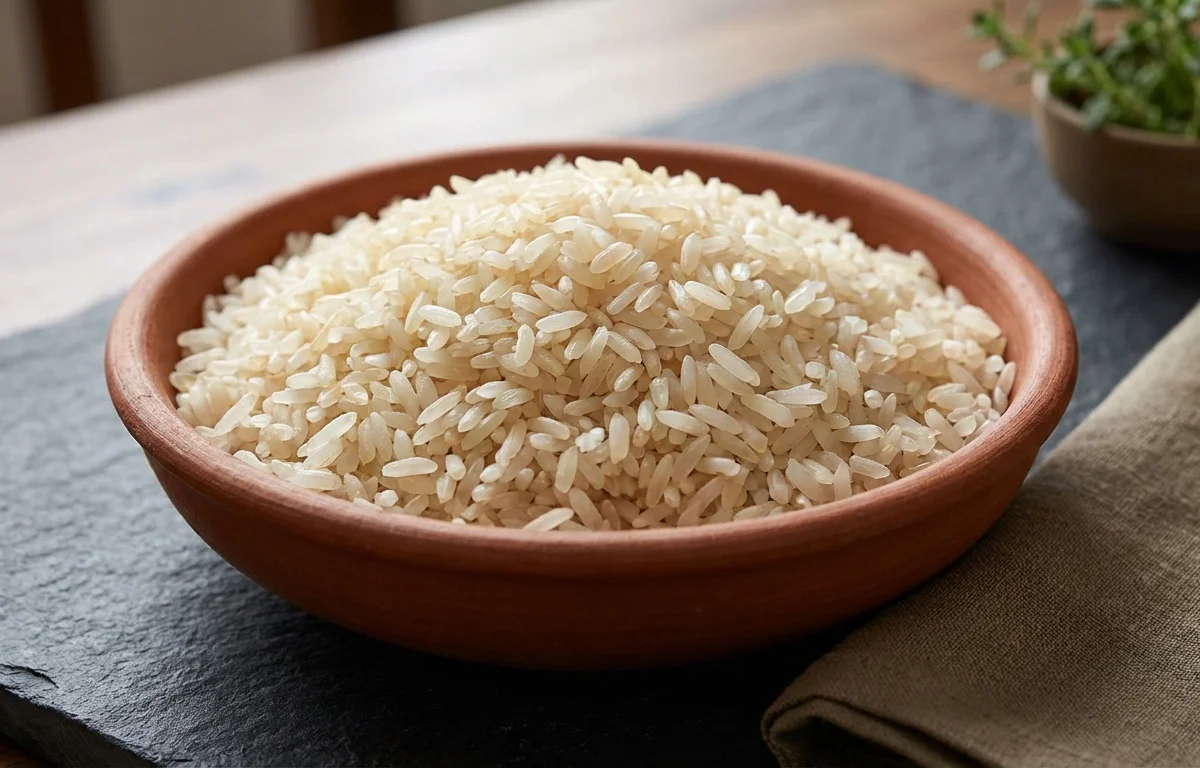
Delicate, separate grains of parboiled rice with a nutty aroma and slightly chewy bite. This is the everyday steamed rice of Maharashtra and coastal India, where rice is parboiled before milling to lock in nutrients. Ready in under 30 minutes, it pairs effortlessly with dal, curries, or a simple dollop of ghee.
For 4 servings
- prep · ~20 min
Wash and soak the rice.
1.Measure 1.5 cups ukda rice into a strainer.2.Rinse under running water until water runs mostly clear (2-3 changes).3.Transfer to a bowl, cover with fresh water, and soak for 20 minutes.TIPSoaking helps the parboiled grains cook evenly and absorb water for a fluffier texture. - boil · ~4 min
Bring water to a boil.
1.Drain the soaked rice and set aside.2.Pour 3.5 cups fresh water into a heavy-bottomed pot.3.Add 0.25 tsp salt and bring to a rolling boil over high heat. - simmer · ~10 min
Add rice and cook on medium heat.
1.Add the drained rice to the boiling water.2.Stir gently once to prevent sticking.3.Cook uncovered on medium heat until most water is absorbed and the surface looks pitted (8-10 minutes).TIPDon't stir too often — it releases starch and can make the rice gummy. - steam · ~15 min
Cover and steam on low heat.
1.Lower the heat to the absolute minimum.2.Cover tightly with a lid and let it steam undisturbed for 8-10 minutes.3.Turn off the heat and let it rest, covered, for 5 minutes.TIPA tight-fitting lid is essential; if it's loose, place a sheet of foil under the lid to trap steam. - garnish · ~1 min
Fluff and finish with ghee.
1.Remove the lid and gently fluff the rice with a fork.2.Drizzle 1 tsp ghee over the top.3.Toss gently to coat and serve hot.TIPUse a fork, not a spoon, to fluff — it keeps the grains intact and airy.
What to keep in mind.
6 tips from the recipe — small details that make a real difference to the final dish.
- 1Use a heavy-bottomed pot to prevent the rice from scorching during the final steam.
- 2Rinse the rice until the water runs mostly clear to remove excess surface starch.
- 3A 20-minute soak is crucial for parboiled rice to cook evenly and achieve a separate grain.
- 4Resist stirring after adding the rice to the boiling water; too much stirring releases starch and makes it sticky.
- 5For perfectly steamed rice, do not peek under the lid during the 8-10 minute steam; trapped steam is essential.
- 6Let the rice rest off the heat for 5 minutes before fluffing to redistribute moisture evenly.
Adapt it for your goals.
Low-oil / Vegan
Replace the ghee with a drizzle of neutral oil (coconut or avocado) or simply skip it. You still get fluffy, separate grains; it's ideal for those avoiding dairy or following a low-fat diet.
Herb infusedHerb-infused
Add 1 crushed garlic clove, a 2-inch cinnamon stick, and 2 green cardamom pods to the boiling water. This variation lends a subtle, aromatic warmth that pairs beautifully with rich curries.
Coconut RiceCoconut Rice
Replace 1 cup of the cooking water with 1 cup of thin coconut milk. The rice takes on a mild sweetness and creamy texture, perfect alongside South Indian or coastal seafood dishes.
Turmeric Rice (Pulissery style)Turmeric Rice (Pulissery-style)
Add 1/2 teaspoon of turmeric powder to the boiling water. This gives the rice a golden color and an earthy undertone, complementing dal or vegetable stir-fries.
Why this is on our healthy list.
Rich in B Vitamins
Because ukda rice is parboiled before milling, essential B vitamins (like thiamine and niacin) migrate into the grain, unlike fully polished white rice.
Sustained Energy
Parboiling alters the starch structure, resulting in a lower glycemic response than standard white rice, providing longer-lasting energy without sharp blood sugar spikes.
Easy to Digest
The parboiling process partially cooks the starch, making ukda rice gentler on the stomach and easier to digest than raw white rice.
Naturally Low in Fat
At only 1 teaspoon of ghee per serving, this dish is very low in fat, with the minimal fat coming from a traditional source that aids absorption of fat-soluble vitamins.
Frequently asked questions
Mushy rice usually means too much water or over-stirring. Measure exactly 3.5 cups water per 1.5 cups rice, and do not stir after adding the rice to the boiling water.



.webp)