Ulte Tawe ka Paratha
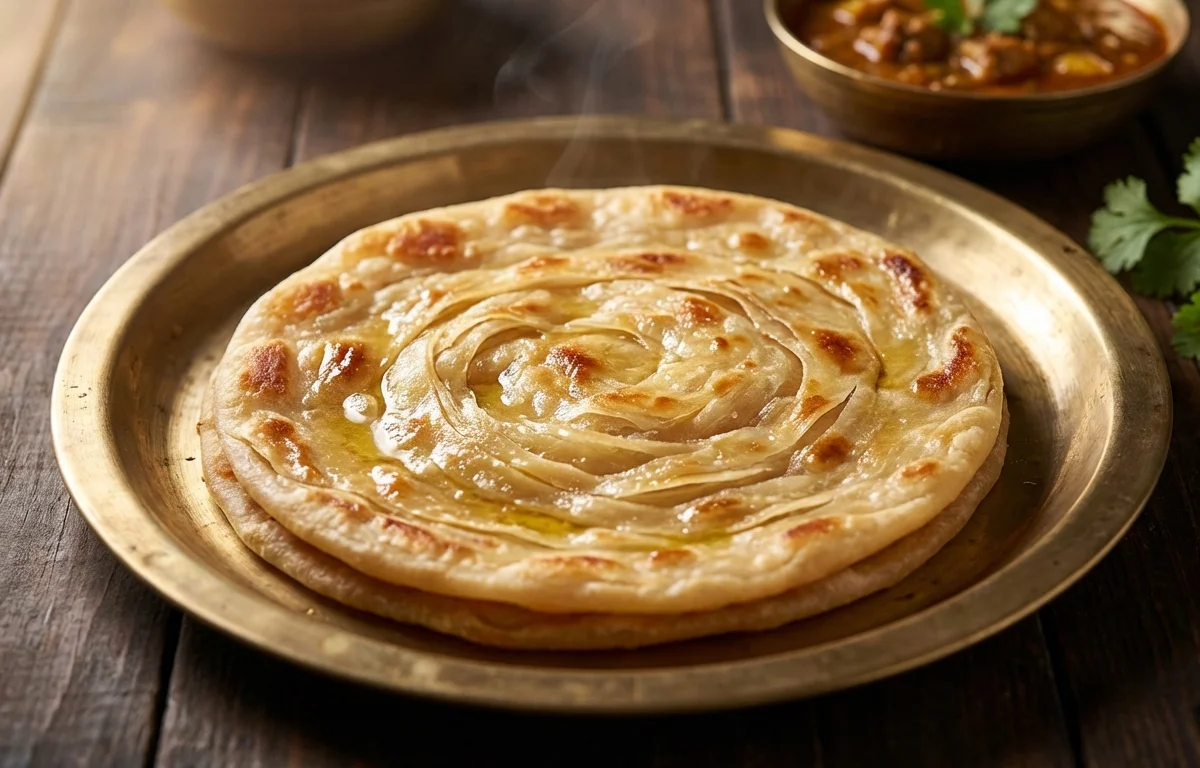
A rustic, flaky whole-wheat flatbread cooked with a unique reverse-griddle technique that gives it a beautifully crisp, blistered crust and a soft, layered interior. Originating from the streets of Old Delhi, this paratha is cooked seam-side up first, trapping steam to create delicate layers before being flipped onto the hot iron.
For 4 servings
- knead · ~30 min
Knead the dough.
1.In a mixing bowl, combine 2 cups whole wheat flour, 1 pinch salt, and 1 tbsp oil. Mix well.2.Gradually add room temperature water, a little at a time, while mixing.3.Knead into a smooth, soft dough for about 8-10 minutes. The dough should be pliable but not sticky.4.Cover the dough with a damp cloth and rest for at least 20 minutes.TIPA well-rested dough relaxes the gluten, making it easier to roll into thin, even discs without springing back. - prep · ~3 min
Divide and shape the dough balls.
1.After resting, give the dough a quick, gentle knead.2.Divide the dough into 4 equal-sized portions.3.Roll each portion into a smooth, round ball between your palms. - prep · ~2 min
Roll out the paratha and apply ghee.
1.Take one dough ball and flatten it lightly with your fingertips.2.Dust it generously with dry whole wheat flour.3.Using a rolling pin, roll it into a circle about 6-7 inches in diameter.4.Spread about 1/2 tsp of ghee evenly over the surface.5.Fold in half to create a semicircle and apply ghee again on the new top surface.6.Fold one more time to create a triangle. Generously dust the triangle with flour. - prep · ~5 min
Roll the paratha to its final shape.
1.Place the floured triangle seam-side down on the rolling surface.2.Gently roll it out into a larger triangle, taking care to maintain the layered folds. Aim for about 5-6 inches on each side.3.Repeat the process of creating layers, applying ghee, folding, and rolling for the remaining dough balls. - fry · ~5 min
Cook the paratha on a hot tawa with the reverse technique.
1.Place the tawa over medium-high heat and let it get very hot.2.Carefully place the first rolled paratha on the hot tawa with the seam side facing UP. This is the key 'ulta' (reverse) step.3.Cook for about 20-30 seconds until you see small bubbles and the bottom side starts to get light golden spots.4.Flip the paratha over so the seam side is now down on the tawa.5.Apply about 1/2 tsp of ghee on the top surface, spreading it evenly with a spoon.TIPCooking seam-side up first traps steam inside the paratha, forcing the layers to separate and creating a perfectly flaky texture. - fry · ~5 min
Finish cooking until golden and crisp.
1.Press the paratha gently with a spatula, especially on the edges, to ensure it cooks uniformly.2.Flip the paratha again and apply a little more ghee on the now slightly crisp top.3.Cook by pressing gently and flipping a couple of times until both sides are beautifully golden-brown and crisp, with charred spots in places.4.The total cooking time per paratha should be about 4-5 minutes. - serve · ~1 min
Serve the paratha piping hot.
1.Remove from the tawa and, if you like, crush it lightly from the sides with your hands to expose the flaky layers.2.Serve immediately, piping hot.TIPA final brush of ghee right before taking it off the tawa adds a rich shine and irresistible aroma.
What to keep in mind.
7 tips from the recipe — small details that make a real difference to the final dish.
- 1Use freshly ground chakki atta for the best flavor and texture.
- 2Let the dough rest for at least 20 minutes; this relaxes gluten and makes rolling easier.
- 3Apply ghee on each fold to create distinct, airy layers inside the paratha.
- 4When rolling the final triangle, use gentle, even pressure so the layers don't fuse together.
- 5The tawa must be very hot before placing the paratha; a hot surface ensures immediate blistering.
- 6Cook seam-side up first to trap steam, forcing the layers to separate into delicate flakes.
- 7Crush the hot paratha gently between your palms after cooking to expose the inner layers.
Adapt it for your goals.
Stuffed aloo paratha
Fill the rolled dough with a spiced mashed potato mixture before folding and rolling; the reverse-griddle technique still creates flaky layers around the savory stuffing.
methi thepla styleMethi thepla style
Add ½ cup finely chopped fresh fenugreek leaves (methi) and 1 tsp ginger-green chili paste to the dough for a spiced, herbaceous variation common in Gujarati cuisine.
whole wheat + millet blendWhole wheat + millet blend
Replace ½ cup whole wheat flour with millet flour (bajra or jowar) for a nuttier, gluten-light version that still works with the reverse-griddle method.
Why this is on our healthy list.
100% Whole Wheat
Made entirely with whole wheat flour (atta), providing dietary fiber that aids digestion and helps maintain steady blood sugar levels.
Rich in Healthy Fats
The ghee used for layering and cooking is a source of butyrate, a short-chain fatty acid that supports gut health and reduces inflammation.
Good Complex Carbohydrates
Whole wheat provides sustained energy release, making this paratha a satisfying and energizing meal base.
Frequently asked questions
Resting relaxes the gluten strands formed during kneading, making the dough easier to roll into thin, even discs without shrinking back.



.webp)