Upma
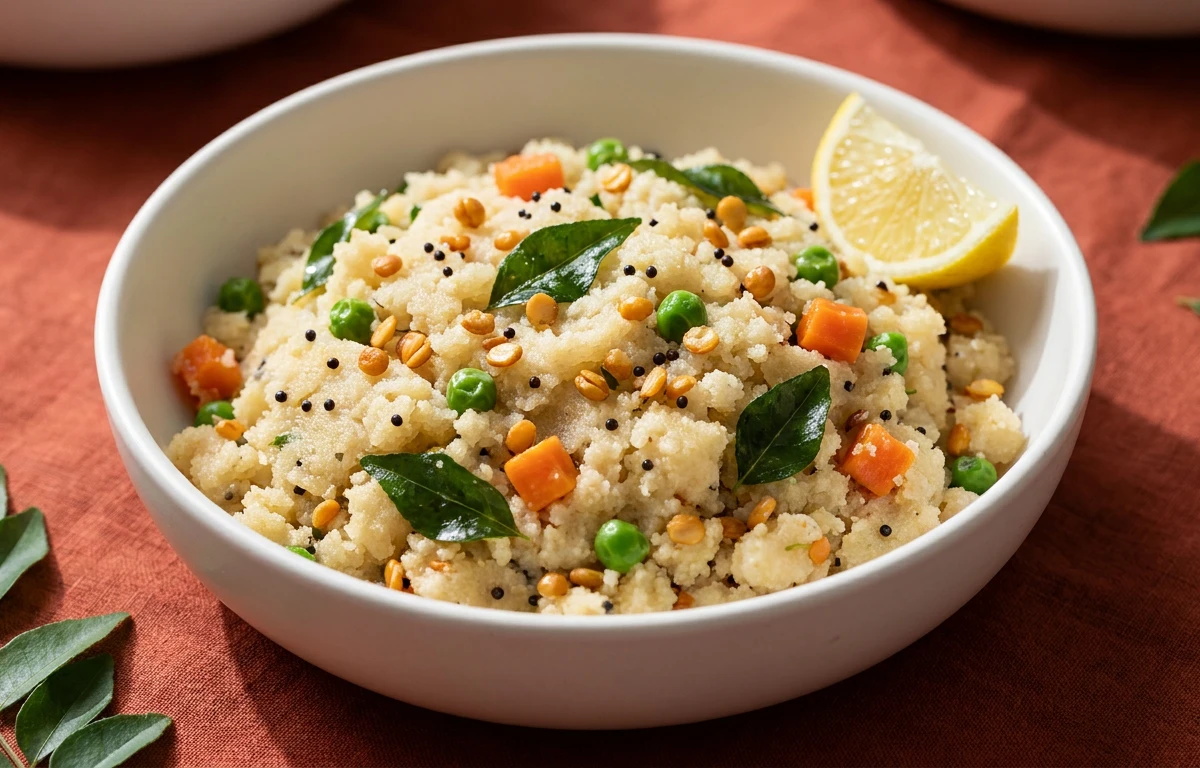
A light, savory semolina breakfast with a soft, fluffy texture and a gentle crunch from mustard seeds and chana dal. This South Indian classic comes together in 20 minutes with just a handful of pantry staples—perfect for busy mornings.
For 4 servings
- prep · ~5 min
Dry roast the semolina.
1.Heat a heavy-bottomed kadhai over low heat.2.Add 1 cup semolina and dry roast for 4–5 minutes, stirring continuously.3.Stop when the semolina is fragrant and just begins to turn a shade lighter. Do not let it brown.TIPConstant stirring prevents the semolina from burning; walk away and it scorches in seconds. - temper · ~8 min
Make the tempering.
1.Heat 2 tbsp oil in the same pan over medium heat.2.Add 1 tsp mustard seeds and let them splutter (30 sec).3.Add 1/2 tsp cumin seeds, 1 tbsp chana dal, and 1 tbsp urad dal. Fry until the dals turn golden (1–2 min).4.Add 8 cashew halves and sauté until light brown (30 sec).5.Add 8 curry leaves, 2 slit green chilis, and 1 inch grated ginger. Sauté until fragrant (30 sec).6.Add the chopped onion and sauté until translucent (3–4 min).TIPLet the mustard seeds pop fully before adding the dals — this builds the signature nutty base. - simmer · ~8 min
Cook the water and semolina.
1.Pour in 2 1/2 cups water and add 1/2 tsp salt. Raise heat to high and bring the water to a rolling boil.2.Lower the heat to the absolute minimum.3.Add the roasted semolina in a steady, thin stream with one hand while stirring rapidly with the other to prevent lumps.4.Keep stirring until all the water is absorbed and the mixture thickens into a porridge-like consistency (2–3 min).TIPAdding the semolina in a thin stream while stirring continuously is the secret to a lump-free upma. - steam · ~3 min
Steam and finish the upma.
1.Switch off the heat once the mixture becomes fluffy and leaves the sides of the pan.2.Cover tightly with a lid and let it steam in residual heat for 2 minutes.3.Uncover, fluff gently with a fork, and drizzle 1 tbsp lemon juice and 1 tsp ghee on top.4.Fold the lemon and ghee in lightly, garnish with chopped coriander leaves, and serve hot.TIPThe steaming step makes the upma extra soft — don't skip it.
What to keep in mind.
6 tips from the recipe — small details that make a real difference to the final dish.
- 1Dry roast the semolina on low heat until fragrant but not browned to ensure a light, fluffy texture.
- 2Add the roasted semolina in a thin stream while stirring vigorously to prevent lumps from forming.
- 3Let the mustard seeds fully splutter before adding dals for the classic South Indian tempering aroma.
- 4Use boiling hot water when mixing with semolina to speed up absorption and keep grains separate.
- 5After cooking, let the upma rest covered for 2 minutes to steam and become extra soft and fluffy.
- 6For a non-sticky upma, use a heavy-bottomed pan and stir constantly during the final cooking stage.
Adapt it for your goals.
Vegetable upma
Add 1/2 cup each of finely chopped carrots, peas, and bell peppers after sautéing the onions for a more colorful, nutrient-packed breakfast.
high protein upmaHigh-protein upma
Stir in 1/2 cup of crumbled paneer or roasted peanuts after adding water for extra protein and a heartier meal.
onion tomato upmaOnion-tomato upma
Add 1/2 cup chopped tomatoes along with the onions and cook until mushy for a tangy, South Indian twist.
vegan upmaVegan upma
Replace ghee with additional oil or coconut oil in the finish for a fully plant-based version without sacrificing richness.
Why this is on our healthy list.
Good Source of Plant Protein
The combination of chana dal, urad dal, and cashews provides a modest but meaningful plant-based protein boost.
Rich in Dietary Fiber
Semolina made from durum wheat contains fiber that aids digestion and promotes satiety.
Low in Saturated Fat
Using primarily vegetable oil and a small amount of ghee keeps the saturated fat content low while maintaining flavor.
Contains Antioxidant-Rich Spices
Mustard seeds, curry leaves, cumin, and ginger are known for their antioxidant and anti-inflammatory properties.
Frequently asked questions
Lumps form when semolina is added too quickly or the water is not boiling. Stir in a thin stream over low heat and keep stirring vigorously.