
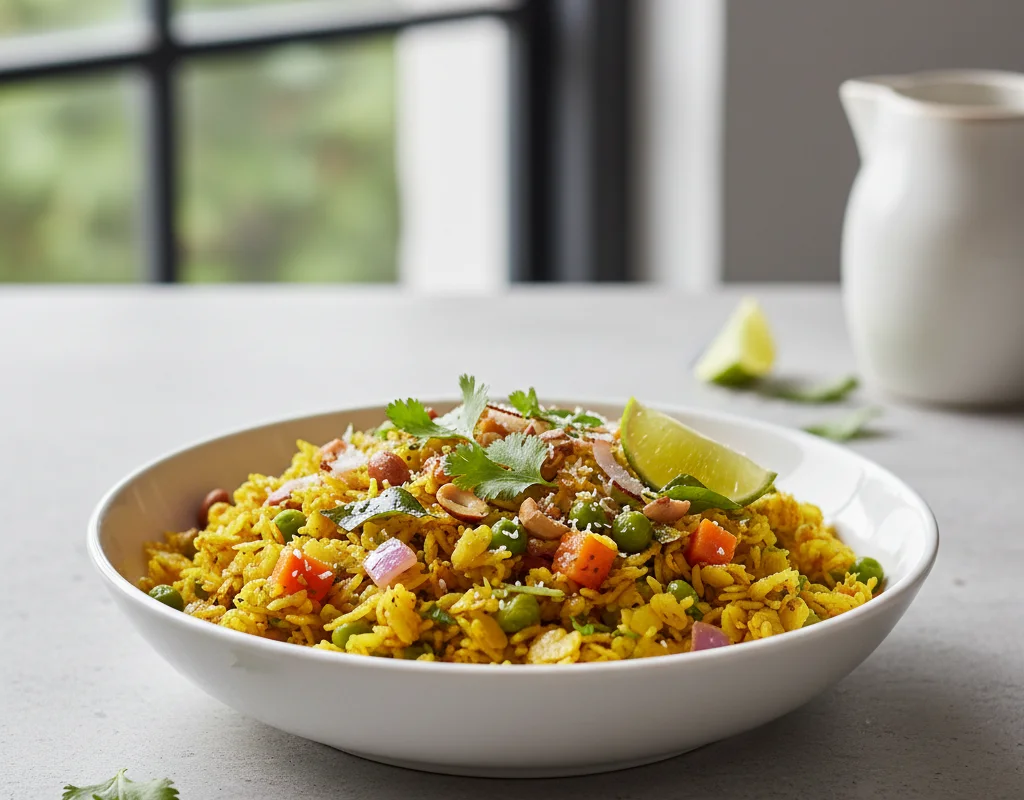
Vegan Poha
Flattened rice with peanuts, onion, mustard — naturally vegan, classic.
For 2 servings
Rinse and drain the flattened rice.
- Place the poha in a colander or fine-mesh sieve.
- Rinse under cold running water for 30 seconds until softened.
- Drain thoroughly and set aside to prevent the rice from becoming mushy.
TIPAvoid over-soaking; the rice should be moist but retain its individual shape.Temper the spices and peanuts.
- Heat oil in a wide pan over medium heat.
- Add mustard seeds and wait for them to crackle.
- Stir in the peanuts, green chili, and turmeric, frying until peanuts are golden.
TIPFry the peanuts until they are crunchy to provide a texture contrast to the soft rice.Sauté onions and combine with poha.
- Add the chopped onions to the tempered spices.
- Sauté for 3 minutes until the onions become translucent.
- Gently fold in the rinsed poha and salt until evenly coated.
Finish with lemon and cilantro.
Remove the pan from the heat. Squeeze fresh lemon juice over the mixture and garnish with chopped cilantro. Toss gently one last time before serving.
TIPCover the pan for 2 minutes off the heat to allow the steam to finish softening the rice.
What to keep in mind.
4 tips from the recipe — small details that make a real difference to the final dish.
- 1Always rinse the poha just before you start the tempering to ensure it doesn't dry out too much.
- 2Add a pinch of sugar during the sautéing step to perfectly balance the salt and lemon juice.
- 3Use a wide pan to ensure the poha is heated evenly without breaking the delicate grains.
- 4If the poha feels too dry after mixing, sprinkle a tablespoon of water over it and cover with a lid for a minute.
Adapt it for your goals.
Low sodium
Omit the salt and double the lemon juice and cilantro to maintain a bright, savory flavor profile.
spicierSpicier
Add half a teaspoon of red chili powder or increase the number of slit green chilies during the tempering stage.
vegetarianVegetarian
Top with freshly grated coconut or serve with a side of dairy-based curd for added protein.
Why this is on our healthy list.
High Iron Content
Flattened rice is a significant source of iron, supporting healthy blood oxygen levels.
Heart Healthy Fats
Peanuts provide monounsaturated fats that help maintain healthy cholesterol levels.
Easy Digestion
The light, steamed nature of the rice makes it very gentle on the digestive tract.
Frequently asked questions
Yes, it is a low-fat, gluten-free breakfast option rich in iron and complex carbohydrates, making it an excellent energy source.


