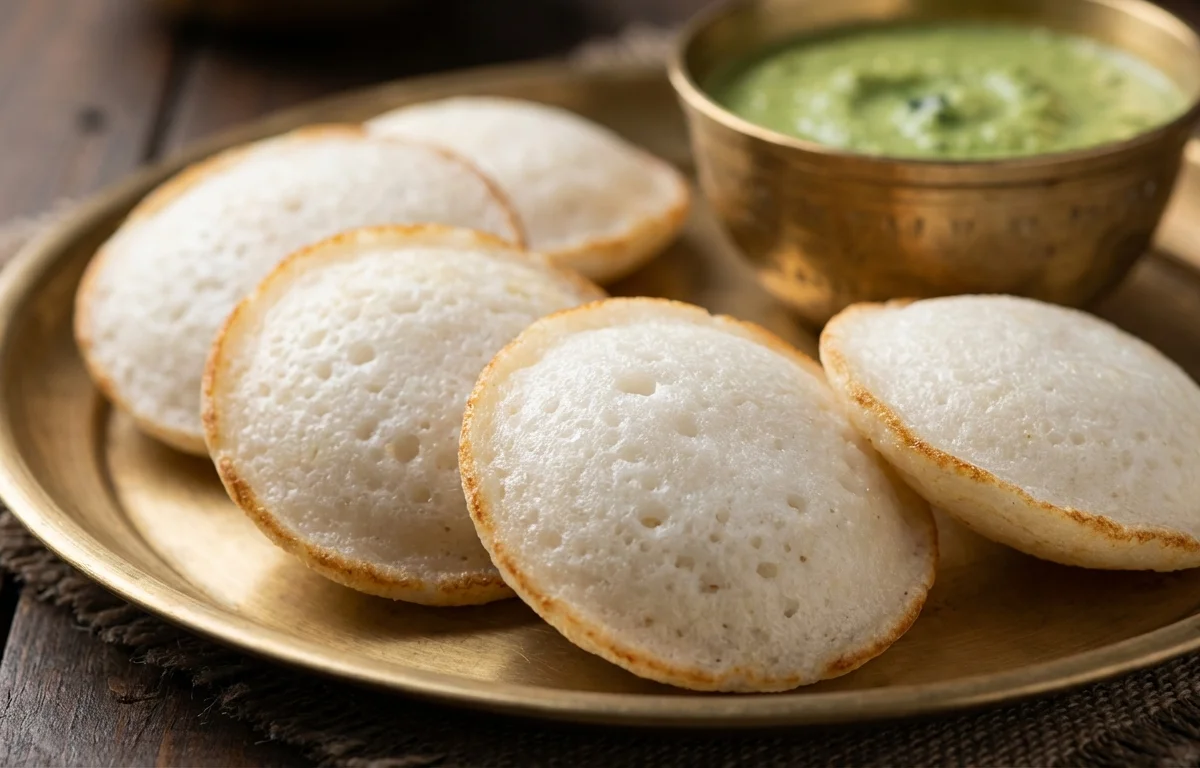
Vellai Paniyaram
Soft, white paniyarams with a light crisp edge and a gentle tang from fermented rice and urad dal batter. This Chettinad breakfast favorite is shallow fried in a paniyaram pan and tastes wonderful with coconut chutney.
For 16 servings
- prep · ~240 min
Soak the rice and dal.
1.Wash the idli rice well until the water runs mostly clear.2.Soak the rice in enough water for 4 hours.3.Wash the urad dal and soak it with fenugreek seeds in a separate bowl for 4 hours. - mix · ~20 min
Grind the batter.
1.Drain the urad dal and fenugreek seeds, then grind with a little water to a smooth, fluffy batter.2.Drain the rice and grind it with the cooked rice and enough water to a smooth batter that is slightly thicker than idli batter.3.Combine both batters in a large bowl and mix well with your hand for 1 minute.TIPKeep the batter smooth and light; a heavy batter makes dense paniyarams. - rest · ~480 min
Ferment the batter.
Cover the bowl loosely and leave the batter to ferment in a warm place for 8 hours or overnight, until it looks airy and slightly risen.
TIPLeave enough space in the bowl because the batter expands as it ferments. - mix · ~2 min
Season the batter.
Add salt to the fermented batter and mix gently. If needed, add a spoon or two of water so the batter pours easily but still looks thick.
- fry · ~15 min
Cook the paniyarams.
1.Heat a paniyaram pan over medium heat and grease each cavity with a little oil.2.Pour batter into each cavity until almost full.3.Cover and cook until the tops lose their raw look and the bottoms turn light golden, 2 to 3 minutes.4.Turn each paniyaram gently, drizzle a few drops of oil if needed, and cook the other side for 1 to 2 minutes.TIPCook on medium heat so the center cooks through before the outside browns too much. - serve
Serve the vellai paniyaram hot.
What to keep in mind.
7 tips from the recipe — small details that make a real difference to the final dish.
- 1Grind the urad dal very fluffy; that trapped air is what gives vellai paniyaram its soft, hollow interior.
- 2Mixing the combined batter with your hand helps kick-start fermentation and gives a better rise than using a spoon.
- 3The batter should be thicker than idli batter but still pourable; overly thin batter spreads and loses the classic domed shape.
- 4Do not overfill the paniyaram cavities; leaving a little space helps them puff without spilling over.
- 5Keep the flame at medium throughout so the center cooks fully while the outside stays pale with just a light golden edge.
- 6Covering the pan for the first side traps steam, which keeps the paniyarams soft and white instead of drying out.
- 7Fermented batter can be refrigerated overnight; let it sit out briefly and stir gently before making the next batch.
Adapt it for your goals.
Low-oil
Use a well-seasoned nonstick paniyaram pan and brush each cavity lightly with oil for a lighter version that still browns well.
mini onionMini-onion
Add a small spoonful of finely chopped shallots and green chilli to the batter for a more savory Chettinad-style snack version.
coconut richCoconut-rich
Blend a little fresh coconut into the rice batter for a slightly sweeter, softer paniyaram with extra richness.
leftover batterLeftover-batter
If the batter turns more sour the next day, make smaller paniyarams and pair them with spicy chutney for a stronger fermented flavor.
Why this is on our healthy list.
Naturally Fermented Batter
The fermented rice and urad dal batter can be easier to digest and develops beneficial complexity without commercial additives.
Plant-Based Protein Support
Urad dal adds plant protein and makes the paniyarams more satisfying than a rice-only batter.
Moderate Oil Cooking
Because they are cooked in a paniyaram pan with light greasing instead of deep-frying, these stay lighter than many fried breakfast snacks.
Frequently asked questions
The usual causes are under-fermented batter, urad dal not ground fluffy enough, or batter that is too thick and heavy.