
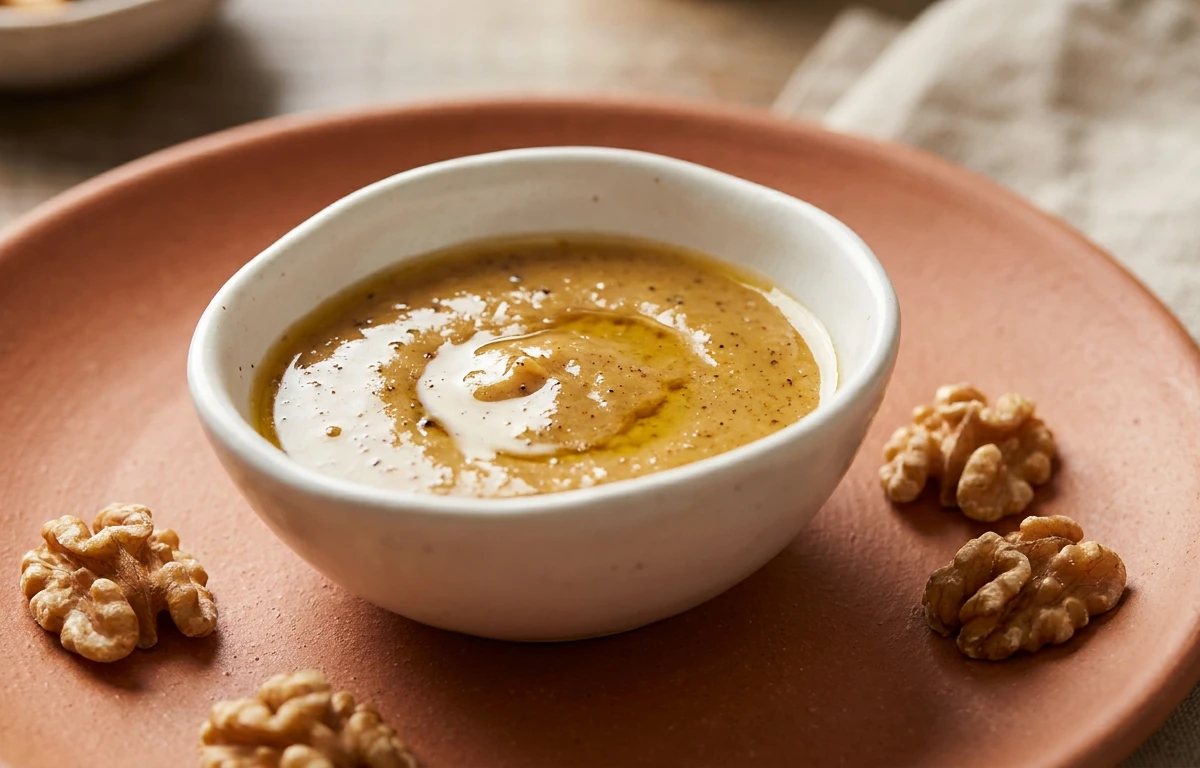
Walnut Paste
A rich, creamy walnut paste made by blending soaked walnuts into a smooth, spreadable consistency. This versatile Indian pantry staple is used as a base for rich Mughlai curries, gravies, and a thickener for kormas. Earthy and naturally sweet, it adds depth and body to any dish it touches.
For 6 servings
- prep · ~30 min
Soak the walnuts in hot water.
Place the shelled walnuts in a bowl and pour the hot water over them. Let them soak for 30 minutes so the skins loosen and the nuts soften.
TIPHot water helps the skins slip off easily. If you skip soaking, the paste will be slightly grainier. - prep · ~5 min
Drain and peel the walnuts.
Drain the soaking water completely. Pinch each walnut to slip off the papery brown skin and discard the skins. This step ensures a pale, smooth paste.
TIPThe skins carry bitterness; removing them gives you a sweeter, creamier paste suited for Mughlai gravies. - mix · ~2 min
Blend into a smooth paste.
Add the peeled walnuts to a blender along with 2 tablespoons of cold water and 2 tablespoons of milk. Blend on high speed, scraping the sides down once, until you get a smooth, creamy consistency. Add a tiny pinch of salt to balance the flavor.
TIPBlend in short pulses first so the nuts break down, then run continuously. The mixture should be thick but spreadable — like soft butter. - serve
Use immediately or store.
Transfer the walnut paste to a clean airtight jar. Use it right away as a curry base or store in the refrigerator for up to 3 days, or freeze for up to a month.
What to keep in mind.
6 tips from the recipe — small details that make a real difference to the final dish.
- 1Soak the walnuts in freshly boiled water for the full 30 minutes to ensure the skins slip off effortlessly.
- 2Peeling the brown skins is essential — they add bitterness and turn the paste gray instead of pale and creamy.
- 3Use cold water and milk when blending to prevent the paste from becoming oily or grainy from the heat.
- 4Scrape down the sides of the blender at least once mid-blend to reach a uniformly smooth consistency.
- 5Store the paste in a glass jar with a tight lid and press a piece of plastic wrap directly onto the surface to prevent oxidation and darkening.
- 6For longer storage, freeze the paste in ice cube trays and pop out individual cubes for easy portioning.
Adapt it for your goals.
Dairy-free
Replace the milk with an equal amount of cold water or unsweetened almond milk for a vegan version that still blends into a creamy paste.
nut free substituteNut-free substitute
Substitute walnuts with cashews or blanched almonds following the same method — cashews give an even silkier paste, while almonds offer a nuttier flavor.
spiced walnut pasteSpiced walnut paste
Add a small piece of ginger and 2 green cardamom pods (seeds only) to the blender for a fragrant paste that adds an aromatic layer to kormas and pulaos.
Why this is on our healthy list.
Rich in Omega-3 Fatty Acids
Walnuts are one of the best plant sources of alpha-linolenic acid (ALA), an essential omega-3 fat that supports heart and brain health.
Good Source of Antioxidants
The walnut skins (even partially removed) contain polyphenols that help combat oxidative stress, though peeling reduces bitterness.
Contains Healthy Fats for Satiety
The natural oils in walnuts provide sustained energy and help you feel full longer, making this paste a satisfying base for rich gravies.
Frequently asked questions
You can, but the paste will be darker, slightly bitter, and less creamy — not ideal for pale Mughlai gravies where appearance matters.


