Let's clear this up first: the Jerusalem artichoke has an identity crisis. It's not an artichoke, and it has nothing to do with Jerusalem. It's the root of a sunflower, and its other name, 'sunchoke,' makes a lot more sense. But the real story isn't its name; it's the strange carbohydrate it's made of. This knobby little tuber is packed with inulin, a prebiotic fiber that's both its greatest strength and the source of its... notorious reputation.
↑ The Jerusalem artichoke, or sunchoke, is the root of a sunflower species.
The misunderstood tuber
Raw, a Jerusalem artichoke is crisp, juicy, and surprisingly sweet, with a nutty flavor somewhere between a water chestnut and a sunflower seed. It's nothing like a globe artichoke. The reason for all this is inulin.
Most starchy vegetables store their energy as starch. Sunchokes use inulin, a type of soluble fiber called a fructan. Here's the important part: humans can't digest inulin. It passes right through our small intestine, providing no calories and causing no blood sugar spike. Then it hits the large intestine, where it becomes a feast for our beneficial gut bacteria. This makes it a fantastic prebiotic, but it's also the reason it can cause... digestive fireworks. The bacteria ferment the inulin, producing gas. This isn't a sign that something is wrong; it's a sign the fiber is doing its job. But it's also why my number one piece of advice is always: start with a small portion.
IN ONE LINE
A raw Jerusalem artichoke is a crisp, low-calorie, prebiotic-rich root that has virtually no impact on blood sugar. Just be sure to introduce it to your system slowly.
Jerusalem artichoke nutrition facts
Here's the nutritional breakdown for a 100-gram serving of raw Jerusalem artichoke, which is about 2/3 of a cup, sliced.
The numbers look modest, but the real story is in what's not easily listed on a standard label: the inulin. Most of that 17.4g of carbohydrate is inulin, which behaves like fiber, not a sugar or starch. It doesn't contribute to your net carb intake in the same way. Also, note the surprisingly high iron content for a vegetable — nearly 20% of your daily value.
Jerusalem artichoke's glycemic index
Because the dominant carbohydrate in sunchokes is inulin fiber, which our bodies don't break down into glucose, their glycemic index (GI) is exceptionally low. While official GI values can vary, they are consistently in the lowest band, making them one of the best tubers for blood sugar control. The glycemic load (GL), which accounts for a typical portion size, is practically zero. It's a carbohydrate source that barely registers.
GLYCEMIC INDEX · JERUSALEM ARTICHOKE vs COMMON FOODS
It sits at the very bottom of the GI scale
Jerusalem Artichoke
inulin-based
LOW
Cherries
whole fruit
LOW
Apple
whole fruit
LOW
White Bread
refined
HIGH
Cornflakes
refined
HIGH
SCALE 0–90
04590
How to eat it right (and avoid the gas)
Eating raw Jerusalem artichoke is a delight, as long as you follow a few simple rules to get the best from it.
01
Start small.
This is non-negotiable. Your gut needs time to adapt to the inulin. Start with a few thin slices in a salad (maybe 30-50g) and see how you feel.
02
Scrub, don't peel.
The skin is thin, edible, and nutritious. A good scrub with a vegetable brush is all you need. Just trim off any dark spots or rootlets.
03
Slice it paper-thin.
The best way to enjoy it raw is to use a mandoline or a very sharp knife. Thin slices have a wonderful crisp texture for salads and slaws.
04
Add acid immediately.
Like an apple, its flesh will brown once exposed to air. Tossing it in lemon juice or vinegar right after slicing prevents this and brightens the flavor.
05
Know that cooking helps.
While this article is about raw, it's worth knowing that cooking (especially long, slow cooking) converts some inulin into fructose, making it sweeter and easier to digest.
What Jerusalem artichoke is good for
01
Feeds your good gut bacteria
As a rich source of prebiotic inulin fiber, it provides food for beneficial gut microbes like Bifidobacteria, supporting a healthy microbiome.
14g
inulin/100g
02
Excellent for blood sugar control
With a very low glycemic index, it provides satisfaction and nutrients without spiking blood sugar, making it ideal for managing diabetes.
GI ~11
very low
03
A surprising source of iron
One small serving provides nearly 20% of your daily iron, crucial for energy and red blood cell production. Pair with vitamin C (like lemon juice) to boost absorption.
19%
iron DV
04
Supports heart & blood pressure
It's naturally fat-free and provides a good amount of potassium, which helps counteract sodium and maintain healthy blood pressure.
429mg
potassium
What to pair it with
The nutty, slightly sweet crunch of raw sunchoke works beautifully with sharp, salty, and fresh flavors.
Eat freely — or be mindful?
Three raw recipes
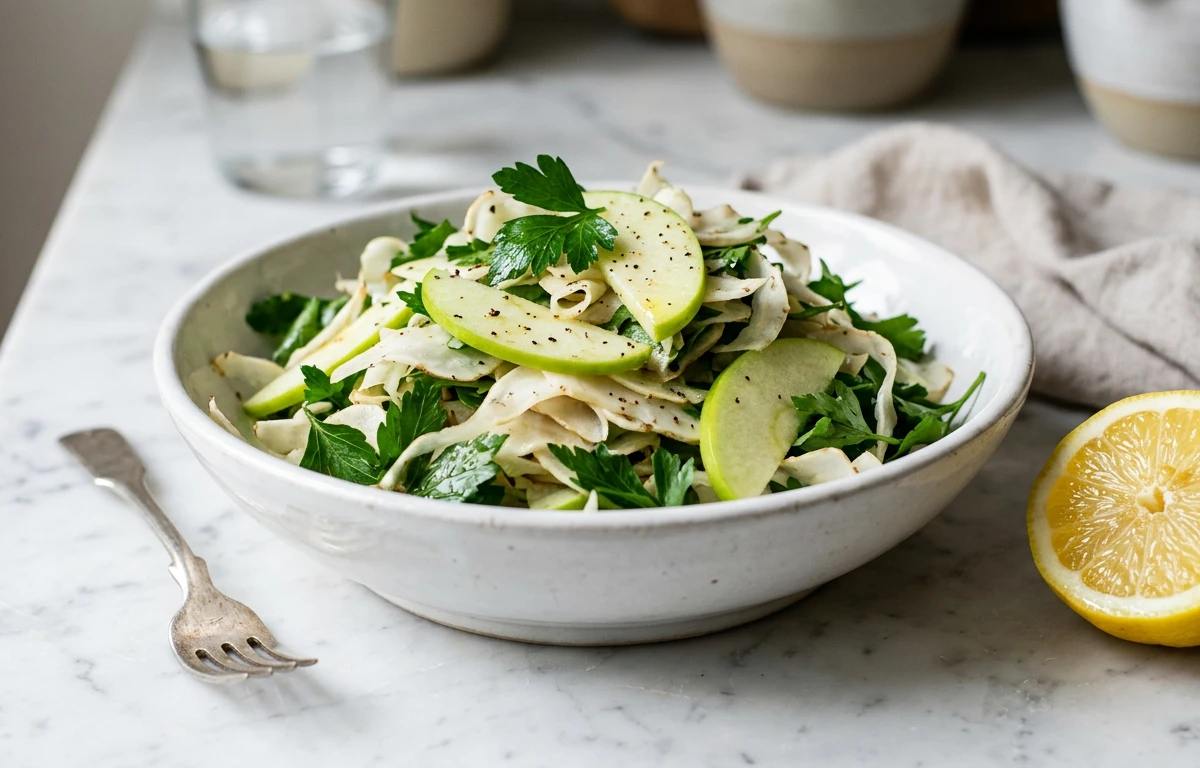
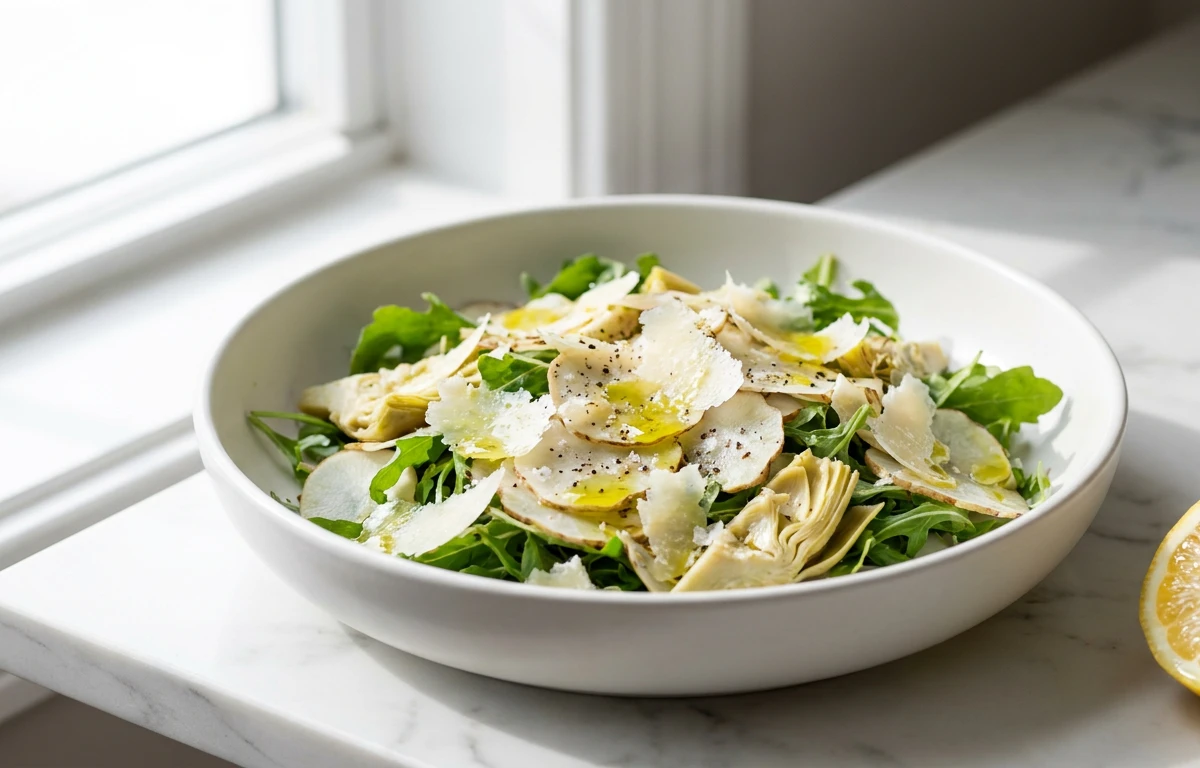
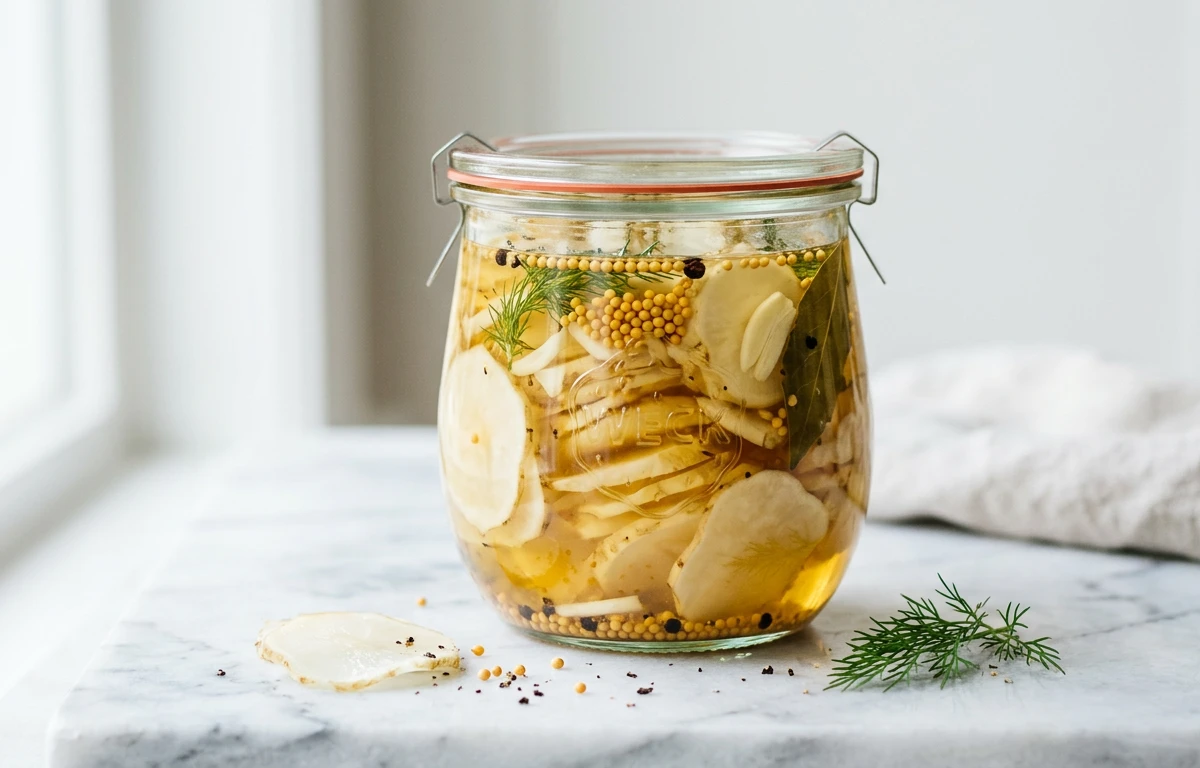
The key to using Jerusalem artichokes raw is to slice them thinly and pair them with bright, acidic flavors.
Want more gut-friendly foods in your diet?
Our meal planner can help you build a week of meals rich in fiber and prebiotics, with portions and pairings designed to support your digestive health—without the guesswork.
Build my weekly plan →SOURCES & REFERENCES · 3
One more thing
Eating well is rarely about willpower. It’s about having a short list of dinners you actually want to eat. Pick two from this list. Make them next week. The rest will follow.
If you want these on autopilot, our weekly meal planner can drop the picks above into your calendar with one click and build a single grocery list from the merged ingredients.
FREQUENTLY ASKED QUESTIONS
Frequently asked questions
Why do Jerusalem artichokes cause gas?
They are high in inulin, a prebiotic fiber your gut bacteria love to eat. The fermentation process produces gas as a byproduct. It's a sign of a healthy process, but can be uncomfortable. Start with small portions to let your system adapt.
Are Jerusalem artichokes and sunchokes the same thing?
Yes. They are two names for the same vegetable, which is the root of a type of sunflower. 'Sunchoke' is arguably the more accurate name.
Do you need to peel Jerusalem artichokes?
No, you don't. The skin is thin and perfectly edible. Just give them a good scrub with a vegetable brush to remove any dirt from the nooks and crannies.
Can I eat Jerusalem artichokes if I have IBS?
It's generally not recommended. Jerusalem artichokes are very high in fructans, which are a type of FODMAP that can be a major trigger for IBS symptoms like bloating, gas, and pain.
METHODOLOGY
How this article was created
Built using verified nutrition databases, culinary research, and traditional cooking knowledge — every claim is cross-referenced against the sources listed in the article.
· USDA data· Culinary research· Quality reviewed
Read our methodology →TRANSPARENCY
About this content
Articles are curated using trusted food databases (USDA FoodData Central, IFCT), culinary literature, and dietary guidelines, then structured by our editorial team for clarity, accuracy, and usefulness.
· Verified data sources· Culinary research· Quality reviewed
Read our editorial policy →EXPLORE OUR MEALS
Meals that fit this article

AMERICAN · 1677 CAL
Almonds with Sliced Apple + supplement + iron

MEDITERRANEAN · 809 CAL
Greek Yogurt with Berries Almonds and Granola + supplement + iron

GENERAL_HEALTHY · 705 CAL
Banana with Peanut Butter Pregnancy + supplement + iron

MODERN · 982 CAL
Hummus with Crudits and Pita with Fresh Orange Snack + supplement + iron
TAGGED
KEEP READING