Health & Nutrition · 9 MIN READ
Roti vs Rice for Weight Loss: The Honest Answer
Neither is magic. Compare them fairly per serving and the gap is much smaller than you think. The honest math, why portion decides the winner, and a simple…
Loading...
Neither is magic. Compare them fairly per serving and the gap is much smaller than you think. The honest math, why portion decides the winner, and a simple…
Let's stop pretending this is a complicated debate. For weight loss, neither roti nor rice is magic. Neither one burns fat. Neither one automatically makes you fat. The real question is much simpler: which one helps you eat fewer calories without feeling miserable? That's the only honest starting point.
Let's stop pretending this is a complicated debate. For weight loss, neither roti nor rice is magic. Neither one burns fat. Neither one automatically makes you fat. The real question is much simpler — which one helps you eat fewer calories without feeling miserable? That's the only honest starting point.
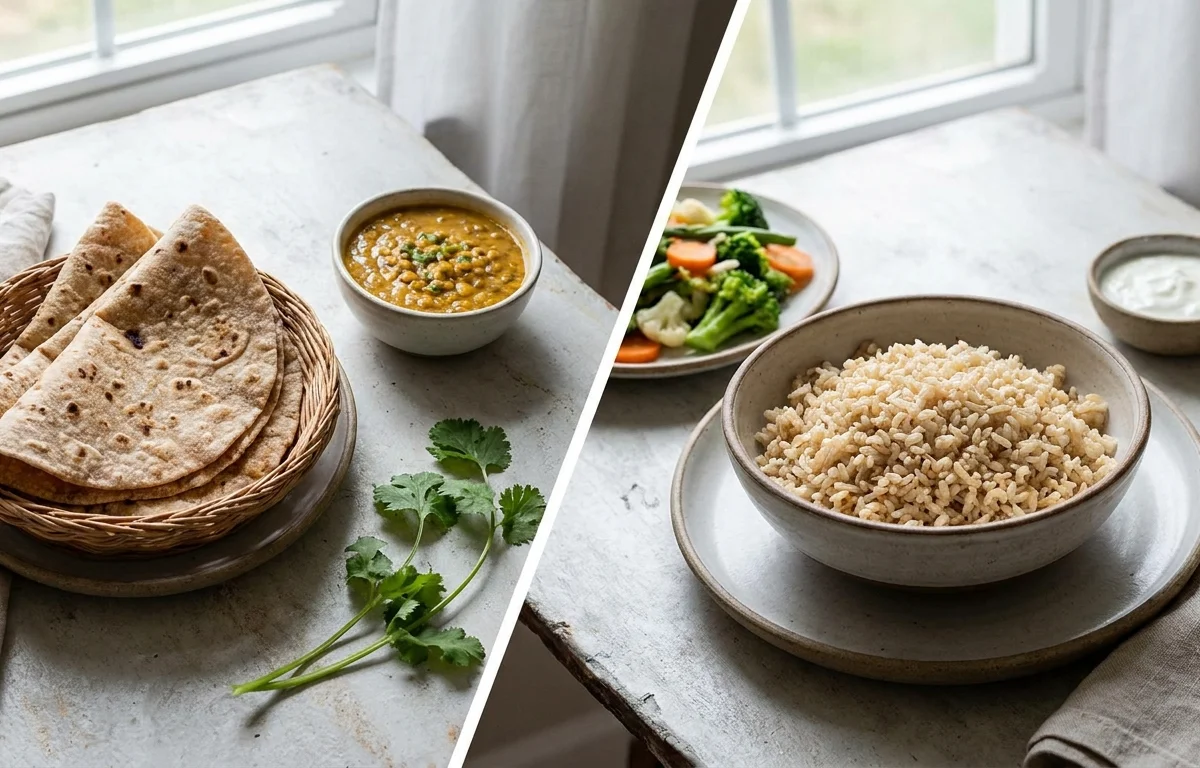
Most online comparisons cheat on the portions. They line up one small roti against a heaping cup of rice and act surprised when rice looks like a calorie bomb. A single whole-wheat roti from 30g of atta carries roughly 75 kcal [1]. A full cup of cooked white rice carries around 205 [2]. Those numbers are real — they're just not the meal anyone actually eats.
Most people eat two or three rotis. Most people eat half a cup to a cup of rice. Compare those — the real-world portions — and the calorie gap shrinks fast. The meaningful differences aren't in calories at all. They're in fibre, protein, and how each one moves your blood sugar.
Here are the numbers using realistic servings. A medium whole-wheat roti is ~30g of atta dough; rice figures are for the cooked grain. Note how calorie-for-calorie, the two staples are far closer than their reputations suggest. Where roti pulls ahead is fibre and protein, not energy.
This is where the comparison actually matters. Whole-wheat roti is made from the whole grain — bran, germ, and all — so it carries meaningfully more fibre and a little more protein than white rice, which has been stripped of both during milling. Fibre and protein are the two nutrients most associated with feeling full. Fullness is what makes a calorie deficit sustainable. Eat the staple that keeps you satisfied longer and you naturally eat less.
But the gap is about the TYPE of rice as much as the grain itself. Swap white rice for brown, red, or other whole-grain rice and you reclaim most of the fibre, narrowing roti's advantage considerably. The honest takeaway: whole grains beat refined grains for weight loss — and that's true whether the whole grain is wheat or rice.
Glycaemic index (GI) measures how quickly a food raises blood sugar. White rice tends to sit high on the scale, causing a faster spike. Whole-wheat roti generally lands in the low-to-medium range thanks to its fibre [3]. A gentler, slower rise means steadier energy and fewer of the crashes that drive snacking — useful for weight management, and especially relevant if you're managing blood sugar or diabetes.
But GI is easy to over-weight. You rarely eat any staple alone, and what you pair it with changes everything. Adding protein, fat, fibre, and vegetables to a meal blunts the blood-sugar spike of EITHER roti or rice. A plate of rice with dal, vegetables, and yogurt behaves very differently from a bowl of plain rice. The pairing usually matters more than the GI number itself.
I've never seen anyone gain weight from rice or lose it from roti. I've seen people do both from portion size, what they pile on top, and whether the meal kept them full. The staple is a footnote.
— Priya Sharma, RD
On a fair per-serving basis, whole-wheat roti has a small, real advantage over white rice — more fibre and protein, lower glycaemic impact, a touch more staying power per calorie. If you're choosing between a plain roti and plain white rice and everything else is equal, roti is marginally the better pick.
But 'marginally better' is the honest verdict — not 'magic'. Brown or whole-grain rice closes most of the gap. And the variable that dwarfs all of this is HOW MUCH you eat and WHAT YOU EAT IT WITH. A person eating five ghee-laden rotis is not out-dieting someone eating a controlled portion of rice with dal and vegetables. Pick the staple you enjoy and will actually eat in sensible amounts. Consistency beats any nutrient nitpick.
Stop agonising over the staple and get these right instead. They have far more impact on weight loss than ever picking a side in this debate.
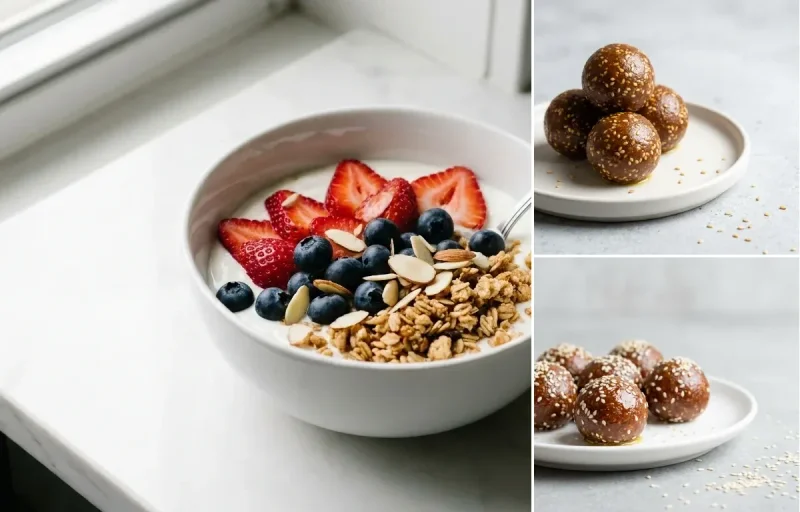
You don't have to banish either one. Here's a weight-loss-friendly day that uses both roti and rice in sensible portions, built around protein and vegetables so the staple is a supporting player — exactly as it should be.
Tell our planner your goals and what you like to eat, and it builds balanced, portion-controlled meals around protein and vegetables — with roti, rice, or both in sensible amounts, plus a grocery list. Weight loss made about the plate, not the argument.
Build my balanced week →Stop asking 'roti or rice?' and start asking: how much am I eating, what am I eating it with, and will this keep me full for the next three to four hours? That answer will help you lose weight faster than any roti-vs-rice debate.

Sourabh writes about Indian cuisine, budget cooking, and the everyday nutrition questions that come up in Indian kitchens — chapati portions, dal protein, how to keep dishes balanced without losing the flavours families actually want. His pieces lean on credible sources (ICMR-NIN, peer-reviewed studies) and home-cook reality in equal measure.
Meet the editorial team →Built using verified nutrition databases, culinary research, and traditional cooking knowledge — every claim is cross-referenced against the sources listed in the article. Last reviewed Jun 2026.
Articles are curated using trusted food databases (USDA FoodData Central, IFCT), culinary literature, and dietary guidelines, then structured by our editorial team for clarity, accuracy, and usefulness.