The moment you see piles of them at the market, you know spring has properly arrived. Fresh field beans — or fava beans, or broad beans, depending on who you ask — are one of the season's real treats. It's a bit of work, I won't lie. You have to free them from their big pods, and then often from their little individual jackets. But for that effort, you're rewarded with a creamy, nutty, bright green gem that's a world away from the canned version. They're packed with plant protein and fiber, making them incredibly satisfying and brilliant for blood sugar balance.
↑ Fresh fava beans are worth the effort of double-podding.
The spring powerhouse
Let's get one thing straight: fava beans, broad beans, and field beans are all names for the same glorious thing, Vicia faba. They're not a green bean; they're a true legume, more closely related to lentils and chickpeas. And unlike most of their cousins, we often eat them fresh rather than dried.
Their standout feature is the combination of high protein and high fiber in a low-calorie package. A 100-gram serving—that's about two-thirds of a cup, cooked—gives you nearly 8 grams of protein. That is serious business for a vegetable. It's this combo that makes them so satisfying and gives them such a gentle effect on blood sugar.
IN ONE LINE
A true legume eaten fresh, fava beans are loaded with plant protein and fiber, making them a low-glycemic, incredibly filling choice.
Fresh Fava Bean Nutrition Facts
Here's what a typical 100-gram serving of fresh, cooked fava beans (about 2/3 cup) provides. This is after they've been podded and shelled.
The two big stories here are the protein and the fiber. Getting over 7 grams of protein and over 5 grams of fiber for just 88 calories is a fantastic nutritional bargain. This makes fava beans a wonderfully 'nutrient-dense' food — lots of good stuff for not a lot of calories.
The Glycemic Index of Fava Beans
Glycemic index (GI) ranks foods on how fast they raise blood sugar. Anything under 55 is low. While there isn't a widely cited, official GI value for fresh fava beans, all legumes with this much fiber and protein consistently test in the low-GI band. Their effect on blood sugar is slow and steady, making them an excellent carbohydrate source, especially for people with diabetes or anyone looking to manage their energy levels.
GLYCEMIC INDEX · FAVA BEANS vs COMMON FOODS
Fava beans are a low-glycemic food
Cherries
whole fruit
LOW
Fava Beans (est.)
fresh, cooked
LOW
Apple
whole fruit
LOW
Pineapple
whole fruit
MEDIUM
White Bread
refined
HIGH
SCALE 0–90
04590
How to Prep and Eat Them
Fresh favas require a little love, a process called 'double-podding'.
01
First podding: From the big pod.
Split open the large, puffy green pods and run your thumb down the inside to pop out the individual beans.
02
Blanch them.
Drop the beans into boiling water for just 30-60 seconds, then immediately transfer them to a bowl of ice water. This makes the next step easier.
03
Second podding: Off with their jackets!
Each bean has a pale, waxy outer skin. After blanching, you can easily pinch or tear this skin and squeeze out the bright green, tender bean inside. This step is optional for very young beans, but essential for larger ones where the skin can be tough.
04
Keep it simple.
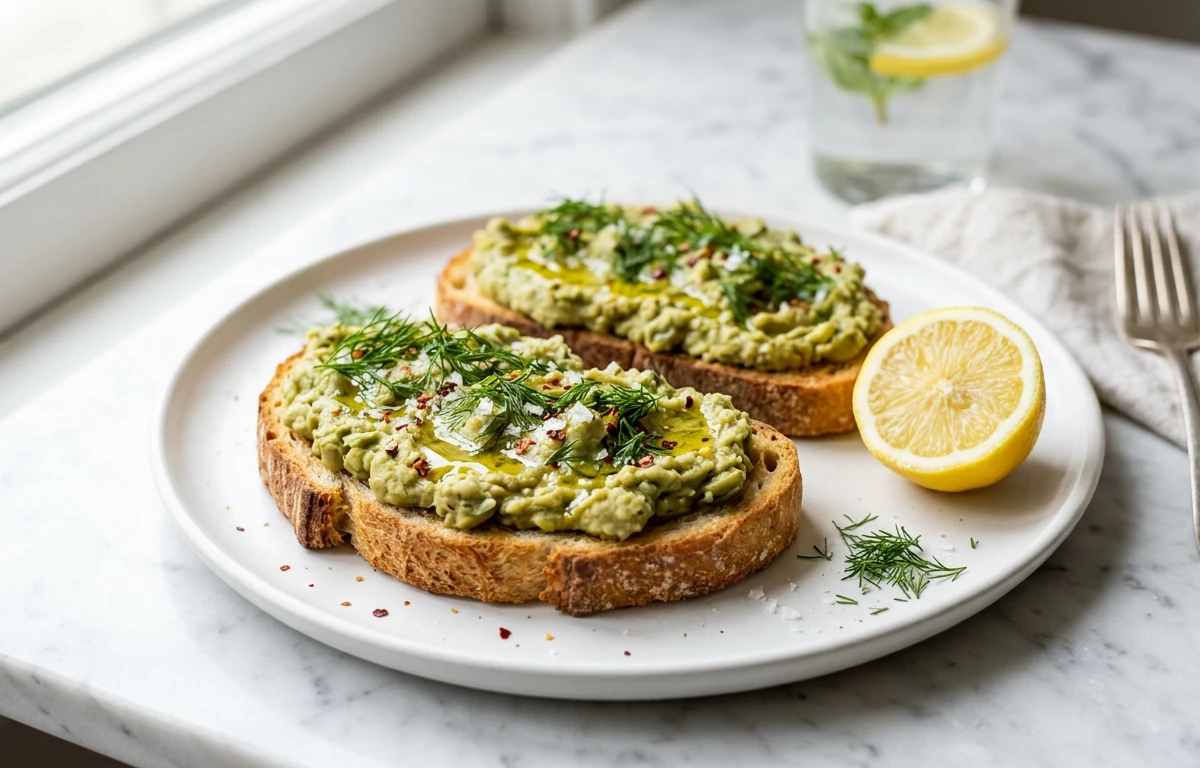
Once double-podded, they need very little. A quick sauté in olive oil with a pinch of salt and a squeeze of lemon is often enough. Don't overcook them; you want to preserve that fresh, green flavour.
What Fava Beans Are Good For
01
High-quality plant protein
With nearly 8g of protein per 100g, fava beans are a superb source for muscle repair, satiety, and building a balanced plant-based meal.
7.6 g
protein
02
Fullness and steady energy
The potent combination of protein and fiber (5.4g!) slows digestion, keeping you full for longer and preventing the blood sugar spikes and crashes you get from refined carbs.
5.4 g
fiber
03
A happy gut microbiome
The fiber in fava beans acts as a prebiotic, feeding the beneficial bacteria in your gut that are linked to everything from better digestion to a stronger immune system.
19%
fiber DV
04
Supporting heart health
The soluble fiber in fava beans can help manage cholesterol levels, while their rich mineral content (like magnesium and potassium) supports healthy blood pressure.
Low
in fat
What to Pair Fava Beans With
Fava beans have a distinctly fresh, slightly nutty, and creamy character that loves salty, sharp, and fresh flavours.
Eat freely — or be mindful?
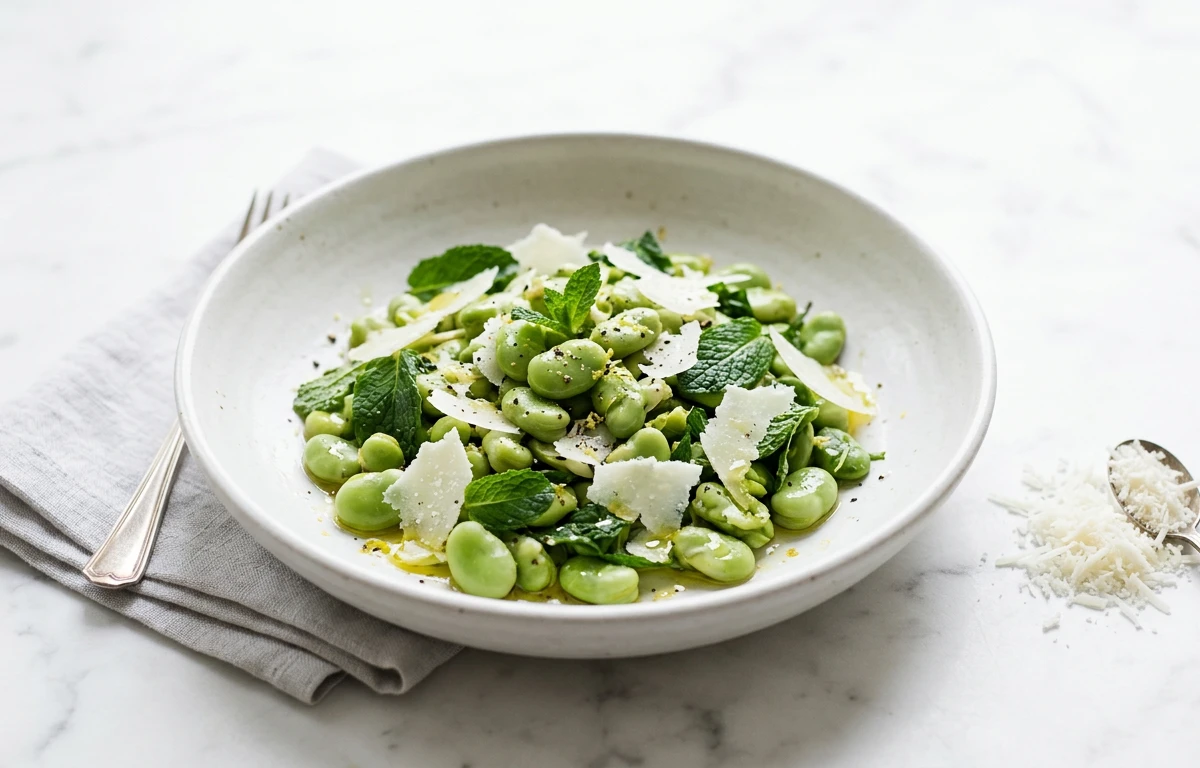
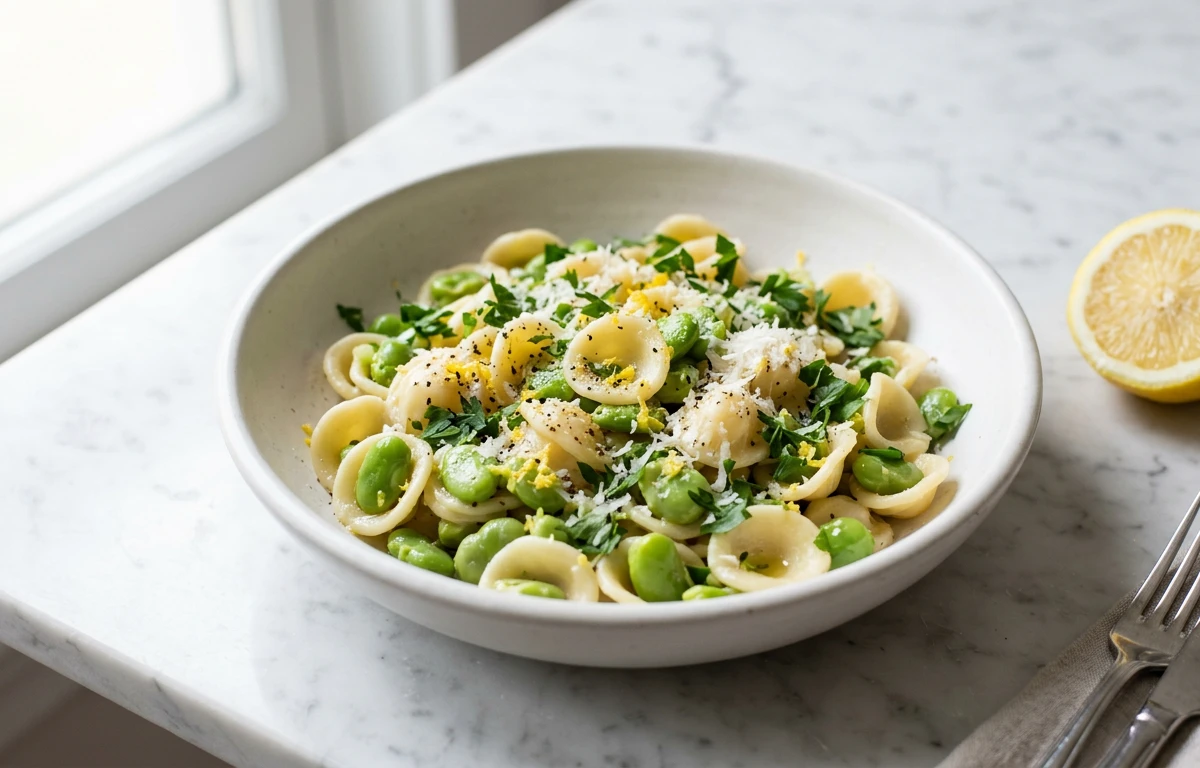
Three Fresh Ideas
Once you've done the prep, using fava beans is a joy. Here are three simple ways to let them shine.
Want more smart, satisfying meals built into your week?
Our meal planner uses high-protein, high-fiber ingredients like fava beans to create balanced dishes that keep you full and energized. We handle the planning so you can just enjoy the food.
Build my weekly plan →SOURCES & REFERENCES · 3
One more thing
Eating well is rarely about willpower. It’s about having a short list of dinners you actually want to eat. Pick two from this list. Make them next week. The rest will follow.
If you want these on autopilot, our weekly meal planner can drop the picks above into your calendar with one click and build a single grocery list from the merged ingredients.
FREQUENTLY ASKED QUESTIONS
Frequently Asked Questions
Do you really have to peel the inner skin off fava beans?
For larger, more mature beans, yes. The outer skin is tough and can be bitter. It makes a huge difference to the final texture. For very young, tiny fava beans, you can sometimes get away with not peeling them.
Why are fava beans dangerous for some people?
Fava beans can trigger a serious condition called 'favism' in people with a genetic disorder called G6PD deficiency. It causes a rapid breakdown of red blood cells. If you have this condition (or don't know your status and have Mediterranean, African, or Asian ancestry where it's more common), you must avoid fava beans entirely.
Are fava beans bad for gout?
Fava beans are very high in purines, which the body breaks down into uric acid. For people with gout, high uric acid levels can trigger painful attacks. It's generally recommended that individuals with gout limit or avoid high-purine foods like fava beans.
Can I use frozen fava beans?
Absolutely. Frozen fava beans are a great time-saver. They are usually already podded (but not double-podded). You can simply blanch them from frozen and then pop them out of their skins as you would with fresh ones.
METHODOLOGY
How this article was created
Built using verified nutrition databases, culinary research, and traditional cooking knowledge — every claim is cross-referenced against the sources listed in the article.
· USDA data· Culinary research· Quality reviewed
Read our methodology →TRANSPARENCY
About this content
Articles are curated using trusted food databases (USDA FoodData Central, IFCT), culinary literature, and dietary guidelines, then structured by our editorial team for clarity, accuracy, and usefulness.
· Verified data sources· Culinary research· Quality reviewed
Read our editorial policy →RELATED RECIPES
Cook from this article
EXPLORE OUR MEALS
Meals that fit this article

AMERICAN · 1677 CAL
Almonds with Sliced Apple + supplement + iron

MEDITERRANEAN · 809 CAL
Greek Yogurt with Berries Almonds and Granola + supplement + iron

GENERAL_HEALTHY · 705 CAL
Banana with Peanut Butter Pregnancy + supplement + iron

MODERN · 982 CAL
Hummus with Crudits and Pita with Fresh Orange Snack + supplement + iron
TAGGED
KEEP READING