Most people know fenugreek as a seed, but the leaves — methi — are where the real kitchen magic is. They have this wonderfully complex, slightly bitter, almost maple-like aroma that completely transforms a dish. And while they look like just another leafy green, they pack an impressive amount of protein and vitamin C for so few calories. They're one of the most underrated vegetables out there, and it's time we changed that.
↑ Fresh fenugreek leaves have a distinct aroma and a powerful nutritional profile.
The savory, powerhouse green
Fenugreek leaves, or methi, are a staple in Indian cooking for a reason. They're not just filler. They bring a deep, savory, and slightly bitter flavor that's hard to describe but impossible to forget. Think of it as a grown-up green that adds complexity, a bit like arugula or radicchio but with its own unique, slightly celery-and-maple-syrup scent.
But the flavor is only half the story. Nutritionally, methi punches way above its weight. For something that's mostly water and air, it delivers a surprising amount of protein and a serious dose of vitamin C, all for fewer than 50 calories per 100-gram serving. It's time to stop thinking of it as an exotic, optional ingredient and start seeing it as the nutritional workhorse it is.
IN ONE LINE
More than just a leafy green, fenugreek leaves (methi) are a low-calorie, low-carb vegetable with a surprising protein punch and a huge hit of vitamin C.
Fenugreek leaf nutrition facts
Here's what 100 grams of fresh fenugreek leaves — about two packed cups — provides. The protein and vitamin C levels are particularly impressive for a leafy green.
A negligible glycemic index
There's no official glycemic index (GI) value for fenugreek leaves, and for good reason: it's pointless to measure. Like spinach, kale, or lettuce, fenugreek leaves are so low in digestible carbohydrates that their effect on blood sugar is practically zero. They are overwhelmingly made of water, fiber, and protein. You simply can't eat enough of them to cause a blood sugar spike. This makes them an absolutely top-tier food for anyone managing diabetes or following a low-carb diet.
GLYCEMIC INDEX · FENUGREEK LEAVES vs COMMON FOODS
Fenugreek leaves have almost no glycemic impact
Fenugreek Leaves
leafy green
LOW
Cherries
whole fruit
LOW
Apple
whole fruit
LOW
White bread
refined
HIGH
Cornflakes
refined
HIGH
SCALE 0–90
04590
How to cook with methi
The assertive flavor of methi is its best quality, but it needs to be handled right. Here are a few tips to get the most out of it.
01
Tame the bitterness.
The leaves have a pleasant bitterness. Sautéing them in oil or ghee mellows it perfectly. You can also blanch them for 30 seconds in salt water before using.
02
Pair with starch or fat.
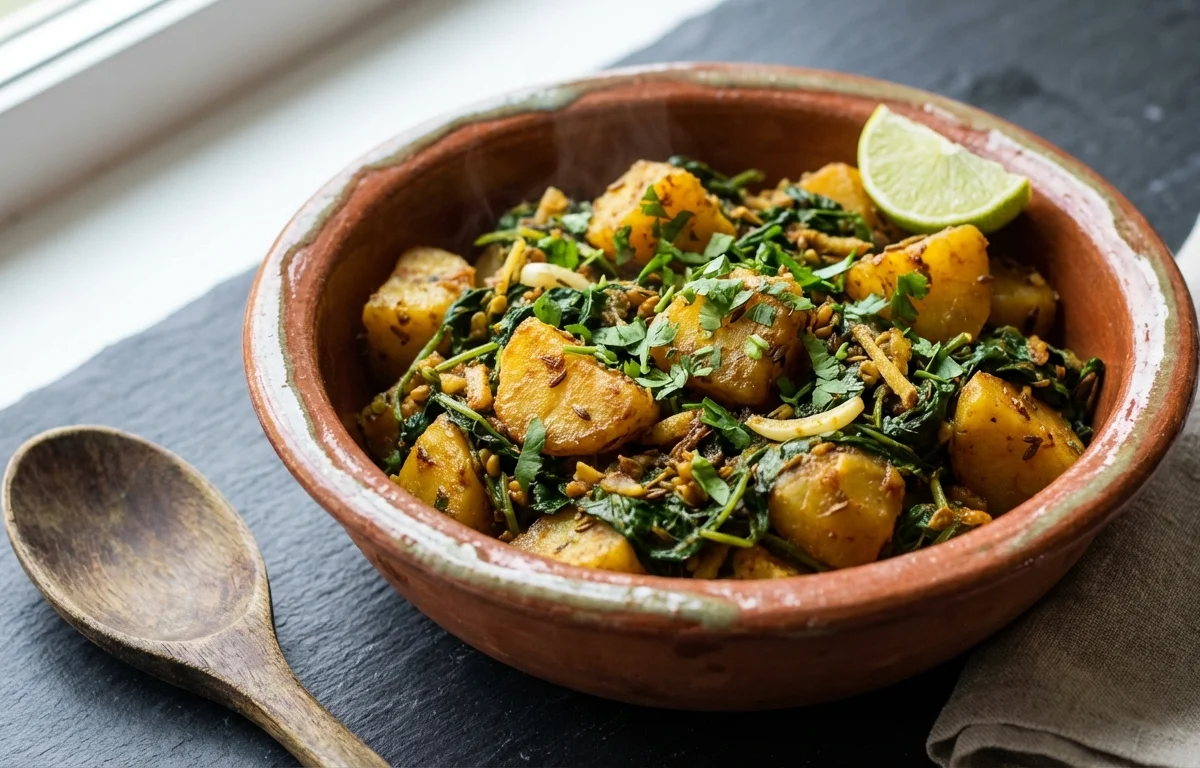
The classic pairings are with potatoes (aloo methi) or creamy sauces for a reason. The starch and fat provide a perfect canvas for methi's strong flavor.
03
Add it late.
Like spinach, methi cooks down significantly. For curries and dals, stir the leaves in during the last 5-10 minutes of cooking to keep their flavor bright and prevent them from turning mushy.
04
Know your methi: fresh vs. dried.
Fresh methi is a vegetable. Dried fenugreek leaves (kasoori methi) are a herb. Kasoori methi is much more concentrated; you use it by the teaspoon, not the cup.
What fenugreek leaves are good for
01
A surprising protein source
At 4.4 grams per 100g, fenugreek leaves have more protein than many other vegetables, making them great for plant-based and balanced diets.
4.4g
protein
02
Excellent for immunity
A single serving provides over half your daily vitamin C, a key antioxidant for immune function and skin health.
58%
vit C DV
03
Superb for blood sugar control
With virtually no impact on blood glucose, methi is an ideal vegetable for anyone with insulin resistance or diabetes.
GI low
negligible
04
Nutrient-dense and low-calorie
You get a huge nutritional return—protein, fiber, vitamin C—for very few calories, making it a perfect food for healthy weight management.
49
calories
What to pair methi with
Methi's strong, savory flavor loves to be paired with creamy, starchy, or rich partners that can stand up to it and balance its bitterness.
Eat freely — or be mindful?
Three classic methi recipes
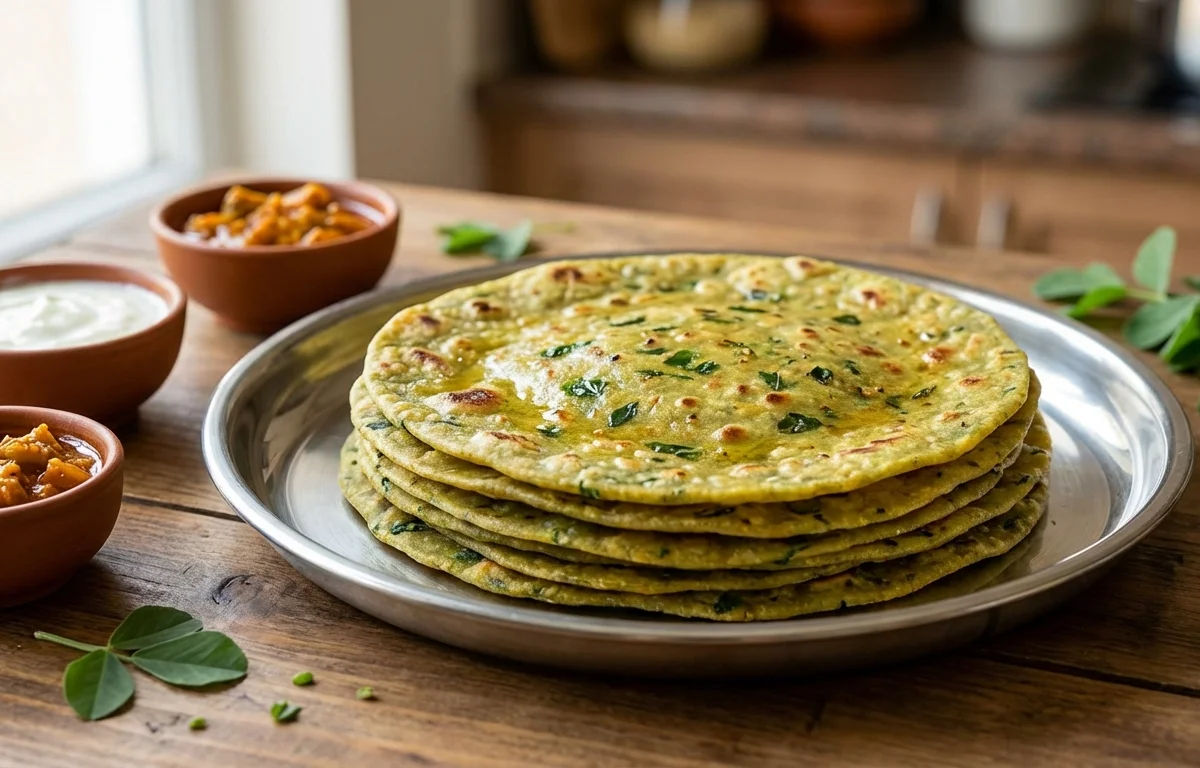
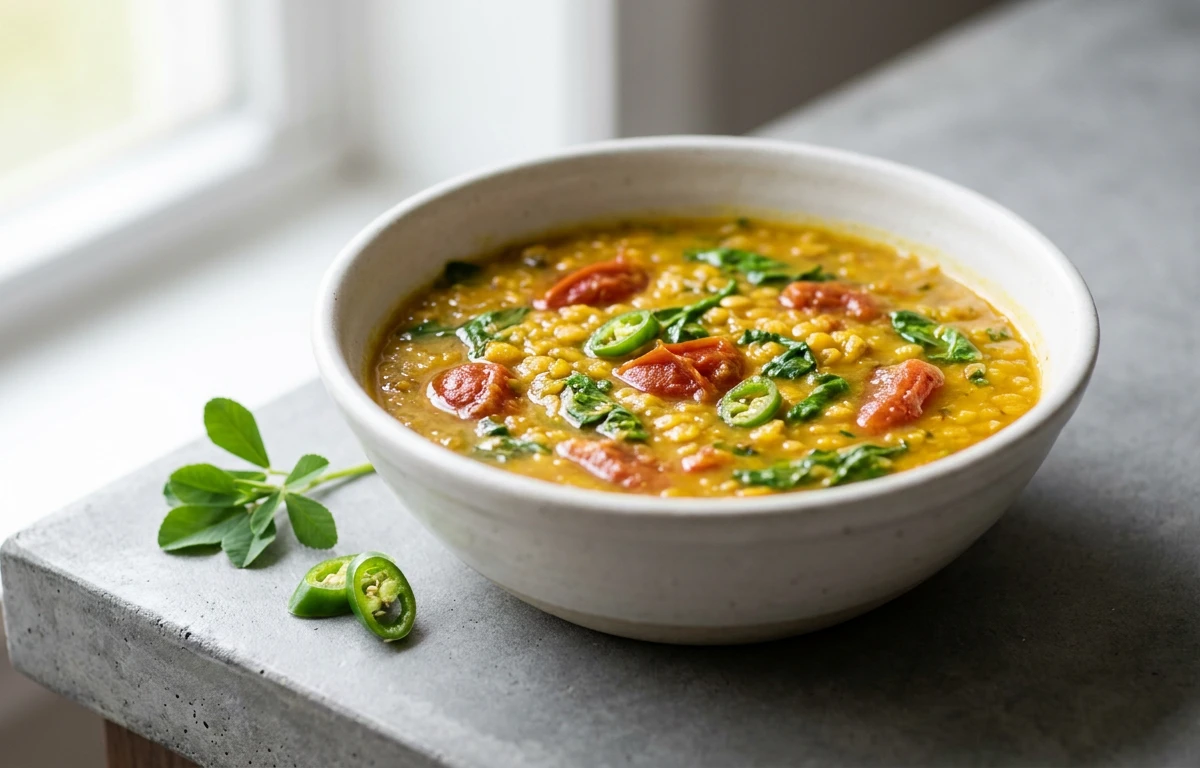
Ready to start cooking? These three recipes are classic, delicious, and a perfect introduction to the magic of methi.
Want more nutrient-dense vegetables in your week — without the planning?
Our meal planner incorporates unique ingredients like fenugreek leaves into balanced, delicious meals, with portions and macros already calculated and a single grocery list at the end.
Build my weekly plan →SOURCES & REFERENCES · 3
One more thing
Eating well is rarely about willpower. It’s about having a short list of dinners you actually want to eat. Pick two from this list. Make them next week. The rest will follow.
If you want these on autopilot, our weekly meal planner can drop the picks above into your calendar with one click and build a single grocery list from the merged ingredients.
FREQUENTLY ASKED QUESTIONS
Frequently asked questions
Are fenugreek leaves good for diabetes?
Yes, they are excellent. They are extremely low in carbohydrates and have a negligible glycemic index, meaning they will not cause a spike in blood sugar levels. Their fiber and protein content also contribute to better glucose control.
How do you get the bitterness out of fenugreek leaves?
While the bitterness is part of their charm, you can reduce it by either chopping the leaves and sprinkling them with salt for 15 minutes before rinsing, or by blanching them in hot water for 30 seconds. Sautéing in oil also mellows the flavor significantly.
What is the difference between fresh methi and dried kasoori methi?
Fresh methi is used as a vegetable, in larger quantities, and has a milder, fresher flavor. Kasoori methi (dried fenugreek leaves) is a finishing herb. It's much more concentrated and aromatic, and you use it in small amounts, often crumbled over a dish at the end.
Can you eat fenugreek leaves raw?
You can, but it's not very common due to their strong, bitter taste. If you do, use very young, tender leaves in small quantities in a salad, much like you would use rocket or radicchio.

ABOUT THE AUTHOR
Shreya Chatterjee
NUTRITION WRITER
Shreya is a nutrition writer and the voice behind The Nutrition Pen, where she turns evidence-based nutrition into simple, repeatable eating habits. Her writing focuses on practical food guidance — what to actually put on the plate — for readers who want to eat well without the noise.
Meet the editorial team →METHODOLOGY
How this article was created
Built using verified nutrition databases, culinary research, and traditional cooking knowledge — every claim is cross-referenced against the sources listed in the article.
· USDA data· Culinary research· Quality reviewed
Read our methodology →TRANSPARENCY
About this content
Articles are curated using trusted food databases (USDA FoodData Central, IFCT), culinary literature, and dietary guidelines, then structured by our editorial team for clarity, accuracy, and usefulness.
· Verified data sources· Culinary research· Quality reviewed
Read our editorial policy →RELATED RECIPES
Cook from this article
EXPLORE OUR MEALS
Meals that fit this article

AMERICAN · 1677 CAL
Almonds with Sliced Apple + supplement + iron

MEDITERRANEAN · 809 CAL
Greek Yogurt with Berries Almonds and Granola + supplement + iron

GENERAL_HEALTHY · 705 CAL
Banana with Peanut Butter Pregnancy + supplement + iron

MODERN · 982 CAL
Hummus with Crudits and Pita with Fresh Orange Snack + supplement + iron
TAGGED
KEEP READING