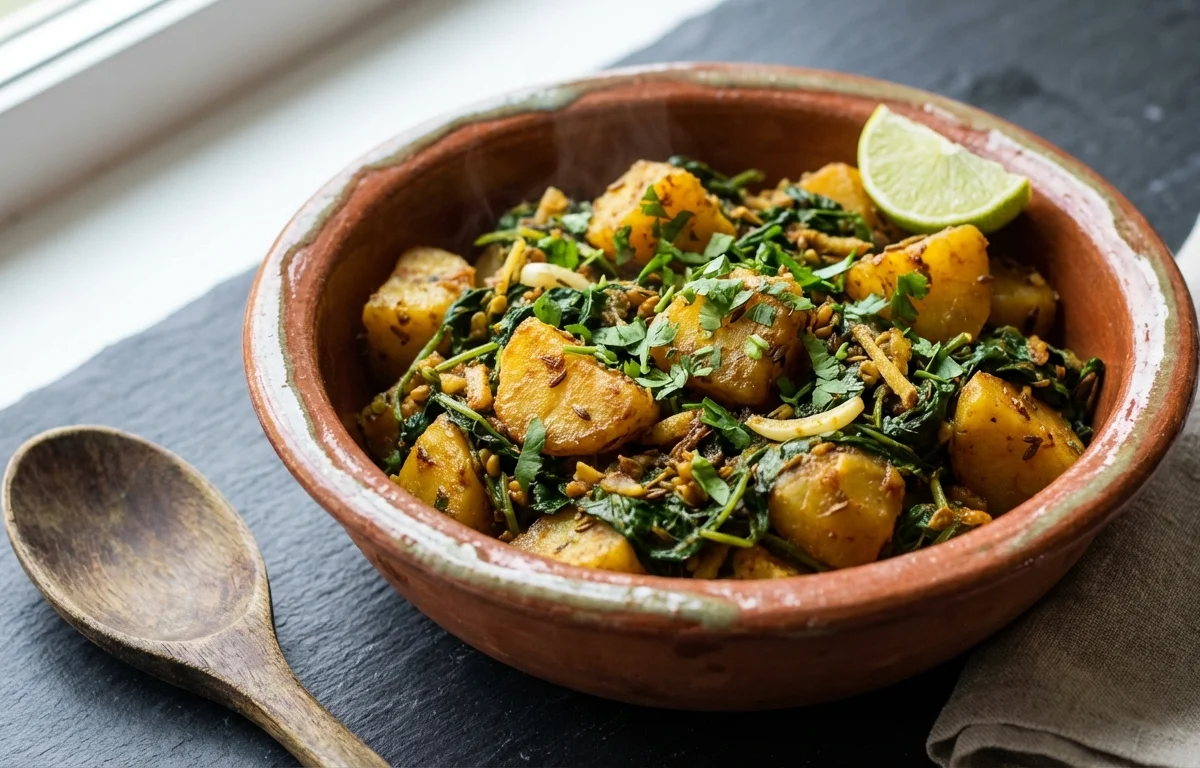
Aloo Methi
Tender potatoes and fragrant fenugreek leaves come together in this simple North Indian sabzi. It is lightly spiced, slightly earthy, and makes a comforting side with roti, dal, or plain rice.
For 4 servings
- prep · ~15 min
Prepare the potatoes and methi.
1.Peel the potato and cut it into small even cubes.2.Pluck the fenugreek leaves, wash them in several changes of water, and roughly chop them.3.Chop the ginger and slit the green chili. - temper · ~1 min
Heat the oil and crackle the cumin.
Heat oil in a wide pan over medium heat. Add cumin seeds and let them sizzle for a few seconds until fragrant.
- saute · ~5 min
Cook the ginger, chili, and potatoes.
1.Add the ginger and green chili and sauté for 30 seconds.2.Add the potato cubes and mix well to coat them in the oil.3.Add turmeric powder, red chili powder, coriander powder, and salt.4.Cook for 3 to 4 minutes, stirring often, until the potatoes start to pick up light color.TIPKeep the heat at medium so the spices do not burn before the potatoes begin to soften. - simmer · ~10 min
Cover and cook the potatoes until nearly tender.
Sprinkle in the water, cover the pan, and cook on low heat until the potatoes are almost done but still hold their shape. Stir once or twice so nothing sticks.
- saute · ~7 min
Add the methi and cook until dry.
Add the chopped fenugreek leaves and mix well. Cook uncovered for 5 to 7 minutes until the leaves wilt, the potatoes turn fully tender, and the sabzi becomes semi-dry.
TIPDo not overcook after adding methi or the leaves can darken too much and taste overly bitter. - serve
Serve hot.
Serve Aloo Methi hot with roti, paratha, or dal and rice.
What to keep in mind.
7 tips from the recipe — small details that make a real difference to the final dish.
- 1Wash the methi in several changes of water, then drain well so grit does not spoil the sabzi.
- 2Cut the potatoes into small even cubes so they finish cooking before the methi loses its color.
- 3Let the cumin crackle fully before adding ginger; under-toasted cumin makes the dish taste flat.
- 4Cook the potatoes until only nearly tender before adding methi, because the leaves release moisture and finish the job.
- 5Keep the pan uncovered after adding methi so excess moisture evaporates and the sabzi stays semi-dry, not soggy.
- 6If your methi tastes very bitter, sprinkle a little salt on the chopped leaves, rest briefly, then squeeze lightly before cooking.
- 7This sabzi reheats well in a skillet; avoid microwaving too long or the potatoes can turn soft and the methi dull.
Adapt it for your goals.
Low-oil
Use less oil and a good nonstick pan, adding a splash more water while covered; useful if you want a lighter everyday sabzi.
garlicGarlic
Add a few chopped garlic cloves with the ginger for a more robust, homestyle North Indian flavor.
onion tomatoOnion-tomato
Sauté chopped onion after the cumin, then add a little tomato before the potatoes for a softer, slightly tangy version.
jainJain
Skip ginger and potatoes; use raw banana or sweet potato cubes with green chili and spices for a Jain-friendly adaptation.
Why this is on our healthy list.
Fiber From Methi and Potato
Fenugreek leaves and potatoes together make this sabzi more filling and satisfying, especially when eaten with simple roti or dal.
Leafy Greens in Everyday Meals
Methi adds the benefits of leafy greens along with a distinctive earthy taste, making a plain potato dish more nutrient-diverse.
Gentle Spice, Big Flavor
Ginger, cumin, coriander, and chilies add depth without needing heavy cream or rich gravies.
Frequently asked questions
Use tender leaves, avoid overcooking, and cook the methi only until wilted and dry. A light salting and brief squeezing of the leaves can also mellow bitterness.



.webp)